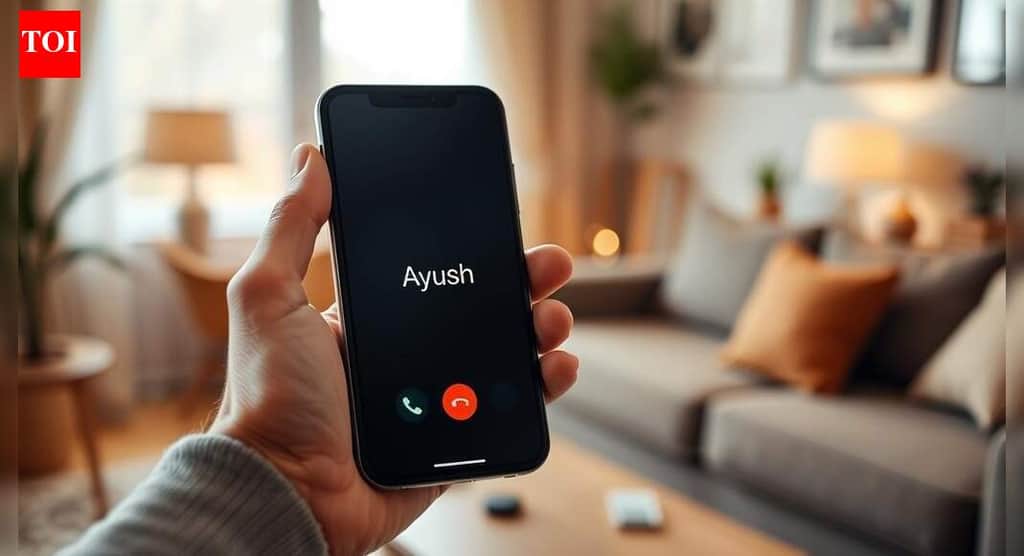
If you have started seeing a name appear on your smartphone screen every time you receive a call from an unknown number, then you are not alone. Many mobile users across India have noticed this change in the recent weeks, even when the caller’s number is not saved in their contacts.
The update is linked to the phased rollout of Calling Name Presentation (CNAP), a new telecom feature being introduced following directions from the Department of Telecom (DoT) and Telecom Regulatory Authority of India (TRAI).The change marks a shift from the existing caller ID system, which only shows a phone number. With CNAP, users can now see the registered name of the caller, making it easier to decide whether to answer a call or not.
The move comes as concerns around spam calls, robocalls and phone-based fraud continue to rise, with many users choosing to ignore calls from unknown numbers altogether.The feature is being rolled out in phases on 4G and 5G networks and is expected to be available nationwide by March 31, 2026. Here is what has changed, how CNAP works, and how it is different from apps like Truecaller.
The European Telecommunication Standards Institute (ETSI) defines CNAP as a supplementary service that enables the called party to receive the calling name information of the calling party. Some of the parameters of CNAP as defined by ETSI are:The name identity is made up of the following information unit: - The name of the mobile subscriber for the purpose of calling name presentation - up to 80 characters of information associated with a specific calling party.
The calling name identity is the name identity of the calling party.”In addition to or instead of the name identity, the network may give a Presentation Indicator (PI) to the called mobile subscriber of the CNAP service. The following information may be given :- Presentation Indicator (PI) showing: a) presentation restricted, or b) name unavailable. The name identity of a PLMN subscriber shall always be provided by the network.”
In its 2022 consultation paper, TRAI listed some of the limitations that may impact the implementation of CNAP. It said:“Mobile telephone consumers make use of a variety of feature-phones and smartphones of different makes and models. TRAI said that while some mobile handsets could already be supporting CNAP feature, the other handsets might require software upgrades to enable CNAP feature on them. Some landline telephone sets in use have the alphanumeric display feature while many others do not.
In case CNAP service is introduced in the Indian telecommunication network, the manufacturers of mobile handsets and landline telephone sets may have to enable the CNAP feature in their future supplies.
CNAP framework is currently being rolled out in phases across the country for 4G and 5G networks. The feature was first launched in pilot in October 2025, with an all-India rollout expected by March 31, 2026. An Economic Times quotes DoT sources which said that Vodafone Idea and Reliance Jio have already started the CNAP pilot in Haryana.CNAP works directly through telecom networks, thus reducing the dependency on mobile apps or internet access. Telecom companies use their own records to match a phone number with the name registered at the time a SIM card was issued, based on official identity documents. When a call is made, this information is pulled from the network and shown on the receiver’s screen.While it is enabled by default for users right now, those who do not want their name to appear on outgoing calls can choose to hide it using existing caller ID restriction options.The feature is meant to provide a common and verified caller name system across all networks, helping users identify calls more easily. Telecom equipment makers have been asked to ensure that mobile phones support the feature within a few months of its nationwide rollout.
At present, all access service providers in India provide Calling Line Identification Presentation (CLIP) supplementary service, as a part of their bouquet of services to telephone consumers.
When a telephone consumer receives an incoming call, the telephone number of the calling party is displayed on the called party’s telephone (mobile handset/ landline telephone set), through the CLIP service. The telephone consumers require that they should be able to correctly identify the calling party.
As per a TRAI consultation paper, the CLIP service does not adequately meet this requirement as this service presents only the telephone number of the calling party.
“Apparently, the said requirement may be met through a name presentation facility where the name identity of the calling party is displayed on the called party’s telephone,” the telecom body said.In its consultation paper, TRAI says that consumers have raised a concern that in absence of the calling party name presentation facility, they prefer not to attend calls from unknown telephone numbers, as most of such calls are unsolicited commercial communications (UCCs) from un-registered telemarketers.
“As a result, even genuine telephone calls go unanswered.”Consumers have also raised their concern in respect of robocalls, spam calls, and fraudulent calls. Robocalls are calls made automatically by IT-enabled systems mainly to financially dupe telephone consumers. Spam calls are unsolicited marketing calls from personal mobile connections, bypassing the do-not-disturb (DND) feature, and targeting many telephone consumers.
Through fraudulent calls, certain individuals attempt to obtain details of bank account/ onetime-password (OTP) with an aim to defraud consumers.Smartphone users rely on third-party apps to identify caller nameAt present, smartphone users make use of native smartphone tools and third-party apps like Truecaller to identify the calling party name and mark spam calls. Apple (manufacturer of iPhones) has a ‘silence unknown numbers’ feature on its mobile handsets, while the Google Phone app for Android has a ‘caller ID and spam’ protection option that allows phone users to mark incoming calls as spam. TRAI says that the native smartphone tools and third-party apps, generally, provide name identification services based on crowd-sourced data. However, the crowd-sourced name identity information may not be reliable, in many instances.
Both CNAP and Truecaller show a caller’s name, but they work in very different ways. A CNAP is a network-based service that shows the caller’s registered name taken from official KYC records submitted when a SIM card is issued.
CNAP does not require an app. It does not use the internet, and works the same way across networks. While Truecaller is a third-party app that relies mainly on crowdsource database, where names are collected from users’ contact lists and reports. This means the displayed name may not always be accurate or verified. Truecaller also needs internet access and user permission to access contacts.In short, CNAP offers a verified, built-in caller name service controlled by telecom operators, while Truecaller is an app-based solution that depends on user data and online access. Further, Truecaller offers real-time spam lists and community flags that CNAP may not.
What is CNAP?CNAP, or Calling Name Presentation, is a telecom feature that shows the registered name of the caller along with the phone number when you receive a call. It works directly through telecom networks and does not require any app.Why was CNAP introduced?CNAP was introduced to help users identify unknown callers more easily. Regulators found that many people avoid answering calls from unknown numbers due to spam, robocalls and fraud. As a result, even genuine calls often go unanswered.How is CNAP different from the existing caller ID service?The current caller ID service only shows the phone number of the caller. CNAP goes a step further by displaying the name of the caller, making it easier to recognise who is calling.How does CNAP get the caller’s name?Telecom companies use the name submitted during SIM card registration, based on official KYC documents. When a call is made, the network fetches this name and shows it on the receiver’s phone.Does CNAP require internet or a mobile app?No. CNAP works at the network level. It does not need internet access or third-party apps.When did CNAP roll out in India?CNAP was first launched as a pilot in October 2025. A phased rollout is underway, with nationwide implementation expected by March 31, 2026 for 4G and 5G users.Will CNAP work on all phones?Not immediately. Some smartphones already support CNAP, while others may need software updates. Many older landline phones may not support it due to lack of alphanumeric displays.Is CNAP enabled by default?Yes, CNAP is currently enabled by default. However, users who do not want their name to appear can hide it using caller ID restriction (CLIR) settings.Will CNAP stop spam and fraud calls?CNAP does not block calls, but it helps users identify callers more clearly. This may reduce the chances of answering spam or fraudulent calls.How is CNAP different from Truecaller?CNAP shows verified names from telecom records and works without an app. Truecaller is a third-party app that relies on crowdsourced data, needs internet access, and may not always show accurate names. Truecaller also offers spam tagging, which CNAP does not currently provide.
Editorial Context & Insight
Original analysis & verification
Methodology
This article includes original analysis and synthesis from our editorial team, cross-referenced with primary sources to ensure depth and accuracy.
Primary Source
Times of India