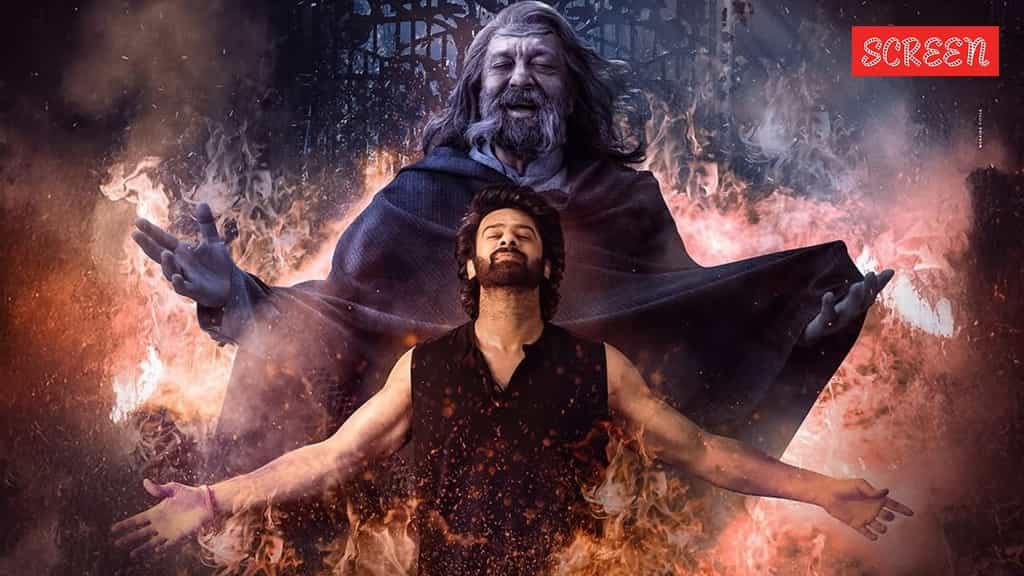
The Raja Saab was touted as one of the biggest films of the year releasing in Pongal. Starring Baahubali star Prabhas and marking his first foray into the horror genre, the film generated massive anticipation among fans eager to see the actor in a new avatar. However, the final product left many viewers feeling disappointed and even cheated. While some audiences criticised the frequent use of body doubles—even in relatively simple shots—others took issue with what they described as a poorly written, unintentionally comic script that fell far short of fan expectations. Now, director Maruthi has suggested that the film’s lukewarm reception stems from audiences failing to understand its deeper intent.
After addressing the use of the word “flop” during a press conference on the film’s second day—held to celebrate its grand opening—Maruthi shared a note stating that viewers watched the film “in a festive mood,” which, according to him, prevented them from engaging with the film’s layered narrative.
He wrote, “Audiences watch a film for about three hours on screen, but it is the result of nearly three years of relentless effort, stress, learning, and creative struggle. When such work is mocked or dismissed so easily, it does hurt, even if we choose to stay silent.”
Responding to online trolling, the filmmaker added that there would come a time when those who mock others would face confusion and hardship in their own lives, often without realising that their past actions contributed to it. “This is neither a curse nor a threat,” he said, “but simply the way life works.”
Defending his film further, Maruthi placed the onus on the audience, stating, “Viewers watched The Raja Saab in a festive mood, expecting light entertainment. This may have stopped them from fully connecting with the deeper layers of the narrative.”
He also claimed that had the film released at a different time, the climax in particular would have sparked stronger discussion and appreciation. “Time always brings clarity, and honest work eventually finds its place—even if it takes longer than expected,” he added.
However, Maruthi’s remarks triggered strong backlash on social media, with many questioning the logic behind his defence. A Reddit user wrote, “First you release the film in the festival season to maximise collections, and when it flops, you blame the audience for expecting a festive entertainer. Maverick logic, sir.”
Another commented, “‘I’m not the problem—everyone else is.’ You had a huge budget and Prabhas, and still made a terrible film.”
Several users also questioned Prabhas’ choice of collaborators. One post read, “You release the film during a festival so it can do well, and when it doesn’t, you blame the audience for being in a festive mood. Stupid excuse from a stupid director of a stupid movie. Does Prabhas have no sense of judgment when choosing scripts and filmmakers?”
Other comments included: “Does Prabhas not read scripts before signing anything?” and “Absolute trash of a movie. Wasted four hours and Rs 1,500 on two tickets. The film never used the potential of a pan-India star. The director should have stuck to his strength—comedy-horror—or played to Prabhas’ action strengths. Mixing everything led to disaster. Rs 400 crore down the drain.”
The disappointment ran deeper given that Maruthi had earlier delivered the critically acclaimed horror film Prema Katha Chitram, raising expectations that The Raja Saab would achieve similar success.
In its first five days, The Raja Saab earned Rs 120 crore net in India, with over Rs 63 crore coming from its opening day alone. Collections, however, witnessed a steep decline thereafter.
Made on a reported budget of over Rs 400 crore, The Raja Saab was expected to dominate the box office. Instead, due to its underwhelming performance, the film soon lost screens to releases starring Chiranjeevi, Ravi Teja, and Naveen Polishetty—although those films, too, are reportedly struggling at the box office.
Editorial Context & Insight
Original analysis and synthesis with multi-source verification
Methodology
This article includes original analysis and synthesis from our editorial team, cross-referenced with multiple primary sources to ensure depth, accuracy, and balanced perspective. All claims are fact-checked and verified before publication.
Primary Source
Verified Source
The Indian Express
Editorial Team
Senior Editor
James Chen
Specializes in India coverage
Quality Assurance
Associate Editor
Fact-checking and editorial standards compliance