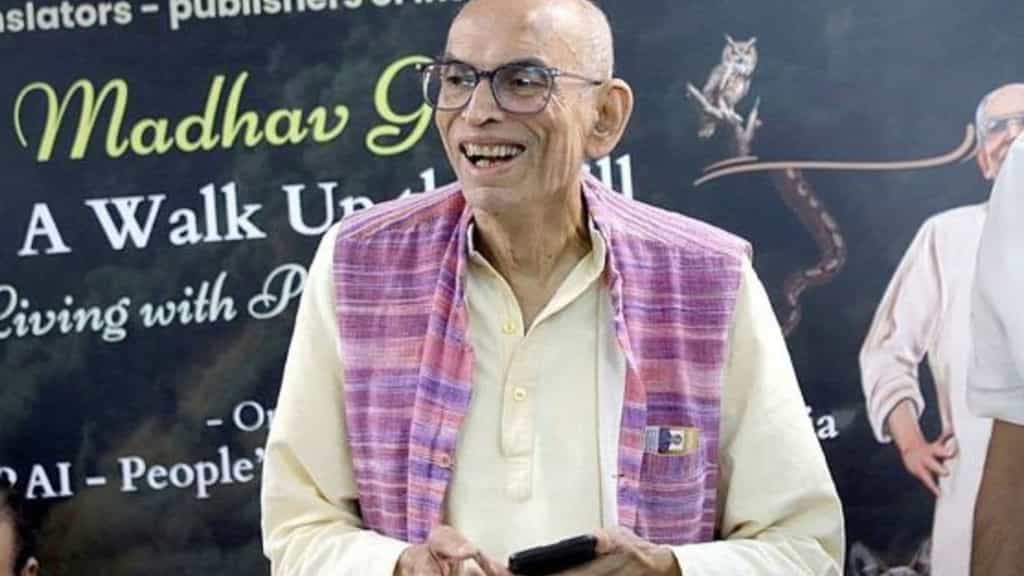
Madhav Gadgil, the ecologist who worked extensively on conservation of the Western Ghats passed away in Pune. (Express Photo by Pavan Khengre)
Ecologist Madhav Gadgil, who died in Pune on Thursday, is a name that has echoed in Kerala’s high ranges over the last decade.
The Gadgil Committee report on the Western Ghats, which in 2011 recommended a slew of measures for protecting the fragile mountain ranges, had sparked widespread protest from mainstream political parties and religious groups, particularly Christian churches, which raised objections against the proposed restrictions on activities in the ghats belt. Subsequently, the government formed another panel, headed by K Kasturirangan, to find a balance between conservation and development. However, environmentalists in Kerala always referred to Gadgil’s voice as “nature’s conscience”.
Gadgil, who headed the Western Ghats Ecology Experts Panel, had recommended that the whole mountain range be declared an ecologically sensitive area — in 2012, UNESCO declared it a World Heritage Site.
Although the recommendations of the Gadgil and Kasturirangan panels were shelved over fear of backlash, Gadgil had kept reminding Kerala about his warnings, especially during the several natural calamities that have hit the state over the last decade.
When Wayanad witnessed a devastating landslide in 2024, Gadgil had dubbed it a man-made disaster. In 2019, when the Wayanad village, Puthumala, had witnessed a similar tragedy, Gadgil visited the area and opined that the region was unfit for human settlement.
In 2018, when large tracts of Kerala was submerged in floods, causing death and destruction, the Gadgil Committee report emerged as a grim reminder of the need for revisiting the state’s conservation strategies and management of the Western Ghats.
In 2016, soon after the LDF government assumed office in Kerala, there had been a move to revive the contentious Athirappally hydel power project, proposed on the Chalakudy river in Thrissur. Green activists had foiled the bid, mainly based on the Gadgil report, which had found that the Athirappally belt was also an ecologically sensitive zone, where power plants and other major projects should be banned.
Recently, Gadgil shared the sentiments of farmers regarding the growing threat from wild animals, especially wild boars. Gadgil wanted to give legal sanction for killing wild animals, which pose a threat to human lives.
Paying tribute, Congress legislator and Opposition leader V D Satheesan said Gadgil had repeatedly reminded us about the need for preserving natural resources for posterity. He had demonstrated scientific temper and took a balanced approach towards criticism. Human-centric nature conservation, balanced development and decentralised governance were core to his thought, said Satheesan.
Editorial Context & Insight
Original analysis & verification
Methodology
This article includes original analysis and synthesis from our editorial team, cross-referenced with primary sources to ensure depth and accuracy.
Primary Source
The Indian Express