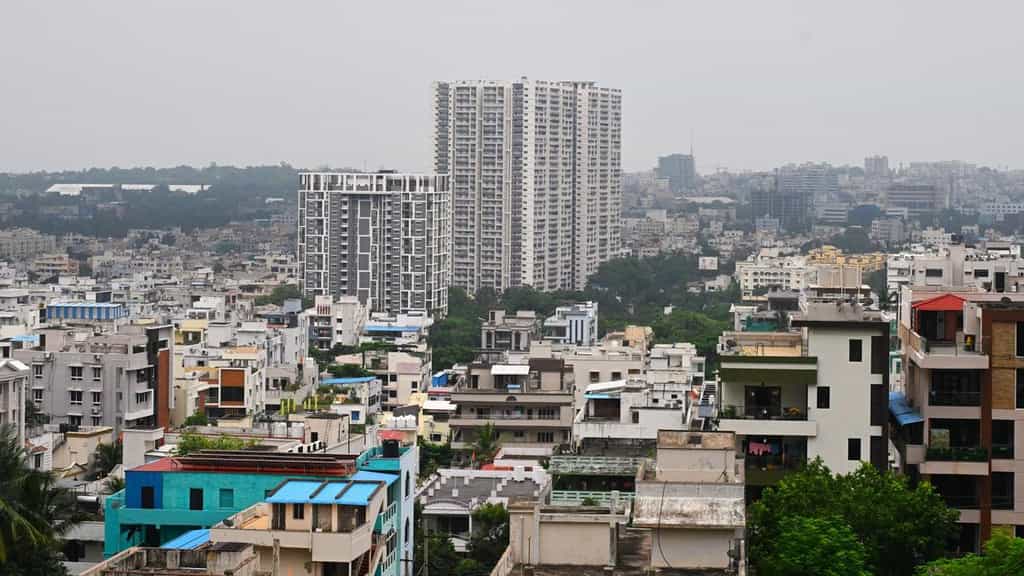
Ahead of the Union Budget 2026, the real estate fraternity has appealed to the Union Government for significant policy interventions to rejuvenate housing demand and address the challenges of stalled projects.
Industry bodies have highlighted that escalating land acquisition costs and construction overheads have rendered the current tax thresholds obsolete, particularly in rapidly expanding urban corridors.
A primary contention remains the definition of ‘affordable housing.’
Stakeholders argue that the existing ₹45 lakh price ceiling no longer aligns with the market realities of major cities, making several projects financially unviable for developers and inaccessible for intended beneficiaries.
Speaking to The Hindu on Monday (January 12), E. Ashok Kumar, president of the Confederation of Real Estate Developers’ Associations of India (CREDAI), Visakhapatnam Chapter, noted that the current limit acts as a deterrent to growth.
“The ₹45 lakh ceiling and the associated 1% GST benefit are outdated. They do not account for the prevailing land and material costs in most development zones. We propose that the government increase this limit to ₹80–90 lakh,” Mr. Kumar said.
He further advocated for a reduction in GST on works contracts from 18% to 12% to improve project viability and bolster supply.
The sector has also sought enhanced incentives for first-time homebuyers, particularly in the mid-income bracket.
Mr. Kumar pointed out that a significant portion of buyers in this segment currently falls outside the ambit of affordable housing benefits due to the restrictive price cap, thereby missing out on the 1% GST rate and other tax concessions.
The industry’s wishlist includes the restoration of the additional interest deduction under Section 80EEA and smoother credit flow for developers — measures that are expected to lower the overall cost of housing and reduce the burden of Equated Monthly Instalments (EMIs) for consumers.
The CREDAI president further urged the Centre to accord ‘infrastructure status’ to the housing sector rather than treating it merely as an asset class.
While acknowledging the positive intent behind initiatives like PMAY-Urban 2.0, Mr. Kumar stressed that further refinements are essential to translate policy into tangible housing supply in Tier 1 and Tier 2 cities, including Visakhapatnam.
Editorial Context & Insight
Original analysis and synthesis with multi-source verification
Methodology
This article includes original analysis and synthesis from our editorial team, cross-referenced with multiple primary sources to ensure depth, accuracy, and balanced perspective. All claims are fact-checked and verified before publication.
Editorial Team
Senior Editor
Aisha Patel
Specializes in India coverage
Quality Assurance
Associate Editor
Fact-checking and editorial standards compliance