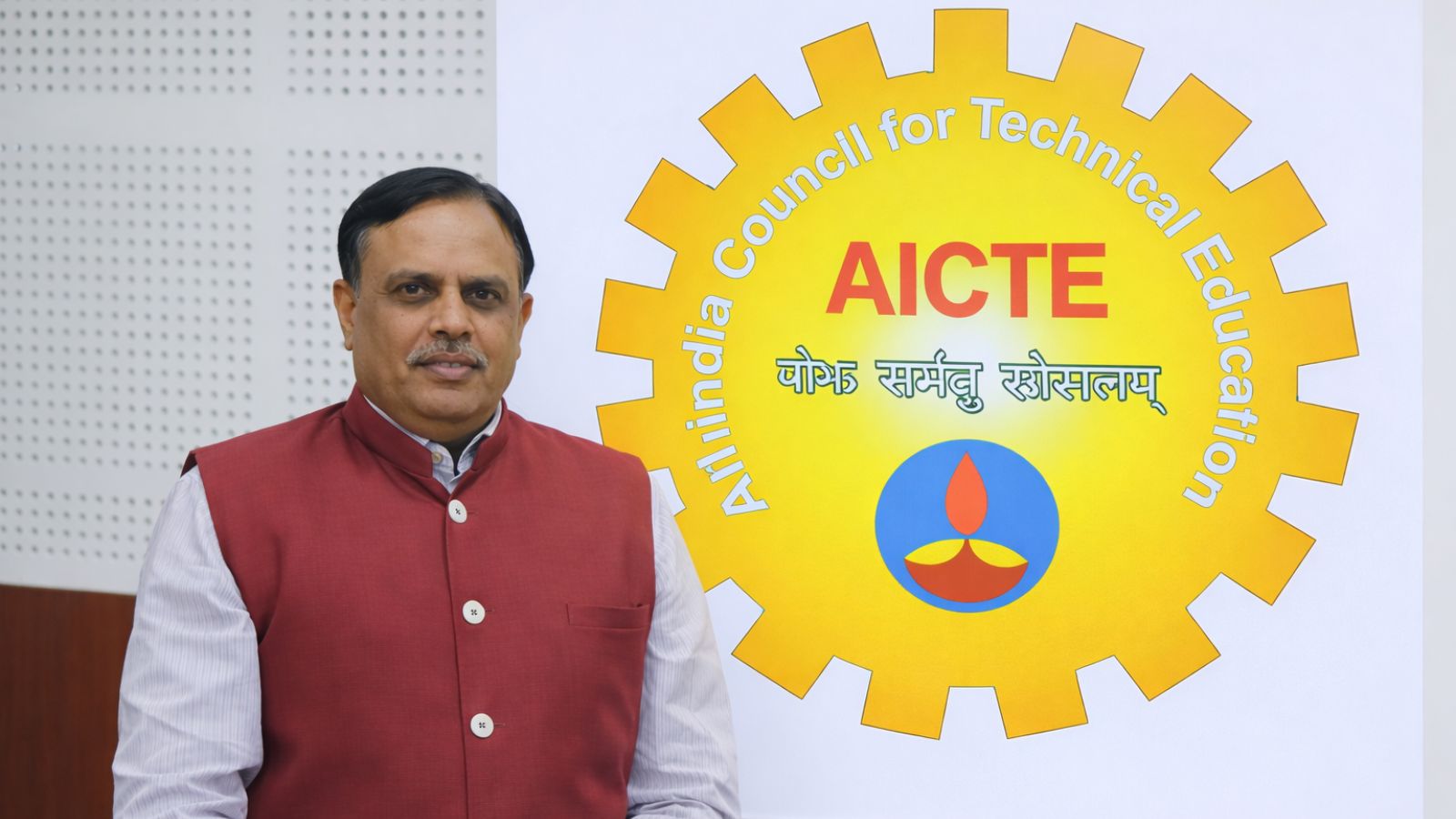
Concerns over the impact of Artificial Intelligence on the workforce are not of job loss, but skill mismatch, and while students today are better exposed than ever before to changes in tech, preparedness is uneven, according to Professor T G Sitharam, who demitted office as the chairman of the All India Council for Technical Education (AICTE) after his tenure ended this month.
Prof Sitharam is the chair of the Human Capital Working Group, India-AI Impact Summit 2026, which is scheduled to be held in February, and is being organised by the Ministry of Electronics and Information Technology. He is a former Director of IIT Guwahati and has been a professor in the Department of Civil Engineering at the Indian Institute of Science (IISc), Bengaluru.
In an email interview, Prof Sitharam responded to questions from The Indian Express regarding AI, and engineering education.
Q: How is engineering education in India trying to keep pace with emerging technology?
Professor T G Sitharam: Engineering education in India is undergoing a conscious and structured transformation. AICTE has moved from a rigid curriculum framework to a more flexible, outcome-based, and industry-aligned model curriculum. We have introduced AI, data science, machine learning, cybersecurity, robotics, and interdisciplinary minors across engineering streams. In addition, initiatives such as internships, project-based learning, industry certifications, exposure to global platforms like the India-AI Impact Summit, and collaboration with leading technology companies ensure that students are exposed to emerging technologies early in their academic journey.
Q: Do you think engineering students graduating today, irrespective of stream, are equipped with the skills to deal with these changes in tech and use them to their advantage?
Professor Sitharam: Students today are better exposed than ever before, but preparedness is uneven. While many students demonstrate strong adaptability, problem-solving ability, and digital literacy, there is still a gap between theoretical knowledge and practical application in some institutions. This is why AICTE emphasises hands-on learning, internships, skilling courses, and continuous faculty upskilling, so that graduates are not only job-ready but also future-ready.
Q: How do you see AI affecting or changing jobs for engineers? Do you have any concerns about its impact on the workforce?
Professor Sitharam: AI will certainly transform jobs rather than eliminate them outright. Routine and repetitive tasks will increasingly be automated, but this will create demand for engineers skilled in AI development, system integration, ethics, governance, and human–AI collaboration. Our concern is not job loss, but skill mismatch. Hence, the focus of the AI Human Capital Working Group at the India-AI Impact Summit 2026 is on reskilling, upskilling, and lifelong learning, ensuring that engineers remain relevant as technologies evolve.
Q: What do you think the impact of AI has been in the classroom so far for young engineering students?
Professor Sitharam: AI has begun to change classrooms in meaningful ways. Students are using AI tools for coding assistance, simulations, design optimization, and personalized learning. At the same time, AICTE is mindful of concerns around academic integrity and over-dependence. Therefore, we emphasize responsible and ethical use of AI, ensuring it complements learning rather than replacing critical thinking.
Q: How do you think students are responding to emerging tech and AI?
Professor Sitharam: Students are responding with enthusiasm and creativity. We see strong participation in hackathons, innovation challenges, startup incubation, and research projects involving AI and emerging technologies. Many student-led startups are leveraging AI to solve problems in healthcare, agriculture, education, and sustainability. This clearly indicates that emerging tech is driving innovation and entrepreneurial thinking among young engineers.
Q: What more do you think needs to be done on this front with regard to curriculum and teaching?
Professor Sitharam: We need to move faster towards interdisciplinary education, continuous curriculum updates, and faculty capacity building. Teachers must be empowered to teach emerging technologies through training, industry exposure, and research opportunities. Additionally, assessment methods must evolve to value creativity, problem-solving, teamwork, and real-world application, rather than rote learning.
Q: Since AICTE began granting approval to colleges for engineering education in regional languages, how do you think this has fared so far?
Professor Sitharam: The initiative has been encouraging. Engineering education in regional languages has helped improve accessibility, comprehension, and inclusivity, particularly for students from rural and semi-urban backgrounds. While English remains important for global engagement, learning core concepts in one’s mother tongue builds confidence and reduces early dropouts. We are carefully monitoring quality and scalability as this initiative progresses.
Q: AICTE data shows that BTech enrolment has been on the rise in recent years. What do you think is driving this upswing?
Professor Sitharam: The upswing is driven by multiple factors, including an improved perception of engineering careers, expansion of opportunities in emerging sectors, flexible experiential learning modules, alignment of curricula with industry needs, and the growing startup and innovation ecosystem. Government initiatives such as Digital India, Make in India, and semiconductor and manufacturing missions have also renewed interest in engineering education.
Q: Despite positive BTech enrolment trends, many MTech seats remain vacant. Why do you think this is happening, and what is AICTE doing about it?
Professor Sitharam: Despite positive BTech enrolment trends, many MTech seats remain vacant because a growing number of students prefer early employment or entrepreneurship over pursuing higher studies, as industry experience is often perceived to offer quicker financial returns. Another significant and increasingly important reason is that many students are now opting to join PhD programmes directly after completing their BTech, bypassing MTech altogether. This direct-entry PhD pathway has reduced the pool of candidates who would traditionally enrol in MTech programmes.
AICTE is addressing these challenges by promoting industry-linked MTech programmes, offering research-based scholarships, enabling flexible entry and exit options, and strengthening academia–industry collaboration, so that MTech programmes become more attractive, relevant, and competitive in comparison to both immediate employment and direct PhD pathways.
Q: What is your view on the proposal for a higher education commission as a single regulatory body?
Professor Sitharam: The Viksit Bharat Shiksha Adhishthan (VBSA) proposal reflects the need for a more streamlined, transparent, and outcome-oriented regulatory framework. Any such reform should ensure academic autonomy, reduced regulatory overlap, and a strong focus on quality and accountability. AICTE believes that regulatory changes must ultimately empower institutions, faculty, and students while safeguarding national priorities and global competitiveness.