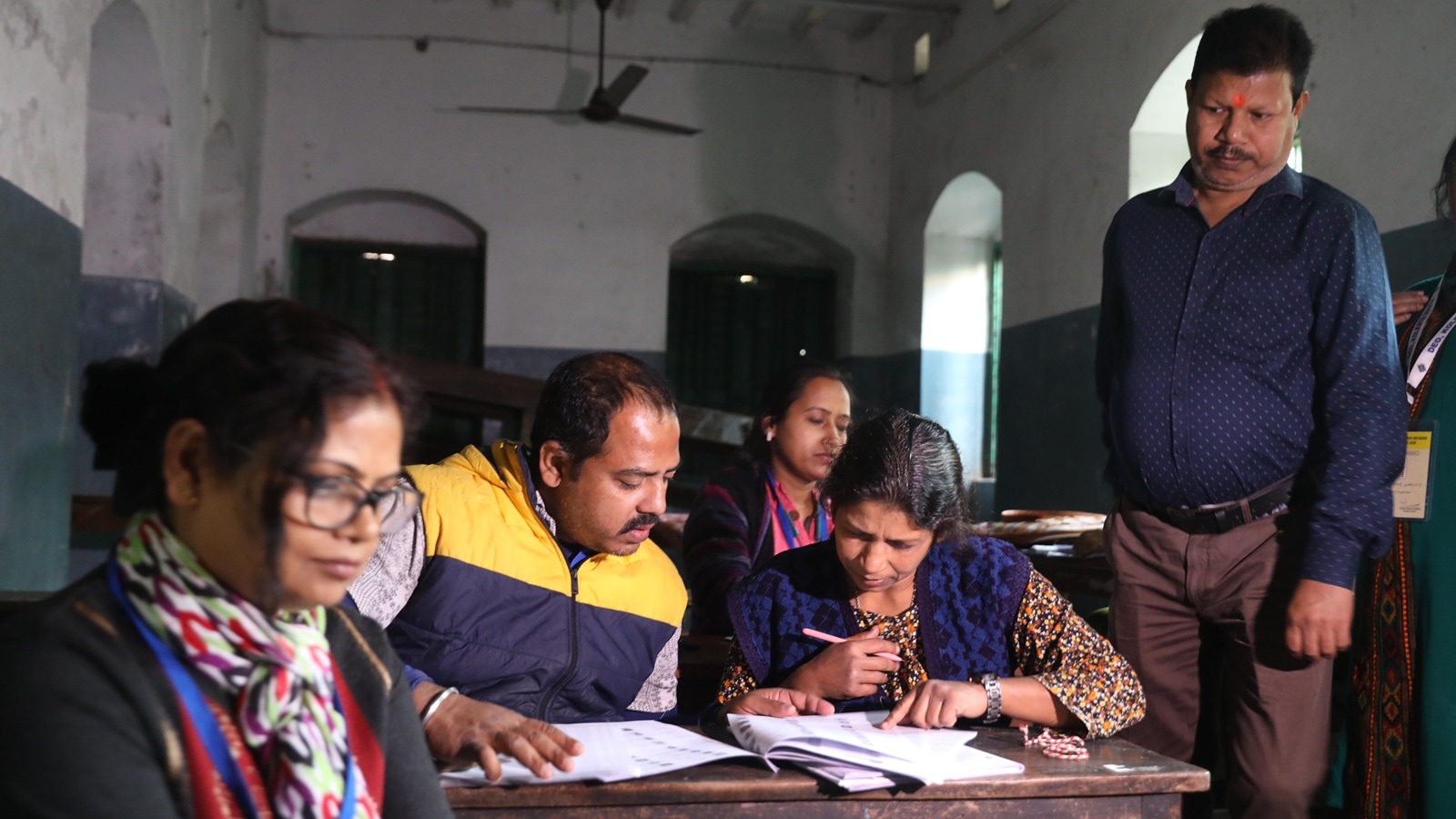
The first phase of hearings will cover the 32 lakh unmapped voters, followed by cases involving logical discrepancies. (Express Photo)
As hearings to decide whether lakhs of electors will remain on the rolls begin in West Bengal, the Election Commission of India has allowed only Booth Level Officers (BLOs), their supervisors, Electoral Registration Officers (EROs) and micro-observers to be present at the proceedings.
The decision, part of the Special Intensive Revision (SIR) exercise to update electoral rolls, means Booth Level Agents (BLAs) will be kept out of the hearings. Unlike BLOs, who are government officials deployed for the process, BLAs are representatives of political parties who were involved in collecting documents.
Officials and micro-observers, Group ‘B’ central government employees who will help examine enumeration forms and the entries made by BLOs to eliminate errors, will sit at 11 tables in each of the state’s 294 Assembly constituencies for the proceedings. They will hear cases relating to the state’s 32 lakh “unmapped” voters — those whose names, or whose parents’ names, did not figure in the 2002 SIR list — as well as electors flagged for logical discrepancies such as data mismatches or inconsistencies in voter enumeration forms.
According to a senior ECI official, BLAs were excluded to “avoid unnecessary chaos” and ensure transparency.
“Those who are part of the hearing process will upload documents provided by electors, so nothing is hidden. So, there is no need to present BLAs during the hearings,” the official said.
Officials said the number of tables could be increased if required. Around 4,000 micro-observers have been enlisted, with West Bengal Chief Election Officer Manoj Agarwal saying notices would be issued to those who do not comply with orders.
“Some electors have a mismatch in their father’s name, age or spelling. BLOs have already started asking those voters with such discrepancies to bring their necessary documents, and these cases will be disposed of after verifying them,” a source said.
— Each Assembly constituency will have 11 hearing tables, comprising one ERO or Assistant ERO, a micro-observer, a BLO and a supervisor. The state will have 3,234 tables, with scope to increase the number if needed.
— Only government premises — such as Block Development Offices, Sub-Divisional Offices or government schools — will be used. Hearings will begin at 10 or 11 am.
— Voters who fail to comply with a notice will be given another hearing before their names are deleted from the rolls.
— Cases involving ill voters will be considered “sympathetically”. Teams will also make home visits for electors aged over 85.
— All data will be uploaded on the application after the hearings are completed.