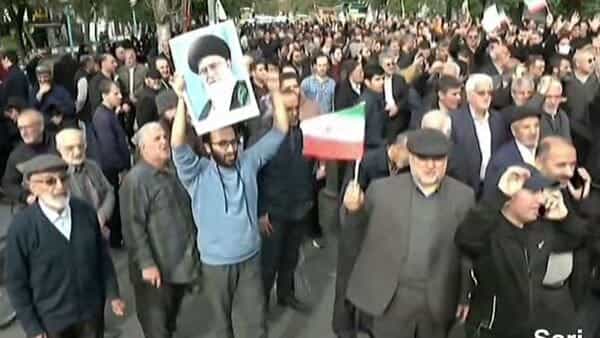
Amid large-scale protests in Iran, Supreme Leader Ayatollah Ali Khamenei alleged that the demonstrators were acting to please US President Donald Trump. He reportedly dismissed Trump as having hands “stained with the blood of Iranians”.
Meanwhile, state media referred to the demonstrators as “terrorists,” setting the stage for a violent crackdown as in other protests in recent years, despite Trump's pledge to back peaceful protesters with force if necessary.
Trump has repeatedly pledged to strike Iran if protesters are killed. The president suggested Friday any possible American strike wouldn't “mean boots on the ground, but that means hitting them very, very hard where it hurts.”
Iran’s Supreme Leader Ali Khamenei referred to last year's June attacks by the US and was quoted by Iran International as saying, “In the 12-day war, more than a thousand of our compatriots were martyred.”
Khamenei added that the US president had said, “I gave the order and I commanded the attack,” and said this amounted to an admission that “his hands are stained with the blood of Iranians.”
'Protesters who commit vandalism could face death penalty'
Tehran's prosecutor Ali Salehi said that some protesters in Iran could face the death penalty for their actions, according to the semi-official news agency Tasnim.
Salehi said that acts of vandalism targeting public property carried out as part of anti-regime demonstrations will be considered "moharebeh", translated as "waging war against God". The punishment for moharebeh includes execution.
"We will not show leniency toward armed terrorists," Salehi said, according to Tasnim. "Their sentence is moharebeh."
According to the Associated Press, Iranian state media referred to the demonstrators as “terrorists.
Protesters are “ruining their own streets ... in order to please the president of the United States,” the 86-year-old Khamenei said to a crowd at his compound in Tehran.
“Because he said that he would come to their aid. He should pay attention to the state of his own country instead," Khamenei said.
Iran's judiciary chief Gholamhossein Mohseni-Ejei separately vowed that punishment for protesters “will be decisive, maximum and without any legal leniency.”
“Some still insist on romantic myths about this regime, treating it as a defender of the oppressed abroad,” Ebadi said in a statement. “But a government that shoots peaceful protesters ... at home cannot claim moral authority anywhere.”
"Iran's in big trouble," Trump said on Friday.
"We're watching the situation very carefully. I've made this statement very strongly that if they start killing people like they have in the past, we will get involved," Trump said, adding that it "doesn't mean boots on the ground, but it means hitting them very, very hard where it hurts."
In a post on X, the Institute said, "Critical Threats and ISW have recorded 116 protests across 22 provinces since 3:30 PM ET on January 8."
"Twenty of these protests were large protests, which CTP-ISW defines as protests with more than 1,000 participants," the statement added.
"CTP-ISW's protest data since its last data cutoff likely reflects only part of the protest activity that has taken place in Iran since that time, given that the internet shutdown restricts protesters' ability to publish and share videos of the protests. Some protesters have reportedly used Starlink to send reports of protests to foreign media," it said.
At least 65 people have been killed in the protests that began in late December over Iran’s ailing economy and have morphed into the most significant challenge to the government in years.
Editorial Context & Insight
Original analysis & verification
Methodology
This article includes original analysis and synthesis from our editorial team, cross-referenced with primary sources to ensure depth and accuracy.
Primary Source
mint - news