


Key takeaways
- Half-million strong military will train on drones as “universal combat tool.” South Korea plans to train every single member of its nearly…
- South Korea plans to train every single member of its nearly half-million-strong military to operate drones as easily as they handle…
- The goal is to make drones a “universal combat tool” for all troops by training them to use drones like a “second personal weapon,” said…
What happened
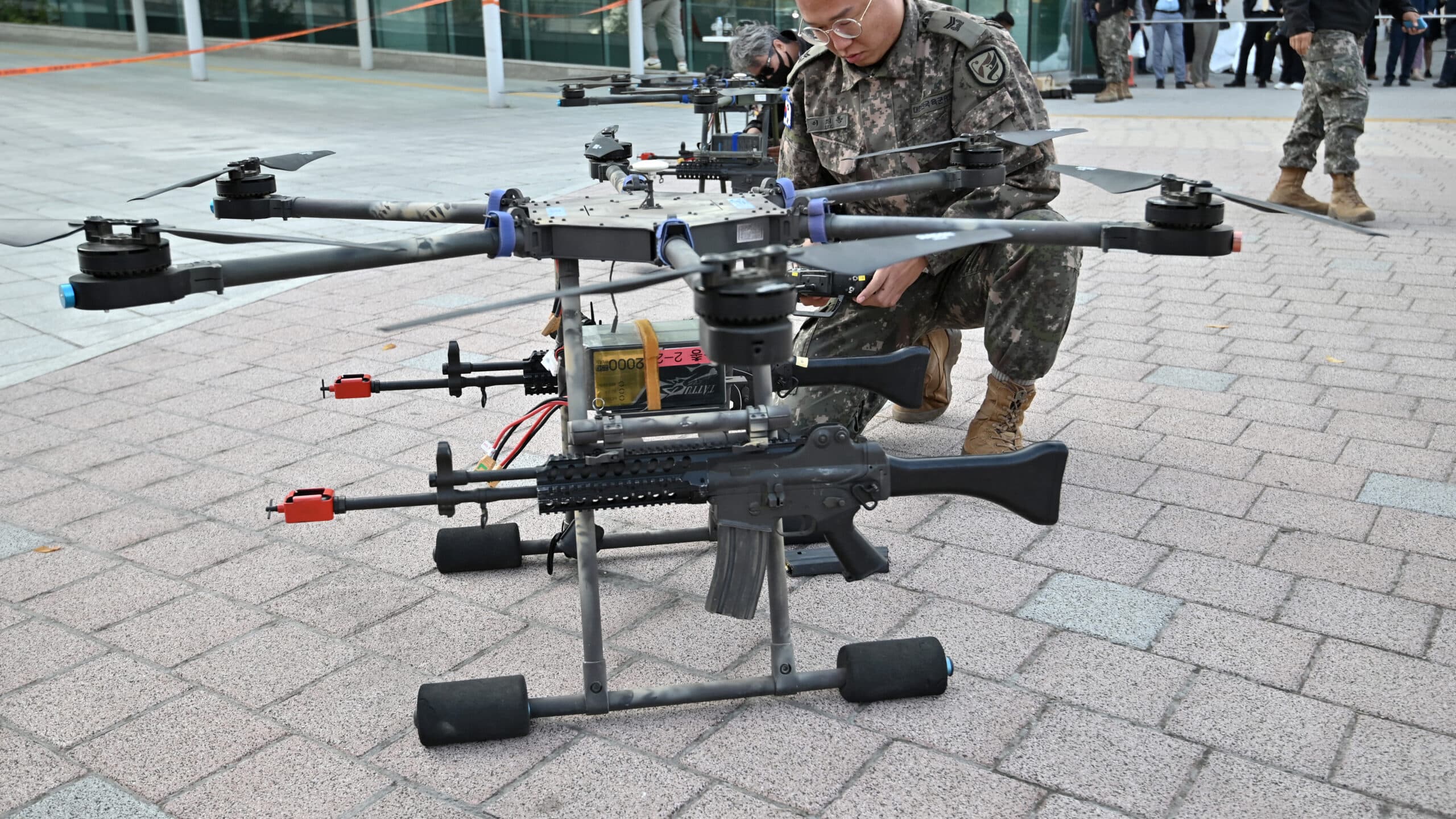
South Korea plans to train every single member of its nearly half-million-strong military to operate drones as easily as they handle personal firearms. That ambitious goal was announced as the South Korean military seeks to maintain a technological edge in its 70-year border standoff with the larger military of a hostile North Korea.
South Korean companies are building new military attack drones, but the defense ministry may struggle to find enough commercial drones made without Chinese components to train hundreds of thousands of military conscripts, said Min-Cheol Jung, a cofounder of the Team Retriever counter-drone red team based in South Korea, in a War on the Rocks article.
Jung also highlighted the South Korean military’s personnel shortage, especially among noncommissioned officers and officers expected to help train new conscripts to use drones.
It’s worth noting that Ukraine, the model for so many countries’ military reform efforts, does not field a military where everyone is trained to be a drone pilot—although Ukraine has scaled up training to produce tens of thousands of drone operators.
Instead, Ukraine’s effective use of military drones comes from having widely deployed specialized drone operator teams to back up front-line infantry units, standing up the Unmanned Systems Forces branch of the military to develop drone doctrine and coordinate deep strike campaigns, creating a digital battle management system that provides updated battlefield information for rapid decision-making, and developing a homegrown drone industry that can mass produce millions of drones each year while nimbly innovating in response to changing battlefield conditions.
Meanwhile, North Korean soldiers who survived their encounters with Ukrainian drone warfare while fighting on Russia’s side have already been rotating back home to instruct the North Korean military. Though it’s less clear what kind of training lessons they may be imparting to their comrades.
Why it matters
The goal is to make drones a “universal combat tool” for all troops by training them to use drones like a “second personal weapon,” said Ahn Gyu-back, South Korea’s Minister of National Defense, in a June 26 briefing reported by Reuters and other media outlets.
The announcement coincides with broader plans to equip individual military units with more cheap and expendable drones for surveillance and strike missions, along with deploying more counter-drone lasers and microwave weapons.
Meanwhile, South Korea’s former drone operations command headquarters that used to have direct command authority over combat units will be reorganized to focus on collaborating with South Korean industry on developing and procuring commercial drone technology, according to The Korea Times. The South Korean defense minister specifically cited the conflicts in Ukraine and the Middle East as inspiring such military reforms with a focus on drone technologies.
South Korea is hardly alone among the many countries looking to Ukraine’s example in training and equipping their militaries with more drones. 2 million soldiers.
” The first challenge is that South Korea’s conscripted military has been shrinking in recent years due to the country’s declining birthrate, according to The Korea Times. So the South Korean military may struggle to merely achieve and maintain an active-duty force of at least 500,000 troops, and especially as long as the country’s mandatory military service excludes women.
Another practical constraint is that the South Korean military is not planning to equip everyone with drones even for training purposes, ministry officials clarified to The Korea Times. The defense ministry is starting out by providing 11,000 “training drones” to military personnel this year, with the goal of eventually deploying 60,000 drones across the military by 2029.
An additional complication comes from the South Korean military looking to procure drones with 100 percent domestically produced components and no Chinese components due to security concerns, according to the defense minister’s comments reported by Reuters. China is North Korea’s main economic and security partner.
However, China also dominates the world’s commercial drone market through leading drone manufacturers such as DJI.
What to watch
At the same time, South Korean troops are not alone in facing off against the North Korean military. There are currently 28,500 US troops stationed in South Korea as a legacy of the US military intervention on South Korea’s side during the Korean War, which began with a North Korean invasion.
Taking its own cue from Ukraine’s drone innovations, the US military has also been integrating drone familiarization and counter-drone measures into basic training for its own new recruits, while the Pentagon has requested $54 billion for new drone and counter-drone systems in its fiscal year 2027 budget.