


Key takeaways
- Three former SpaceX engineers have switched their attention from making rocket engines to manufacturing steel parts by using AI-driven…
- The company is initially focused on automating the manufacturing of steel skids—rectangular steel frames that can provide a moveable…
- ” The push for automation is not just about saving money.
What happened
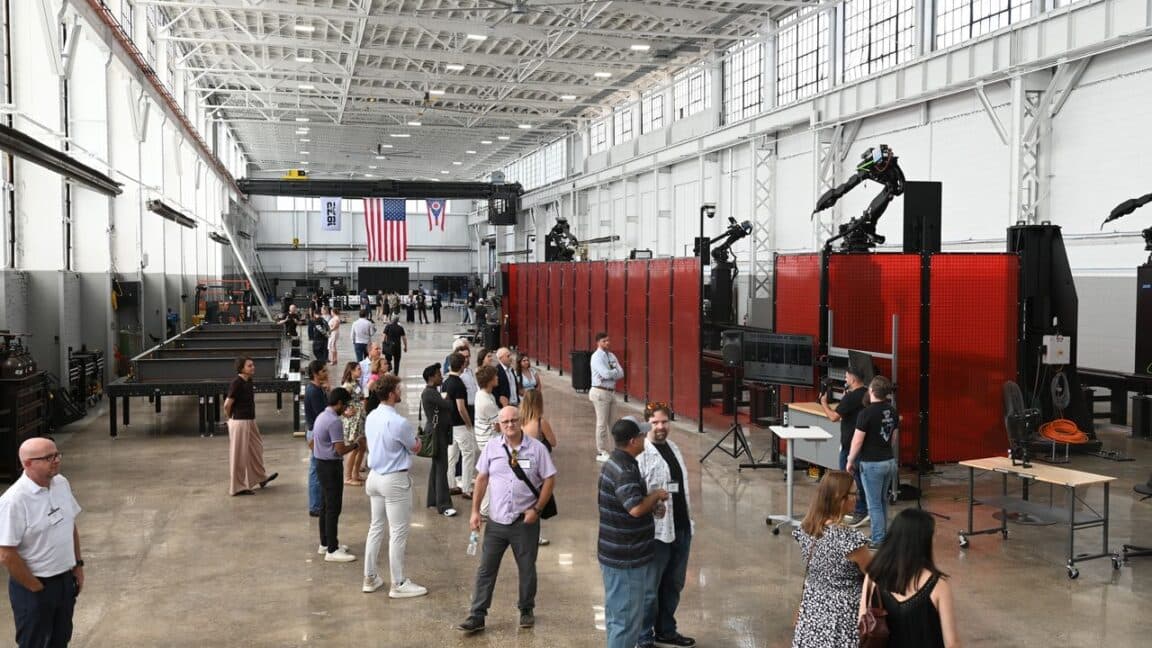
Three former SpaceX engineers have switched their attention from making rocket engines to manufacturing steel parts by using AI-driven software and robots. Their immediate goal involves establishing a prototype factory that can automate most of the steel fabrication process for crucial infrastructure components by 2027. The startup, called 1872, officially launched on July 22 with a ribbon-cutting ceremony at its Factory One facility in Cincinnati, Ohio.
By comparison, he pointed out how a typical jet engine development life cycle can exceed two decades. With the new company 1872, the cofounders decided to first focus on automating production of rectangular steel skids because they are “lower precision components” compared to something like an aerospace-grade part for a rocket, Summers said.
That leaves more room to be wrong from an automation standpoint while still churning out a useful steel component. “We’re starting with more of the less sexy components on the critical infrastructure side that are really important to our ability to build stuff, and that consume a ton of skilled labor and resources,” Summers said.
To get started, 1872 first relied on human workers to establish a manual process for producing finished skids, Summers said. But the company has also been working to integrate technologies such as robotic arms capable of doing automated welding for combining metal pieces, in partnership with the Columbus-based company Path Robotics. The standard process of arc welding creates an electric arc between an electrode stick or wire and metal material.
That electric arc generates enough heat to melt metal at a joint between two metal parts, which allows the two parts to be combined once the molten metal has solidified again. For arc welding, Path Robotics claims its robots typically achieve between 95 and 100 percent on first-pass yields, meaning the share of parts that pass quality inspection the first time without requiring reworking or resulting in scrap.
Why it matters
The company is initially focused on automating the manufacturing of steel skids—rectangular steel frames that can provide a moveable foundation for modular buildings—with the goal of supplying customers who are developing AI data centers or small modular nuclear reactors. “We’re building towards autonomy, but we’re not necessarily building in a dogmatic fashion towards full autonomy,” Dan Summers, CEO of 1872, told Ars.
” The push for automation is not just about saving money. Industry associations have long warned of a growing shortage of skilled labor capable of supporting US efforts to build new AI data centers, semiconductor fabs, automotive factories, and shipyards.
The American Welding Society estimates that the United States will need 320,500 new welding professionals by 2029 because of retirements from an aging workforce, along with soaring demand for welding work. The Trump administration’s tightening restrictions on legal immigration and crackdown on undocumented immigration are further limiting options for welding-intensive industries such as shipbuilding.
“The problem that we are trying to solve is how do we build more things with a decreasing pool of skilled labor to do it with, and this is a good place to start in terms of implementing automation,” Summers said. The 1872 cofounders, including Summers, Brian Mongilio, and Michael Grant, all bring relevant experience from having formerly worked for SpaceX.
Summers oversaw the engineering team responsible for integrating and fabricating the Raptor engines that power the Super Heavy booster rocket for SpaceX’s Starship launch system. The Raptor team’s use of “intelligent software” for tracking and managing the physical manufacturing of Raptor hardware became the “secret sauce” for implementing changes rapidly and precisely, according to Summers.
“We had software engineers that were working with our hardware engineers to not only develop the engine but to develop the system that would build the engine,” Summers told Ars. ” That enabled the Raptor team to take the engine from a heavily instrumented, first full-scale concept to a production version within three years, Summers said.
What to watch
The robotic arms also work more efficiently by spending 70 percent of their working time with the arc on. By comparison, human workers have an arc-on time of just 10 to 12 percent because they spend more time aligning and repositioning metal pieces or adjusting the tool. Such robotic efficiency can reduce welding costs by 85 percent, according to Path Robotics. 78 per weld inch.
Welding a skid can take two to four hours, but assembling all the cut components for the welding process can take four to five days, Summers explained. So the company is especially keen on figuring out how automation can reduce the time required for assembling the skid components. “The whole name of the game is how do we keep that machine fed,” he said.