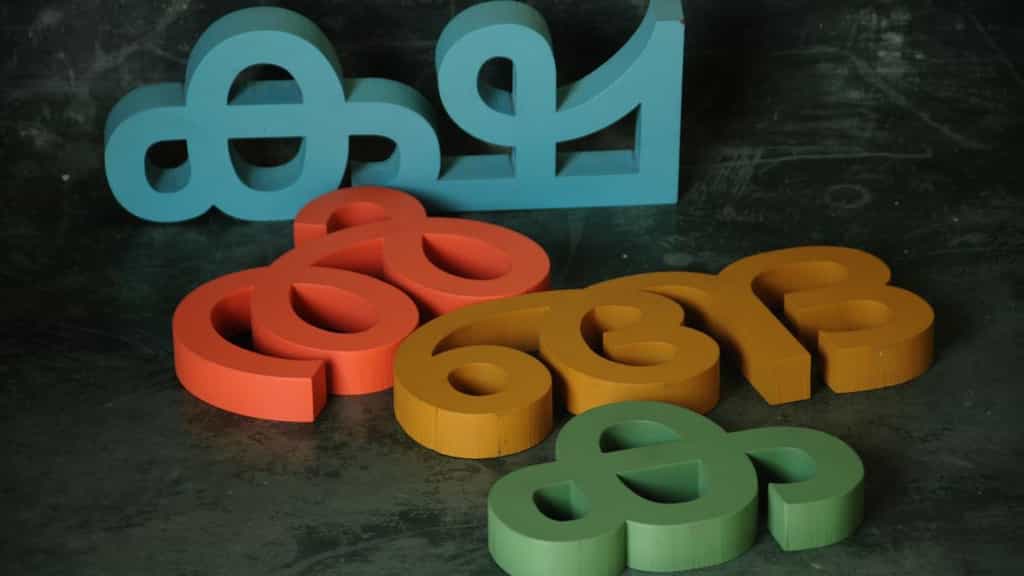
The story so far: On October 6, 2025, the Left Democratic Front (LDF) government tabled the Malayalam Language Bill, 2025 in the Kerala Legislative Assembly. Three days later, the Bill was passed following scrutiny by the Subject Committee. The Bill now awaits the assent of the Governor.
The Malayalam Language Bill, 2025 seeks to formally adopt Malayalam as the official language of Kerala, and mandate its use across government, education, judiciary, public communication, commerce, and the digital domain, subject to constitutional provisions. Presently, the State recognises both English and Malayalam as official languages.
Malayalam will become the compulsory first language in all government and aided schools in Kerala up to Class 10. Steps will also be adopted to translate all judgments and court proceedings in a phased manner. Besides, all Bills and Ordinances will be introduced in Malayalam. Important Central and State Acts that are published in English will also be translated into Malayalam.
The Information Technology department will be entrusted with developing open source software and accessories for the efficient use of Malayalam language in the field of IT.
The draft law also intends to rename the existing Personnel and Administrative Reforms (Official Language) department in the Government Secretariat as the Malayalam Language Development department. The government will also constitute a Malayalam Language Development Directorate under the department.
What prompted its introduction?
Over a decade ago, the Kerala government had introduced the Malayalam Language (Dissemination and Enrichment) Bill, 2015, which was also intended to adopt Malayalam as the official language and to be used for all official purposes. Despite being passed by the Kerala Legislative Assembly, the Bill was referred to the President who withheld assent.
The Bill was reserved for the President’s consideration since it contained provisions that contravened the Official Language Act, 1963. The Central government too raised objections regarding other provisions pertaining to the rights of linguistic minorities, Three Language Formula in accordance with the National Educational Curriculum, and provisions in the Right of Children to Free and Compulsory Education Act, 2009. The new Bill has been introduced after removing such defects.
What has triggered the opposition now?
The Karnataka government has opposed the Bill, describing it as “unconstitutional” and contrary to the interests of the Kannada-speaking linguistic minority in Kerala, particularly those residing in the border district of Kasaragod. It has raised concerns over a provision that proposes making Malayalam the compulsory first language in all schools across Kerala.
A delegation from the Karnataka Border Area Development Authority submitted a memorandum to Kerala Governor Rajendra Vishwanath Arlekar on behalf of the Karnataka government, seeking his intervention to reject the Bill. The petitioners contended that linguistic minority students in Kasaragod and other Kannada-speaking regions of Kerala currently study Kannada as their first language in schools.
The Karnataka government has also expressed apprehension that implementing the Bill in Kasaragod could have far-reaching consequences and adversely impact the Kannada language in general.
What is the Kerala government’s stance?
Law Minister P. Rajeeve, while tabling the Bill, had emphasised that the Bill seeks to protect the rights of linguistic minorities, including citizens who consider Tamil, Kannada, Tulu and Konkani as their mother tongues. It contains special provisions for the linguistic minorities, who will be permitted to use their languages for their correspondence with the State government Secretariat, Heads of Department and all local offices of the State government situated in those areas.
Besides, students, whose mother tongue is any language other than Malayalam, will be able to pursue their study in the languages of their choice and are available in the schools of the State in accordance with the National Education Curriculum. Students from other States and foreign countries whose mother tongue is not Malayalam will also be exempted from writing the examination in Malayalam language in Classes 9, 10 and the higher secondary level.
Editorial Context & Insight
Original analysis & verification
Methodology
This article includes original analysis and synthesis from our editorial team, cross-referenced with primary sources to ensure depth and accuracy.