


Key takeaways
- This May, 37 researchers from roughly two dozen top universities and tech companies published a paper on ArXiv, arguing that scientists…
- ” The paper proposes a replacement, called an “Agent-Native Research Artifact” (ARA), that presents work in a format AI agents can use…
- Some evidence shows AI-enabled research could boost individuals’ careers in a discipline but generate fewer new ideas and topics.
What happened
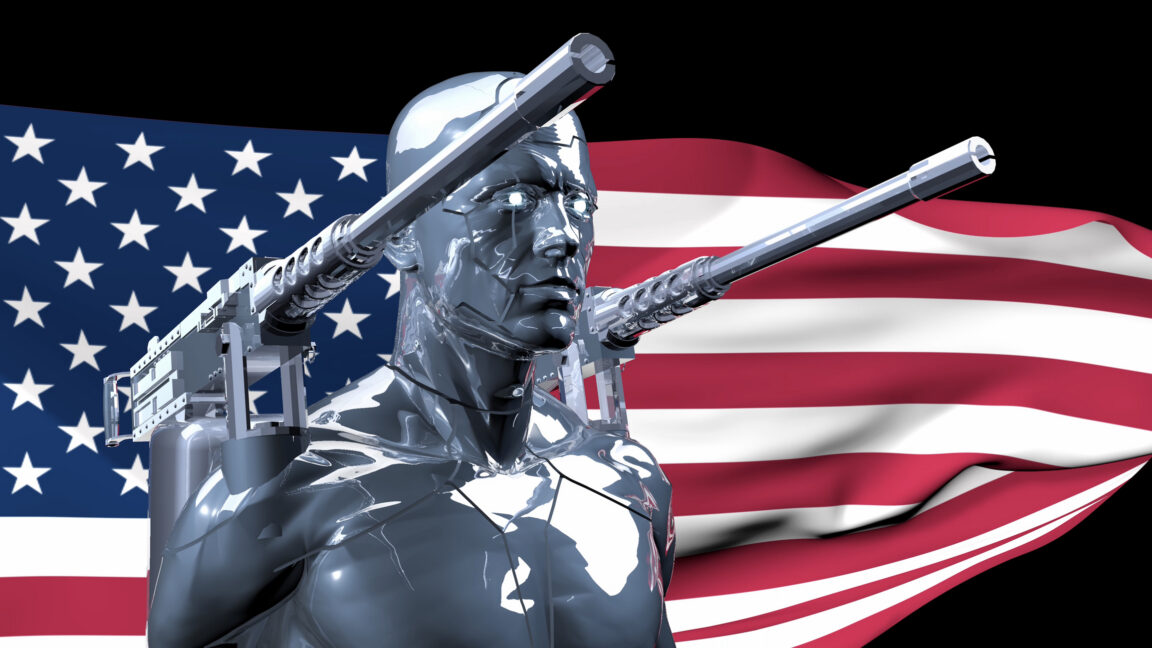
This May, 37 researchers from roughly two dozen top universities and tech companies published a paper on ArXiv, arguing that scientists should stop writing papers. Why? Because artificial intelligence needs a different format, and AI’s needs, they say, should be the priority. “AI agents are becoming first-class participants in research workflows, not tools that assist humans but autonomous contributors that read, reproduce, and extend scientific work.
After that, though, we get archives of work, we get peer review and conferences, and so on. Science starts progressing much faster. So that was a pivot point. I think now is also a pivot point. Because now we have AI, we can unlock a lot of new opportunities. We’re inventing a new format to document research in a more efficient way, from first principles.
Some nonprofit organizations are doing similar things, and there we could help each other. You and your colleagues say the traditional scientific paper has two fundamental flaws from AI’s point of view. Can you explain what those are? ” Once we write everything into a paper, 80 percent of the information about the work is lost. We only write down the last 20 percent.
All the process, a lot of important decision making, the failures, the attempts that didn’t work out, they are all gone. In my work, I might spend a lot of time on fine tuning a small component, maybe just a parameter or several lines of code to make the system perform better. Yet none of that is shown in my final paper.
Someone can read the paper, think the work is great, but they won’t learn what is actually the trick that makes it perform better on a certain workload. So many side branches get left out in creating the story of how the work was done. Then, [even the information that does survive in the paper] is incomplete. ” The paper itself is a lossy compression of the research process.
Why it matters
” The paper proposes a replacement, called an “Agent-Native Research Artifact” (ARA), that presents work in a format AI agents can use efficiently. ) Jiachen Liu co-founded the Agent Native Research Lab in May. Jiachen Liu The growth of AI tools in the research process is not without its critics, and scientists’ opinions about that shift are split.
Some evidence shows AI-enabled research could boost individuals’ careers in a discipline but generate fewer new ideas and topics. D. in computer science from the University of Michigan, which she was awarded in 2025. This May, she became a co-founder of the Agent Native Research Lab, an AI-for-science startup in Palo Alto, Calif. She spoke with IEEE Spectrum about the paper and the future of AI in scientific research.
How did you come to believe AI has become a collaborator for scientists rather than a mere tool? Jiachen Liu: At the end of 2024 when the [Cursor] coding agent came out, I realized it had a great potential to replace me as a researcher.
Yet I still needed to do a lot of harness on top of the AI [creating the infrastructure that guides the model and connects it to world]. It still needed a lot of manual work. I even wrote an article then to emphasize how the human was so important in the loop. But AI has advanced since then.
Already in 2026 there’s an almost complete undergrad level of knowledge inside the large language models. -level or professor-level knowledge will be inside those models. That’s the point where humans cannot provide more value. AIs will have to evolve further by themselves. So we’ll need an infrastructure that allows AI to safely and comfortably evolve. The ARA protocol is a first step to realize this.
What kind of response have you gotten to the paper? Liu: I got diverse feedback, all of it positive. If they’re not positive, they probably don’t bother reaching out to you, right? One type was from industry. They see this could make their research and knowledge systems more AI native. That could basically enable collaborations among the whole enterprise. Another kind of feedback was from the academic researcher side.
Everyone there sees that sharing research results has been a pain point for hundreds years, because any scientific breakthrough is a joint effort. It doesn’t come from individual brilliant scientists. It’s from a community effort, different people pushing in different directions. The scientific paper was invented 350 years ago. Before that, scientists hid their research so that others would not scoop their ideas.
What to watch
So I cannot reproduce the work in the paper because either the language is too ambiguous or there are missing details of the implementation or experiments. Why can’t we just train AI to adapt to humans—for instance, to interact with a researcher to get the information it needs?
Liu: Actually, a component of our ARA system is a “Live Research Manager,” which basically is a faithful AI observer of your entire research progress. So you, the researcher, don’t need to do anything about documenting research knowledge.