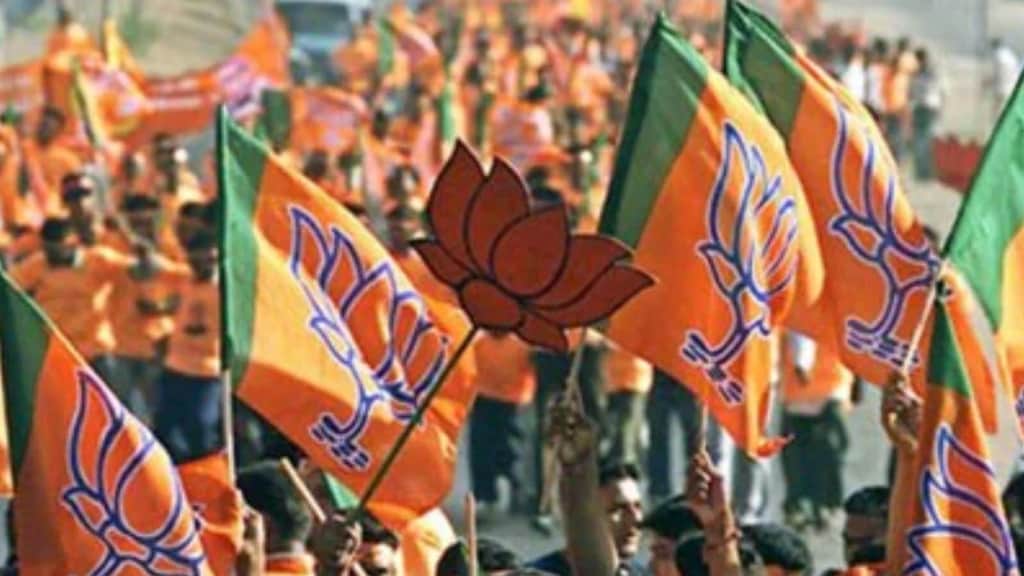
BJP insiders said the outreach would be announced in the coming week and would be “structured to seek maximum impact down to the polling-booth level, especially in rural India” months before Assembly polls in West Bengal, Assam, Tamil Nadu and Kerala. (File Photo)
The BJP is set to launch a nationwide outreach aimed at “dispelling confusion” around the Viksit Bharat-Guarantee for Rozgar and Ajeevika Mission (Gramin) Act, 2025, next week. This comes a day after the Congress announced a protest programme to save the MGNREGA, the rural job guarantee programme that the G RAM G Act replaced. It will start on January 10 and is scheduled to conclude on February 25.
“The outreach will focus on a point-by-point rebuttal of allegations of diluting the Act claimed by the Opposition, especially the Congress,” a BJP leader said, adding that the party had decided to embark on this outreach “as soon as it was tabled” in the Lok Sabha last month.
“It will be a door-to-door campaign, including in the countryside, where the major chunk of the scheme’s beneficiaries reside. Starting with the announcement of the campaign at the national level next week, each of the BJP’s units across the country will take it forward in their respective state,” said the leader.
Union Agriculture and Rural Development Minister Shivraj Singh Chouhan on Sunday dubbed the proposed campaign “Bhrashtachar Bachao Sangram”, accusing the Congress of being against “gram, kaam, Ram (village, work and Lord Ram)” and alleged that “corruption is part of its DNA” that led graft to become synonymous with MNREGA and requiring amends. Chouhan has accused the Congress of lacking both the intent and the policy to strengthen the scheme during its tenure. The Centre has maintained that the rural job guarantee framework has been made “stronger” by the new law, which increases the number of employment days from 100 to 125, and has provisions such as unemployment allowance if work is not provided within the stipulated time and compensation if there is a delay in wage payment.
For the BJP, it is crucial to counter the Congress that is looking to make a swift return to taking on the government on issues such as livelihood, unemployment, rural economy, and agrarian distress after the “vote chori” and anti-SIR planks failed to gain any traction in the Bihar Assembly elections. The BJP’s attempt frame the new law as a bid to end endemic corruption in a Congress-era law links it to the narrative that had brought it to power in 2014 and something the Opposition party has not yet completely shaken off. With this counter-mobilisation, the BJP is hoping to prevent the Opposition from gaining any momentum ahead of the next round of Assembly polls.
Accusing the BJP-led NDA of seeking to “end MNREGA”, Leader of Opposition Rahul Gandhi last week alleged that the purpose of the new law was erasing the right to employment for the poor, stealing economic and political power from the states, and handing over “money to billionaire friends”. The MGNREGA was the centrepiece of the Congress-led UPA government’s achievements and was among its main promises in the 2004 Lok Sabha polls that brought it back to power at the Centre after eight years.
Saying the MGNREGA was a “lifeline for India’s rural economy”, Congress general secretary (organisation) K C Venugopal on Saturday announced the Congress’s nationwide campaign to demand its rollback. The MNREGA, Venugopal said, “gave the poor and marginalised a right to livelihood; with the VB-G RAM G law, the Modi government converted that inalienable right into a government handout”.
Not just the Congress, other Opposition parties have also criticised the G RAM G Act, with the Trinamool Congress (TMC) coming out in opposition and the West Bengal government renaming its rural jobs scheme after Mahatma Gandhi.
Editorial Context & Insight
Original analysis & verification
Methodology
This article includes original analysis and synthesis from our editorial team, cross-referenced with primary sources to ensure depth and accuracy.
Primary Source
The Indian Express