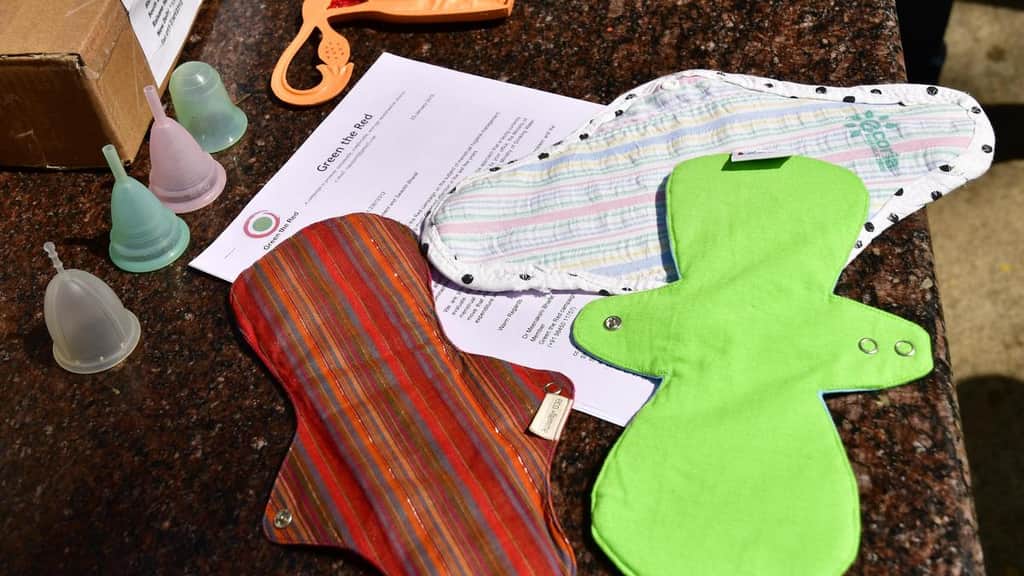
As part of efforts to promote environmentally sustainable and cost-effective menstrual hygiene practices, the Karnataka government has decided to expand the distribution of menstrual cups across the State from the next academic year. This follows a pilot programme implemented in two districts.
The State government last week granted revised administrative approval for the procurement and distribution of sanitary napkins and menstrual cups to the targeted 19.64 lakh adolescent girls (from class 6 to II PU) under the Shuchi programme for 2025–26.
As per the government order, menstrual cups will be introduced only for students from classes 9 to 12, while sanitary napkins will continue to be provided to students from classes 6 to 8, ensuring uninterrupted access during the transition period. Even among older students, the use of menstrual cups will be entirely voluntary, with beneficiaries free to continue opting for sanitary napkins.
The procurement will be carried out through the Karnataka State Medical Supplies Corporation Limited (KSMSCL) in accordance with the Karnataka Transparency in Public Procurements (KTPP) Act and rules. For 2025–26, the government has approved the purchase of 1.79 crore units of sanitary napkins (one unit comprising 10 pads) at an estimated unit cost of ₹30.47 and 10.38 lakh menstrual cups at an estimated unit cost of ₹65.34. The total approved expenditure is ₹61.35 crore.
Menstrual cups were earlier introduced on a pilot basis in Chamarajanagar and Dakshina Kannada districts, under which around 15,000 cups were distributed. The pilot was aimed at assessing acceptability, comfort, usage practices and awareness levels among adolescent girls. Officials said feedback from this exercise informed the decision to expand the programme cautiously.
Under the revised distribution model for classes 9 and 10 and first- and second-year pre-university students, beneficiaries will receive six units of sanitary napkins and one menstrual cup for six months, instead of 12 units of napkins. The government estimates this will lead to savings of about ₹17.26 crore on sanitary napkins, while offering an additional hygiene option.
Each beneficiary will receive one menstrual cup, which is reusable and can be used safely for up to a year with proper hygiene. Orientation sessions will be conducted to provide guidance on correct usage, cleaning and storage, a senior official told The Hindu.
The official stressed that menstrual cups are not a replacement for sanitary napkins but an additional option. The initiative is intended to reduce long-term costs and address environmental concerns arising from disposable sanitary waste, while also improving menstrual hygiene awareness and reproductive health literacy.
Sanitary napkins will continue to be distributed at the rate of one unit per month per beneficiary, covering over 19.64 lakh students from classes 6 to 12.
Owing to supply shortages from August 2025 until the completion of the KSMSCL tender process, the government had earlier approved district-level local procurement of sanitary napkins for a three-month period at a cost of ₹10 crore, in compliance with KTPP norms.
Officials said feedback from the expanded rollout would be reviewed before any further scaling up, noting that no State has so far fully transitioned to menstrual cups in school programmes. Any future policy decision, they said, would be guided by acceptance, comfort, hygiene outcomes and feasibility, rather than compulsion.
Editorial Context & Insight
Original analysis & verification
Methodology
This article includes original analysis and synthesis from our editorial team, cross-referenced with primary sources to ensure depth and accuracy.