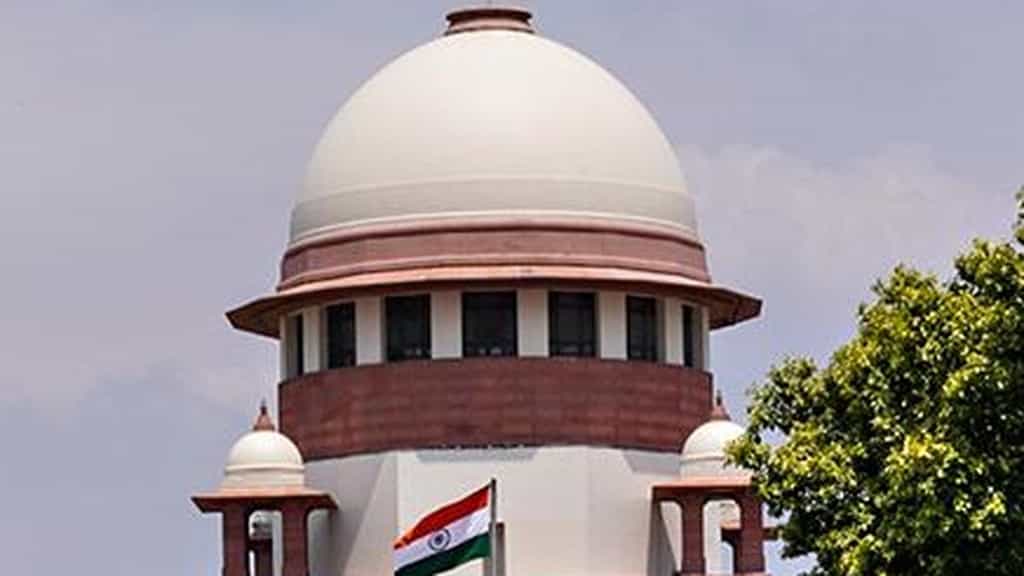
The Supreme Court on Tuesday (January 13, 2026), in a judgment, said that equality in society has to start in school, where the child of a multi-millionaire or a Supreme Court Judge has to sit shoulder-to-shoulder with a child of an autorickshaw driver or a street vendor.
A Bench headed by Justice P.S. Narasimha elaborated that the obligation of the government under the Right to Education Act (RTE) to ensure that neighbourhood schools admit children belonging to weaker and disadvantaged sections has an “extraordinary capacity to transform the social structure of our society”.
“The statutory design [of the RTE Act] is normatively ambitious. It envisages elementary education for all children, across the spectrum of class, caste, gender and economic position, in a shared institutional space. It makes it possible, normatively and structurally, for the child of a multi-millionaire or even of a Judge of the Supreme Court of India to sit in the same classroom and at the same bench as the child of an autorickshaw driver or a street vendor,” Justice Narasimha, who authored the judgment, wrote.
The court’s judgment rose from the bitter experience of the petitioner, Dinesh Biwaji Ashtikar, who was quietly snubbed off when he had approached a neighbourhood school to admit his children for free and compulsory elementary education in 2016.
“It is his case that, even though information through RTI indicated that seats were available, the neighbourhood school did not respond,” Justice Narasimha narrated.
The Judge observed that educating “young India” and achieving ‘equality of status’ demanded an earnest implementation of the constitutional right under Article 21A to free and compulsory education, followed by the statutory mandate of the 2009 Act.
“Ensuring admission of such students must be a national mission and an obligation of the appropriate government and the local authority. Equally, courts, be it constitutional or civil, must walk that extra mile to provide easy access and efficient relief to parents who complain of denial of the right,” the Supreme Court declared.
Editorial Context & Insight
Original analysis and synthesis with multi-source verification
Methodology
This article includes original analysis and synthesis from our editorial team, cross-referenced with multiple primary sources to ensure depth, accuracy, and balanced perspective. All claims are fact-checked and verified before publication.
Editorial Team
Senior Editor
Dr. Elena Rodriguez
Specializes in India coverage
Quality Assurance
Associate Editor
Fact-checking and editorial standards compliance