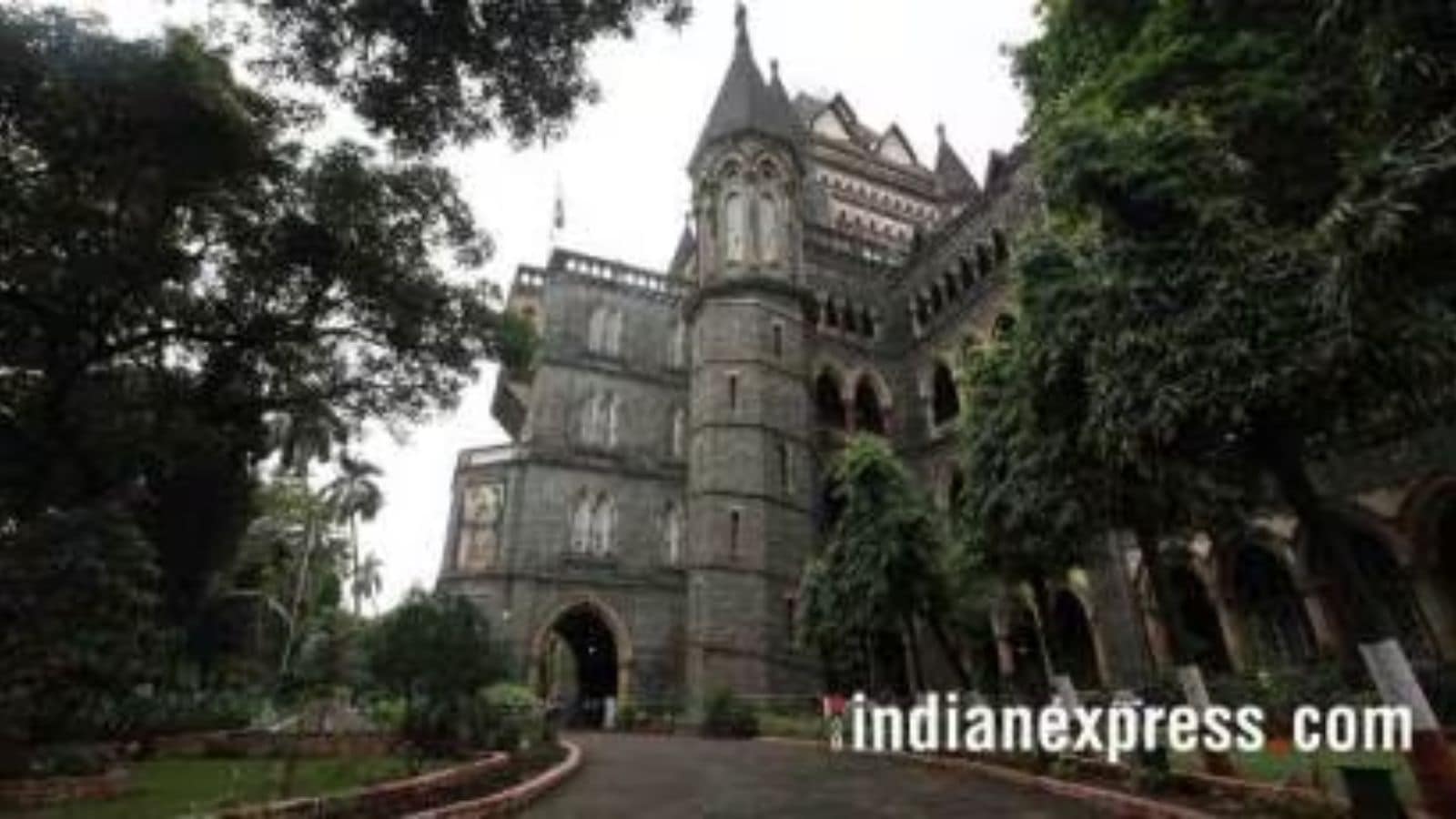
The Bombay High Court on Wednesday slammed BMC for “turning a blind eye” towards increasing air pollution levels in the city and said the situation had gone beyond control of the civic body as sanctions to 125 big projects of Rs 1,000 crore were granted in a city like Mumbai. Therefore, it was not able to manage compliances of pollution norms.
The court directed BMC to conduct regular periodic monitoring of the construction and big project working sites and ensure “fear in the mind of project proponents” to comply with guidelines to curb pollution.
A bench of Chief Justice Shree Chandrashekhar and Justice Gautam A Ankhad was hearing a suo motu Public Interest Litigation (PIL), and other petitions initiated after taking note of various news reports, including The Indian Express’s ‘Death by Breath’ series, which highlighted an “alarming scenario” of air pollution beginning in November 2023.
During the pre-lunch session on Wednesday, Chief Justice Chandrashekhar orally remarked that the BMC was “not doing anything” and was not taking even “minimal” steps to check air pollution levels as it “does not have inclination (to redress the issue). ”
CJ Chandrashekhar added that the civic body had “wide powers to initiate action against the violations but it did not have any mechanism to implement the 28-point guidelines issued by BMC.”
Senior advocate Janak Dwarkadas for NGO Vanshakti said the BMC should stop giving new permissions for constructions until there is a compliance of earlier directives. CJ Chandrashekhar warned the BMC that court would pass orders restraining the BMC from granting any further permission for construction if air pollution situation continued in the city. “Do not take any decision for new decisions. Why multiply problems? If you (BMC) do not ensure implementation, we will do it,” the judge said.
When senior advocate S U Kamdar for BMC told the bench that AQI on Wednesday in the city was at 88, which was considered satisfactory and moderate and situation last year was worse, the bench said that simply saying pollution has decreased would not mean the BMC was working.
The HC also questioned why the flying squads visited only 39 sites since 2 pm on Tuesday, December 23 while there were 94 such ward-level squads and “preventive” measures were required. The court said, “their movement has to be monitored” to check “whether they are actually working or not.”
“You (BMC) have not applied your mind as to how to strengthen your system. You’ve just turned a blind eye. There is no compliance at all. You should have mechanism that minimises possibility of violations or breach,” the bench remarked. It then asked BMC commissioner Bhushan Gagrani to remain present before it during the post-lunch session.
Gagrani then submitted action plan for next over 15 days including at least two-site visits in their area by each ward-level squad and said the civic officers would also ensure randomised visits. The court said the squads should be provided with button cameras and GPS devices so that their work can be tracked.
On court’s query, Gagrani submitted that there were 125 projects of over Rs 1,000 crore sanctioned in the city.
“How can 125 projects worth over Rs 1,000 crore be sanctioned in such a small city?
That is a lot. This has beyond your control and you are not able to check (manage pollution levels) now,” the judges told BMC.
Senior advocate Darius Khambata, appointed as amicus curiae, said the projects of over Rs 1,000 crores “can definitely afford the cost for pollution-control measures.”
“You should wait for two weeks for any projects if you are not able to manage. Regular periodic monitoring should happen. There should be a fear in the mind of the project proponent. We see there are big projects coming up and we see gross violations,”” CJ Chandrashekhar said.
Gagrani further submitted that the BMC had issued 3,497 stop-work notices in a year and work at over 2,100 sites was stopped and 1,518 notices were revoked after ensuring compliance. He said that out of 36 sites inspected by HC-appointed committee, 25 sites are within city and stop work notices were issued to eight sites.
The bench asked the authorities to prominently publicise the guidelines and CJ Chandrashekhar remarked, “Give them some time to comply with it and then start issuing stop work notices. Do not issue them immediately. They (BMC) are doing a lot and he (Gagrani) himself has committed to it.” The HC will hear the matter next on January 20.