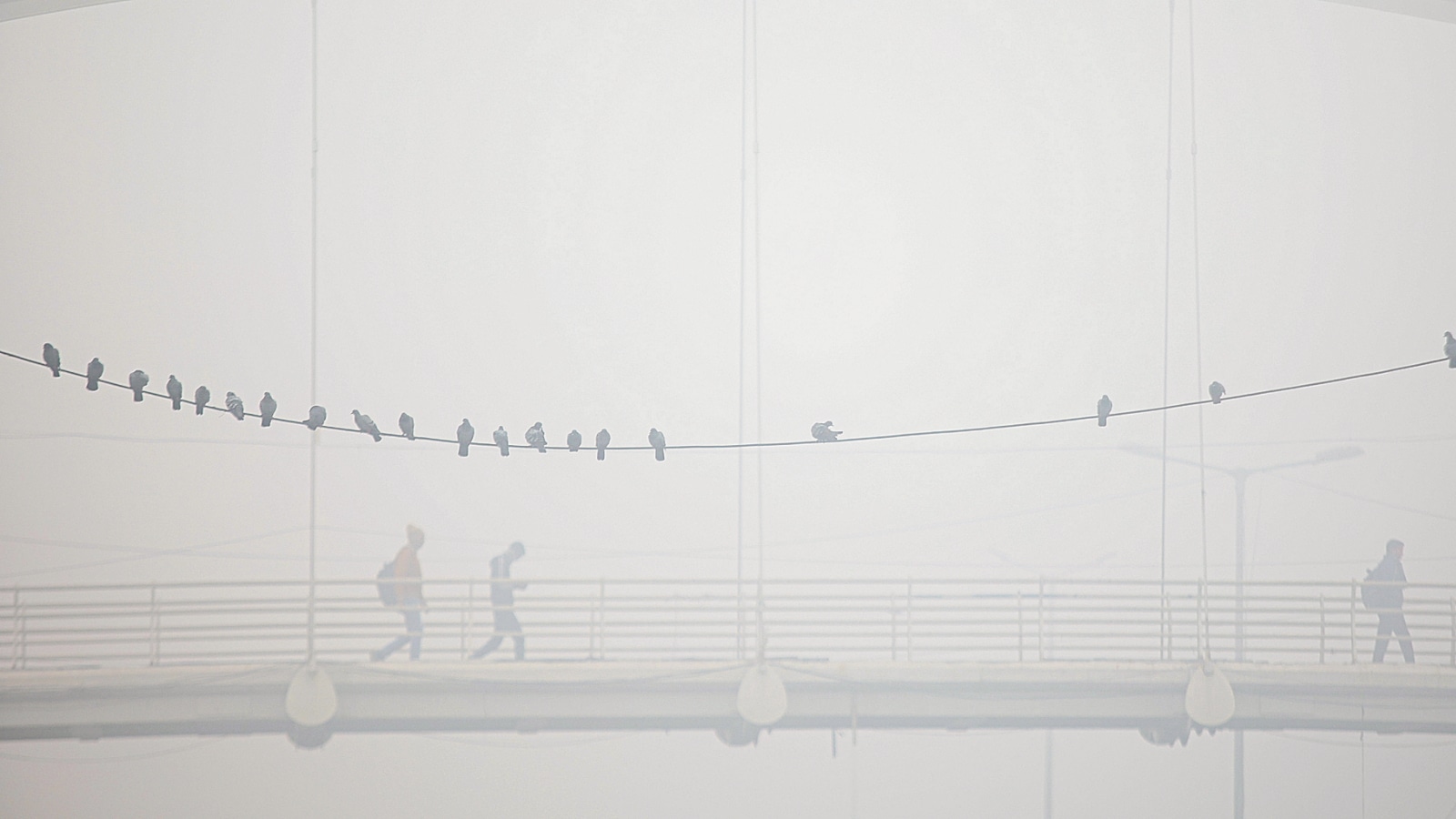
Severe winter conditions have tightened their grip across Punjab and Haryana, with the India Meteorological Department (IMD) reporting the prevalence of cold wave and cold day conditions at several places over the past 24 hours. Although weather conditions remained dry in both states, a combination of low temperatures and persistent fog has heightened cold stress and raised concerns related to health and transport. An orange alert has been issued for very dense fog in majority parts of both the states till December 26 and at isolated places on December 27.
Haryana is under cold stress despite near-normal day temperatures. Weather remained dry across the state, but cold day conditions were observed at isolated places. Average maximum temperatures showed marginal day-to-day variations and largely remained near normal, though localised cold stress persisted.
The highest maximum temperature in Haryana was recorded at 25.1°C in Faridabad, while Chandigarh reported 23.5°C on another observation day. On the colder side, Narnaul recorded the lowest minimum temperature of 5.4°C, indicating favorable conditions for cold wave impacts during night and early morning hours.
“IMD’s impact-based forecast suggests that southern and western districts, including Mahendragarh, Rewari, Sirsa, Fatehabad, Hisar, Bhiwani, and Charkhi Dadri, are likely to experience cold wave conditions over the next two to three days,” Surinder Paul, director, IMD, Chandigarh, said.
According to the IMD norms, a cold wave over plains is declared when the minimum temperature departs from normal by – 4.5°C to – 6.4°C, while a severe cold wave occurs when the departure is – 6.5°C or more. Alternatively, based on actual temperatures, cold wave conditions are met when the minimum temperature falls to 4.0°C or below, and severe cold wave conditions when it drops to 2.0°C or below.
A cold day is defined by the IMD when the maximum temperature departs from normal by – 4.5°C to – 6.4°C, while a severe cold day is declared if the departure is – 6.5°C or lower. These conditions indicate unusually cold daytime temperatures, compounding the impact of chilly nights.
Punjab also witnessed dry weather, with cold winter conditions continuing, especially during night and early morning hours. Despite a slight rise in average maximum temperatures, the state’s temperatures remained above normal by 2 to 2.5°C on certain days, reflecting a contrast between relatively warmer afternoons and colder nights.
The highest maximum temperature in Punjab was recorded at 26.1°C in Bathinda, while Sri Anandpur Sahib reported 25.4°C on another observation day. The lowest minimum temperature dipped to 5.3°C at Gurdaspur, supporting the likelihood of cold wave conditions, particularly in rural and low-lying areas.
Health experts caution that fluctuating temperatures often increase vulnerability to respiratory illnesses, flu, and cold-related stress, particularly among children, the elderly, and those with pre-existing conditions.
Alongside cold wave and cold day conditions, dense to very dense fog has been observed across both states. In Punjab, dense to very dense fog was reported at many places, while Haryana experienced dense fog at isolated to few places.
IMD forecasts indicate that fog conditions are likely to intensify and persist over the next 72 hours, especially during late night and morning hours. Visibility is expected to drop sharply, particularly in districts such as Amritsar, Ludhiana, Jalandhar, Patiala, Bathinda in Punjab and Ambala, Karnal, Kurukshetra, Panipat, Sonipat, Rohtak, Gurugram, and Faridabad in Haryana.
Dense fog, with visibility between 50 and 200 metres, and very dense fog, with visibility below 50 metres, is expected to disrupt road, rail, and air transport, increasing the risk of traffic accidents and delays.
The IMD has advised residents to limit outdoor exposure, wear adequate winter clothing, and consume warm fluids. Motorists are urged to drive cautiously, use fog lights, and stay updated on travel advisories. Authorities have also been asked to remain prepared, particularly in the power, transport, and health sectors, as winter conditions intensify across the region.