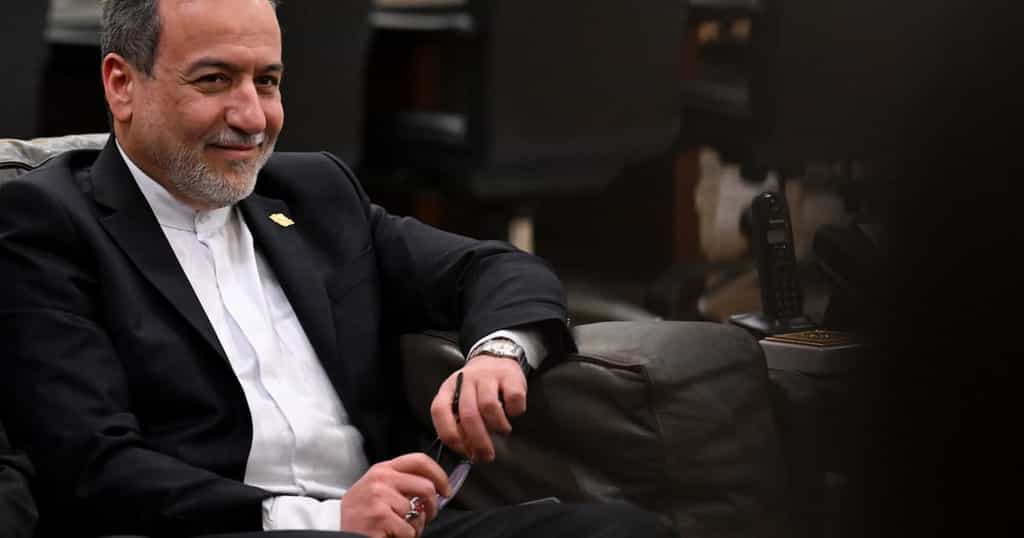
European diplomats were summoned to a closed-door meeting in Tehran with Iranian Foreign Minister Abbas Araghchi at which they “forcefully” objected to Iran’s crackdown on anti-regime protests, according to European officials.
An EU diplomat, granted anonymity to speak freely, said all European ambassadors still active in Tehran had been summoned to the highly unusual meeting with Araghchi. The U.K. was also invited.
The meeting started with Araghchi presenting the Islamic regime’s version of the uprising, describing protesters as rabble-rousers and anti-regime forces supported from abroad, the diplomat said.
However, the European and British envoys used their speaking time to push back strongly against the minister’s account, voicing outrage over what Britain’s Foreign Secretary Yvette Cooper called the “brutal repression” of protests.
“The ambassadors forcefully expressed their concerns” during the Monday meeting, a spokesperson for France’s foreign ministry said in a statement.
The closed-door meeting in Tehran was part of a piecemeal but escalating European response to the crackdown on protests, in which at least 2,571 people have been killed, according to the U.S.-based HRANA rights group.
Speaking to journalists in India, German Chancellor Friedrich Merz said the Islamic regime of Ayatollah Ali Khamenei was “finished,” adding that “we are now witnessing the final days and weeks of this regime.” Several EU countries, including Spain, France, Belgium, Czechia and the Netherlands, have summoned Iranian ambassadors to condemn the violence.
Germany and the Netherlands are now pushing to get the Islamic Revolutionary Guard Corps (IRGC) listed as a terror organization in the EU, according to statements from the German and Dutch foreign ministers.
That comes after EU foreign policy chief Kaja Kallas said she will soon propose fresh sanctions against the Islamic Republic. The proposal for new sanctions will be put forward at a gathering of European foreign ministers in Brussels on Jan. 29, an EU official said.
Dutch Foreign Minister David van Weel said Tuesday he had summoned Iran’s ambassador to the Netherlands to “formally protest the excessive violence against peaceful protesters, large-scale arbitrary arrests and internet shutdowns.”
The EU’s cautious approach contrasts with that of Trump, who is reportedly reviewing options to act against Tehran, including military strikes.
Trump’s moves have been welcomed by Reza Pahlavi, the exiled son of Iran’s former shah, who has emerged as a possible successor to Khamenei.
“Mr President,” Pahlavi posted Sunday on X. “Your words of solidarity have given Iranians the strength to fight for freedom. Help them liberate themselves and Make Iran Great Again!”
In several conversations with POLITICO over the past year, Pahlavi said Iran’s military would either have to cooperate with protesters or stand aside if the current wave of protests is to succeed.
Tehran has a history of brutal crackdowns on protests, with the last wave ending in a series of public hangings that brought formal protests from EU governments.
Editorial Context & Insight
Original analysis and synthesis with multi-source verification
Methodology
This article includes original analysis and synthesis from our editorial team, cross-referenced with multiple primary sources to ensure depth, accuracy, and balanced perspective. All claims are fact-checked and verified before publication.
Primary Source
Verified Source
POLITICO
Editorial Team
Senior Editor
Sofia Andersson
Specializes in World coverage
Quality Assurance
Fact-Check Editor
Fact-checking and editorial standards compliance