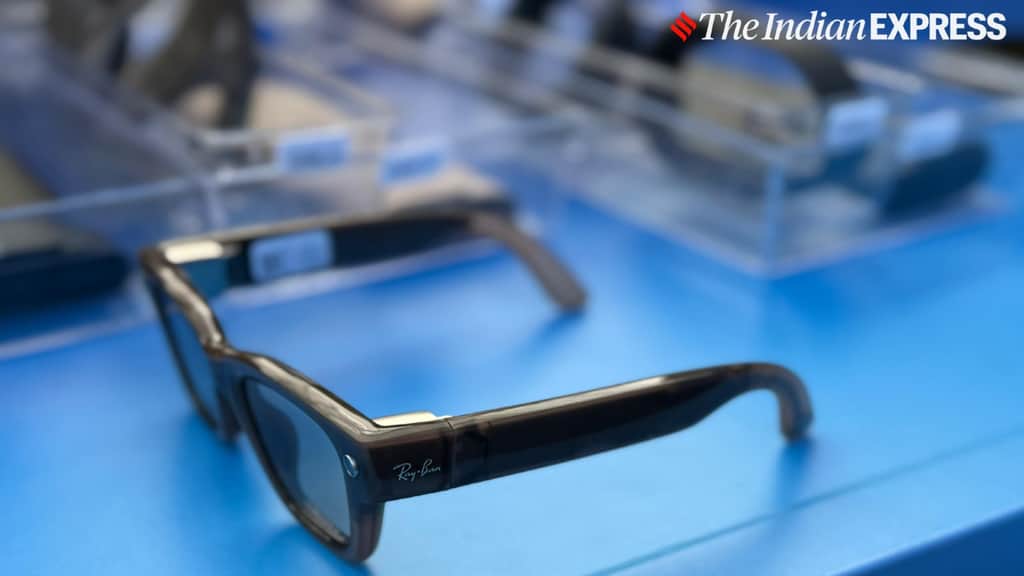
Global customers eager to get their hands on Meta’s latest wearable tech – Ray-Ban Display glasses and Neural Band – may have to wait longer.
The social media giant on Tuesday, January 6, said that it is delaying the launch of the AI-powered smart glasses in international markets due to inventory constraints and “unprecedented” demand in the United States.
The company said that it is hitting pause on initial plans to roll out the smart glasses in countries such as the United Kingdom, France, Italy, and Canada this year. Citing limited inventory, Meta said that it is prioritising orders from US customers instead.
First launched in September 2025, the $799 Meta Ray-Ban Display glasses is the company’s first consumer-ready AI product that lets users watch videos and respond to messages through a wristband powered by neural technology.
The glasses have been developed in partnership with Ray-Ban maker EssilorLuxottica as part of a deal that was first made in 2019 and was renewed in 2024. As a result of the partnership with Meta, EssilorLuxottica reported that its revenue grew in the third quarter in October 2025.
“Meta Ray-Ban Display is a first-of-its-kind product with extremely limited inventory. Since launching last fall, we’ve seen an overwhelming amount of interest, and as a result, product waitlists now extend well into 2026,” Meta said in a blog post on Tuesday.
While Meta’s glasses have gained traction in terms of popularity and demand, it is not the only tech giant betting that AI-powered smart glasses could be the next big platform shift after smartphones. Google demoed its first-ever Android XR-powered smart glasses at last year’s I/O developer conference. It also announced a $150 million partnership with Warby Parker, a US-based manufacturer and retailer of eyewear products. OpenAI is also reportedly working with Apple on developing AI-powered smart glasses.
At CES 2026, Meta announced several new capabilities coming to its Ray-Ban Display glasses, including a new feature that lets users deliver prepared remarks in personal and professional settings with a discreet teleprompter embedded in the glasses display.
Users have to simply copy and paste their notes from Google Docs or any other notes app to use the teleprompter feature. The Meta Neural Band also lets users swipe through customisable text-based cards at their own speed. The teleprompter feature will be rolled out in a phased manner, as per the company.
Teleprompter on Meta Ray-Ban Display. (Image: Meta)
Another new feature coming to Ray-Ban Display is EMG Handwriting, which lets users who are wearing the Neural Band type messages on WhatsApp and Messenger by writing with their finger on any surface. For now, the feature will only be limited to Early Access customers in the US with support for English only.
Meta further said it is rolling out its pedestrian navigation feature in four new cities in the US, bringing the total to 32 cities. Additionally, the company is working with smartwatch brand Garmin on a new automotive OEM proof of concept “that connects Meta Neural Band with Garmin’s Unified Cabin suite of in-vehicle technology solutions for infotainment.”
“In the demo, passengers can play games and navigate the Unified Cabin UI, scrolling to select an app and pinching to launch it. This is made possible by the wristband’s surface EMG technology, which senses a variety of gestures made using the thumb, index, and middle fingers,” it said.
Garmin Unified Cabin: A Proof of Concept for Next-Generation EMG Automotive Input. (Image: Meta)
Meta also said it is working with the University of Utah to assess how its Neural Band can be improved for people with different levels of hand mobility.
Editorial Context & Insight
Original analysis & verification
Methodology
This article includes original analysis and synthesis from our editorial team, cross-referenced with primary sources to ensure depth and accuracy.
Primary Source
The Indian Express