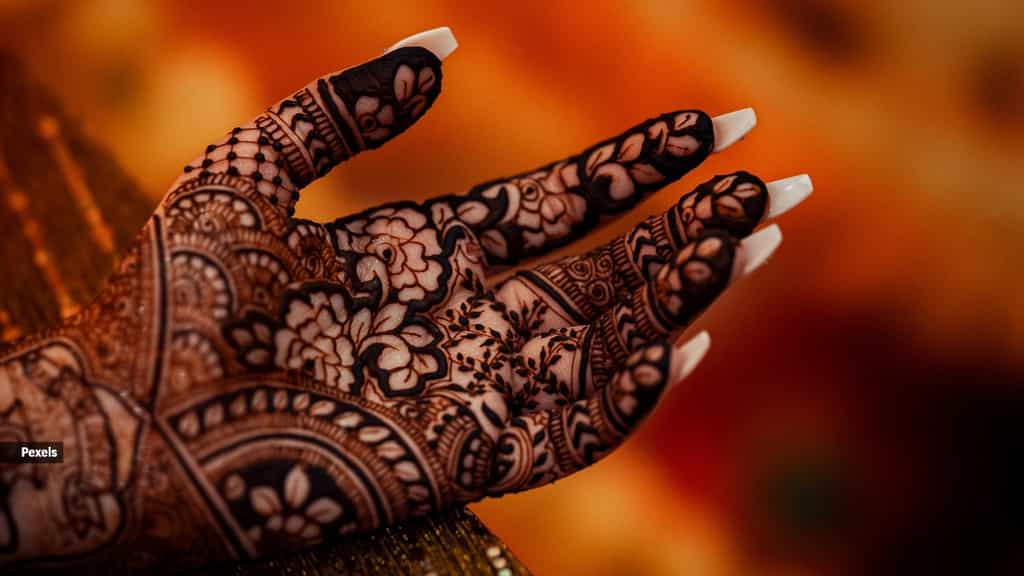
Mehndi is an ancient ceremonial art form with a rich history, used across various cultures (Image: Pexels)
Many of us turn to mehendi or henna during festivities, for that added touch of culture. It isn’t just another fashion check-list — for some, it stirs nostalgia, while others celebrate its spiritual and traditional connections. While the activity is pretty harmless, a Reddit user had an unexpected experience. ‘The henna on my hands feels like it’s burning,’ wrote the person on the online forum, seeking medical advice. We decided to find out the answer and reached out to Dr Poonam Saini, Consultant Dermatologist at Kailash Hospital, Dehradun, to understand how and why this can happen.
Dr Sahni tells indianexpress.com that a burning sensation after application should not be ignored. While mild itching can occur in some people, intense reactions signal a problem. “People with sensitive skin may experience mild itching from natural henna, though it’s very mild and has a short life. A burning or stinging redness with blistering after applying pure henna is not a normal reaction.”
Can mehendi really cause burning sensations? (Image: Unsplash)
Dr Saini explained that such symptoms usually point to an allergy rather than sensitivity. “It often indicates an allergic reaction, which is called allergic contact dermatitis, caused by harmful chemicals and additives present in the henna,” she said. These additives are commonly used to darken the colour of henna and can severely irritate the skin.
Highlighting the risks associated with black henna, Dr Saini revealed, “One of the most important chemicals is PPD, which is paraphenylene diamine, a powerful coal tar-based dye. It’s an important allergen that can cause severe allergic reactions.” She added that black henna may also contain “kerosene, gasoline, benzene, and heavy metals like lead, cadmium, nickel, copper, and aluminium.”
If the skin begins to burn after application, Dr Saini advised immediate action. “If you experience burning or irritation after application of henna, wash it off immediately with cool water and mild soap,” the dermatologist cautions. She further recommends, “Apply a gentle emollient or moisturiser to protect the skin. Apply cool compresses and consult a dermatologist immediately.”
But how can one differentiate between natural and unsafe henna? “Natural henna paste is greenish brown or muddy green while chemical henna is jet black in colour,” the dermatologist explains. She added, “Pure henna stains the skin orange initially and darkens slowly to a deep reddish brown colour over the period of 24 to 48 hours. While the black henna leaves an immediate jet black stain.” One should also check the smell and labels for further confirmation. “Natural henna has an earthy grassy smell while chemical henna has a sharp bleach-like smell,” she further points out while warning people to “avoid any product that contains PPD or other harmful chemicals.”
DISCLAIMER: This article is based on information from the public domain and/or the experts we spoke to. Always consult your health practitioner before starting any routine.
Editorial Context & Insight
Original analysis & verification
Methodology
This article includes original analysis and synthesis from our editorial team, cross-referenced with primary sources to ensure depth and accuracy.
Primary Source
The Indian Express