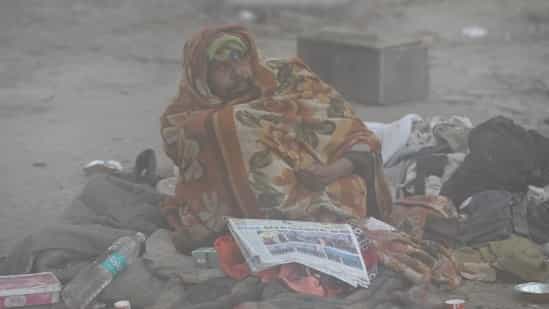
Heaters, mufflers and caps are out amid biting cold in Delhi-NCR with minimum temperature and the mercury in daytime as well dropping to levels that are below normal, which the Indian Meteorological Department (IMD) has attributed to upper-level fog combined with icy-cold northwesterly winds.
Delhi's Safdarjung weather station, representative of city's weather, logged a minimum temperature of 5.8 degrees Celsius - 1.1 degrees Celsius below normal - possibly the coldest of the season, on Thursday, according to data on IMD website.
The previous known lowest minimum temperature of the season - 6.1 degrees Celsius - logged on December 20.
Delhi on Wednesday recorded ‘cold day’ conditions for the second straight day as upper-level fog and icy-cold northwesterly winds kept the maximum temperature at 16.7 degrees Celsius on Wednesday—marginally higher than the 15.7 degrees Celsius recorded the day before but still two degrees below normal.
IMD said that similar to Tuesday, two stations in the city, at Palam and Lodhi Road, recorded “cold day” conditions. It predicted a rise in the maximum temperature by a degree on Thursday, albeit with no significant overall change, continuing the yellow alert in place that was issued the day before, HT reported earlier.
Delhi was expected to record a maximum temperature of 16.7 degrees Celsius, a departure of 2.3 degrees Celsius from normal.
The IMD classifies it as a “cold day” when the minimum temperature is below 10 degrees Celsius and the departure of maximum temperature from normal is 4.5 degrees Celsius or more. It is a “severe cold day” when the maximum is 6.5 degrees Celsius or more below normal.
Cold is likely to intensify in north India until January 15, according to experts cited in an earlier HT report.
Navdeep Dahiya, an amateur weatherman told HT that with no obstruction in the form of a western disturbance expected till January 15, similar conditions should prevail, with single-digit maximums expected in Punjab, Haryana, northwest Rajasthan and parts of Uttar Pradesh.
Editorial Context & Insight
Original analysis & verification
Methodology
This article includes original analysis and synthesis from our editorial team, cross-referenced with primary sources to ensure depth and accuracy.