

Key takeaways
- It’s a glorious day in Kirkland, Washington, an affluent Seattle suburb on the eastern shore of Lake Washington.
- The philanthropist and former Microsoft CEO says he has been growing increasingly alarmed by the rate of change at which AI technology is…
- “We’ve crossed the threshold in terms of [AI’s] bio-capabilities, cyber-capabilities, psychosocial capabilities, job-market-destruction…
What happened
It’s a glorious day in Kirkland, Washington, an affluent Seattle suburb on the eastern shore of Lake Washington. The temperature is in the mid-80s, and the sky is incapable of being any more blue. The view from the Gates Ventures conference room overlooks the Carillon Point Marina, where a flotilla of expensive boats bob in the water, and across the lake to the Olympic Mountains that define the horizon.
I don’t know if you had something you wanted to open with, or I can just jump in. Bill Gates: You know, one good question I’ve had is: Why am I speaking out now? MIT Technology Review: Literally, my first question! Bill Gates: It’s really two things.
One is that we’ve crossed the thresholds in terms of the bio-capabilities, cyber-capabilities, psychosocial capabilities, job-market-destruction capabilities, and even the lack of control; we’re seeing signs of difficulties there. ” And I’m in a state of shock that we’ve crossed these thresholds.
So the fact that we’ve gotten past these is one reason, and the second is that I’m just stunned at the lack of concern and discussion outside of the industry. Within the industry, it’s complicated because the industry doesn’t like criticizing itself, or players like criticizing each other. Some companies are hiring fewer entry-level workers, which you’d have to call a pretty modest signal.
But it’s going to happen, and not in any long time frame—because the things that hold people back in terms of capabilities and reliability, all those things are being solved. And so for a substantial part of the white-collar market, you have very low-cost substitution. And then you can have an opinion on how quickly robotics come along.
Why it matters
It’s gorgeous. And vaguely terrifying. Because if the scene is placid, the messenger is not. Seated across from me at a conference room table, Bill Gates is rocking back and forth in his chair, totally animated. And the more he has to say—about the threats of terror or economic collapse or just losing control of our AI systems—the more agitated I find myself becoming, too.
The philanthropist and former Microsoft CEO says he has been growing increasingly alarmed by the rate of change at which AI technology is advancing, especially since guardrails are not keeping pace. In a new essay published today, Gates argues that we have passed the points where multiple potential dangers should have been checked.
“We’ve crossed the threshold in terms of [AI’s] bio-capabilities, cyber-capabilities, psychosocial capabilities, job-market-destruction capabilities, and even the lack of control,” he said in an interview with MIT Technology Review about his new memo.
” In an effort to wake the world up to what he sees as a rapidly growing societal disrupter, the 70-year-old tech titan has begun sounding the alarm as a “shrill voice,” both publicly with his new essay (the first of multiple he plans on the topic) and in meetings with the press, and privately in conversations with industry, government, and civil society leaders.
And while Gates is calling attention to a number of issues, his warnings about the bio-capabilities of the current frontier models are especially chilling. “Any model that can make novel molecules should be monitored,” he says. ” In addition to the cautionary notes, he also advances some novel ideas for moving society forward. Among them are the concepts of human-reserved jobs, and taxes on robots and tokens.
Gates is bullish on the ways AI will continue to transform agriculture and health care and education, for example, or the ways in which it can help us navigate bureaucracy. And, he argues, eventually we do get to abundance. But first? Turbulence. And lots of it.
MIT Technology Review sat down with the billionaire philanthropist to talk about the road that lies ahead, its dangers, and how it could someday take us to a better place. The following interview has been edited for length and to improve clarity and readability. Mat Honan / MIT Technology Review: Thanks for doing this.
What to watch
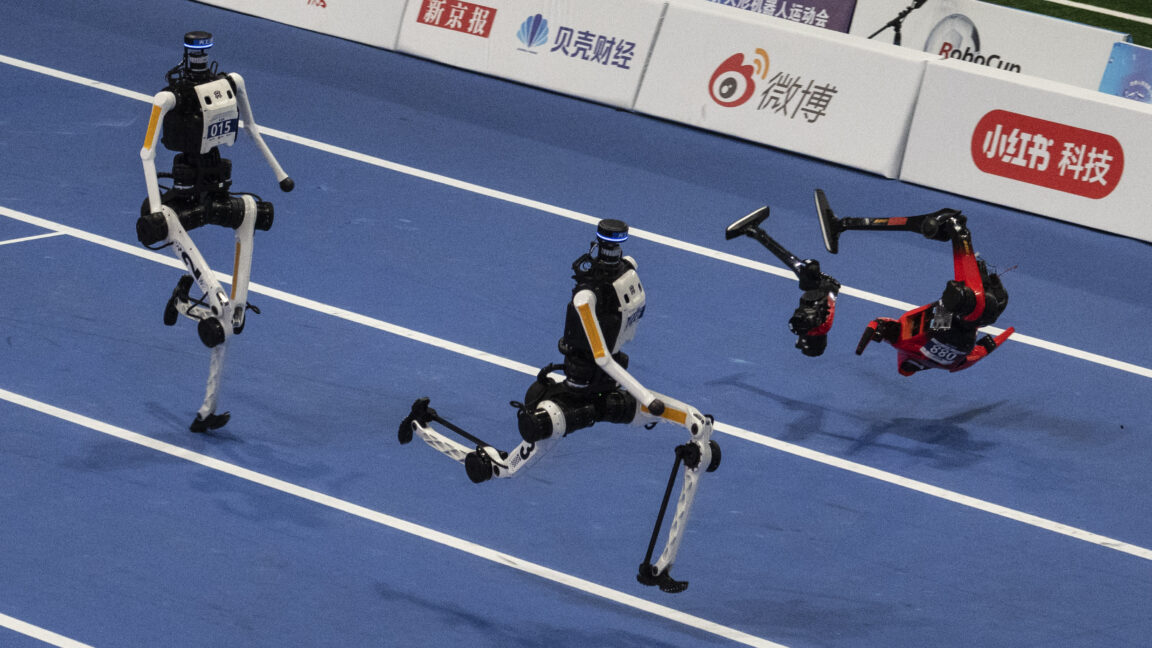
We’re not there yet, but it is stunning the progress being made there—a little bit more in China than in the US, but somewhat in both. MIT Technology Review: You talked about all of this happening so much faster than the internet revolution did, than some of these previous technological revolutions did. What type of timescale are you talking about? You pointed to the thresholds that we’ve crossed.
In your view, have we already passed some sort of tipping point where there’s going to be this inevitable change? Bill Gates: The past definitely is very misleading on this, and a lot of people lean on that. “Hey, no previous technology resulted in a net jobs reduction,” and they’re right. And I’ve given that speech.