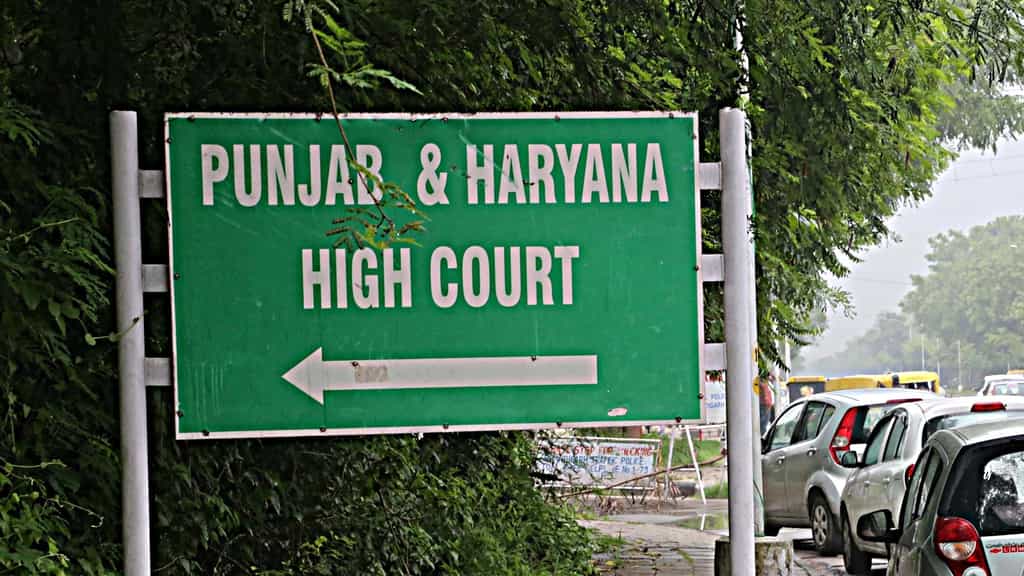
Court, shall be referred to as "District Courts/District Judiciary/Trial Courts". The terms "Subordinate Judge/Subordinate Courts/Lower Courts" shall not be. (Source: Express Archives)
The Punjab and Haryana High Court has directed that courts below the High Court be referred to only as “district courts”, “district judiciary” or “trial courts” in official correspondence and judicial proceedings across Punjab, Haryana and the Union Territory of Chandigarh.
The circular by the Registration General states, “Hon’ble the Chief Justice and Judges have been pleased to direct that henceforth, all the Courts in the States of Punjab, Haryana and UT Chandigarh other than the High. Court, shall be referred to as “District Courts/District Judiciary/Trial Courts”.
The terms “Subordinate Judge/Subordinate Courts/Lower Courts” shall not be used in the official correspondence as well as in the judicial functioning of the High Court as well as the District Courts, unless the same is inevitable.”
The directive follows observations made by the Supreme Court in recent years on judicial nomenclature. : In February 2024, a Supreme Court bench comprising Justices Abhay S Oka and Ujjal Bhuyan directed the court’s own registry to refrain from referring to trial courts as “lower courts.” The bench noted: “It will be appropriate if the Registry of this court stops referring to the trial courts as lower courts.”
Earlier in a May 2023 judgment in the All India Judges Association v. Union of India case, a Supreme Court bench stated that it would no longer refer to the district judiciary as the “subordinate judiciary.” The Court highlighted the vital importance of district courts, describing the term “subordinate” as a misnomer that fails to reflect their independent role in the constitutional scheme.
The Karnataka High Court issued a similar directive in 2020, prohibiting the use of “lower court” or “subordinate court” in appellate references. Other high courts have followed suit in recent years.
While the Constitution (Article 235) vests high courts with control over “subordinate courts,” the Supreme Court has clarified that this is administrative, not indicative of inferiority.
Editorial Context & Insight
Original analysis and synthesis with multi-source verification
Methodology
This article includes original analysis and synthesis from our editorial team, cross-referenced with multiple primary sources to ensure depth, accuracy, and balanced perspective. All claims are fact-checked and verified before publication.
Primary Source
Verified Source
The Indian Express
Editorial Team
Senior Editor
Aisha Patel
Specializes in India coverage
Quality Assurance
Associate Editor
Fact-checking and editorial standards compliance