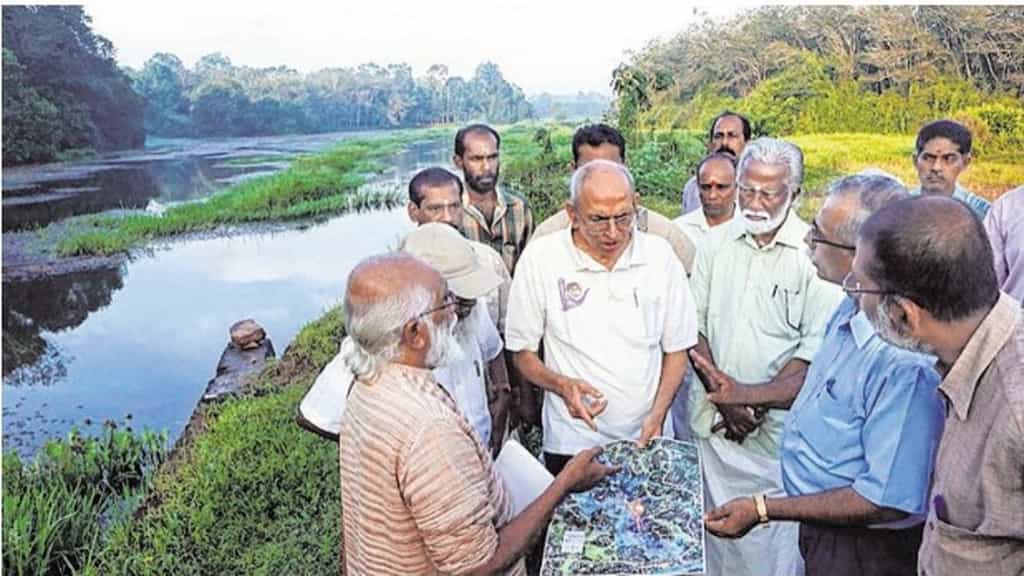
Kerala would remember Madhav Gadgil, the eminent ecologist who passed away on Wednesday (January 7, 2026), as a one-man green army who shaped the socio-political and ecological narratives of the State for the past one and a half decades in an unprecedented manner.
The report of the Western Ghats Ecology Expert Panel (WGEEP), led by Mr. Gadgil, which convulsed the political and conservation landscape of Kerala, classified the mountain ranges into different Ecologically Sensitive Zones (ESZs) based on their ecological significance. It categorised the 142 taluks in the Ghats boundary into ESZs 1, 2 and 3 while prescribing that no new polluting industries, including coal-based power plants, should be allowed in the first two zones. It had also proposed that the existing red and orange category industries should be asked to switch to zero pollution by 2016, with an effective system of social audit.
The panel report almost divided the State into two camps: those who supported the report and those who opposed it. It also saw politicians like the Congress leader P.T. Thomas and Communist Party of India leader Binoy Viswom, who favoured panel recommendations, coming under fire from their respective parties. Mr. Thomas had to move out to Kochi from his home constituency Idukki as a section of the Church and his party workers vociferously opposed his stand favouring the report.
While the pro-conservationists revered Mr. Gadgil as the saviour of the Western Ghats and the vanguard of ecology, he was fiercely hated by those who advocated that development needs should be prioritised over ecology. The Assembly election that followed the submission of the WGEEP report in 2011 also witnessed the political battle being fought in the hilly districts of Kerala on the question of conservation and development. However, Mr. Gadgil was often worried that his report was “misinterpreted by interest groups”, which propagated that people would be evacuated from hilly districts like Idukki, where a large number of taluks fell under the ESZ, and life would become miserable for the ordinary farmers and residents.
The report also sealed the fate of the 163 megawatt Athirappally Hydel power project in the Chalakkudy river, pushed by the then State government. The panel recommended that “no new dams based on large-scale storage be permitted in ESZ 1. “Since both the Athirappilly of Kerala and Gundia of Karnataka hydel project sites fall in Ecologically Sensitive Zone 1, these projects should not be accorded environmental clearance,” noted the report.
“The views of Mr. Gadgil have left an influence on the green movements and ecological campaigns of the State. His stand on issues concerning development and environment was widely discussed in the State,” remembered Kerala Chief Minister Pinarayi Vijayan in his condolence message.
Mr. Viswom noted that Mr. Gadgil taught that it was not the intervention to improve the living standards of ordinary people, but the violent intervention of profit-oriented capitalist development that polluted soil, water and nature everywhere and makes human life impossible. This is the reality for Kerala and for India, he said.
Editorial Context & Insight
Original analysis & verification
Methodology
This article includes original analysis and synthesis from our editorial team, cross-referenced with primary sources to ensure depth and accuracy.