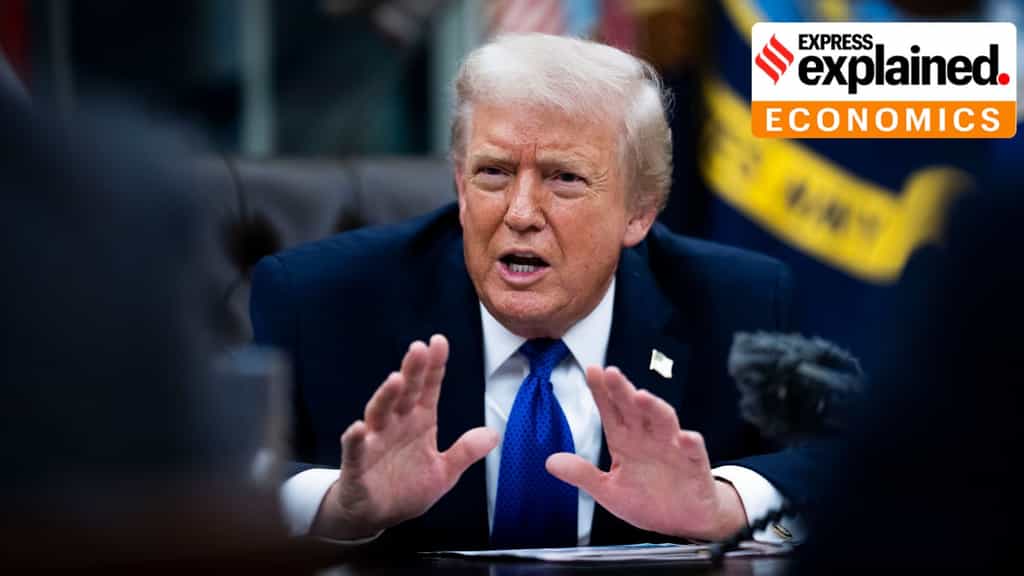
On January 10, US President Donald Trump called for a one-year cap on credit card interest rates at 10 per cent, to take effect from January 20, 2026. He positioned the proposal as a consumer-protection measure aimed at reducing the burden of high credit card borrowing costs, strongly criticising issuers that routinely charge annual percentage rates (APRs) of 20–30 per cent or even higher. Trump said such steep rates amounted to “ripping off” the American public.
The proposal has been welcomed with interest by Indian cardholders as well, many of whom face interest rates of up to 42 per cent per annum on outstanding balances. The announcement has also sparked a broader question in India: could the country consider a similar move to rein in credit card interest rates?
The announcement reiterates a campaign promise made during the 2024 presidential race and is timed to align with the anniversary of his administration. However, translating the proposal into law would require approval from the US Congress as well as cooperation from financial regulators. Similar proposals to cap credit card interest rates at 10 per cent have previously been introduced in Congress by bipartisan lawmakers, including Senators Bernie Sanders and Josh Hawley, and Representatives such as Alexandria Ocasio-Cortez. Despite periodic support, these bills have encountered strong resistance from the financial services industry and continue to be viewed as unlikely to pass in their current form.
Analysts say that imposing a rigid cap on interest rates could limit access to credit, particularly for higher-risk borrowers, as lenders may become more selective or scale back credit card issuance altogether. They also warn that such a cap could lead to a reduction in card benefits and rewards as issuers look to offset lower interest income, and may even drive some borrowers toward costlier and less regulated lending options.
However, an interest-rate ceiling would meaningfully ease the burden on heavily indebted card holders by sharply reducing borrowing costs and offering much-needed relief from persistently high credit card interest rates.
In India, the credit-card landscape and regulatory context are quite different. There is no 10 per cent cap on credit-card interest and Indian lenders typically charge much higher APRs, often in the 36–48 per cent range annually, depending on the card and issuer. A Supreme Court decision in late 2024 clarified that banks can charge more than 30 per cent interest on credit-card dues, overturning an earlier consumer-protection decision that would have capped rates.
What have lured customers to the credit card segment are incentives like rewards on higher spending, loan offers and lounge benefits. “Customers should realise that if they keep card dues beyond the interest-free period, they end up paying an interest rate of up to 42 per cent or more in some cases. It will put them in a debt trap,” said a bank official.
In India, the credit cards segment is monitored by the Reserve Bank of India (RBI). “It has allowed freedom to banks to fix the interest rates on credit card spending. Banks are charging high interest rates on card outstandings claiming that there’s no collateral on card spends,” said an observer. So Trump’s move in US is unlikely to have any impact in the Indian markets for now. However, experts feel that it could trigger some decision making across other geographies including India as it is a customer centric decision.
Credit-card use in India has been rapidly increasing, with outstanding debt, spending, and overdue balances rising significantly in recent years. RBI data shows credit-card spending and balances climbing, and rising delinquencies highlight increasing financial stress for cardholders. The total number of outstanding credit cards increased to 11.5 crore as of November 2025, registering a 7.1 per cent year-on-year and 0.7 per cent month-on-month growth. Issuance momentum was led by public sector banks, which recorded 7.6 per cent y-o-y growth, aided by their ability to cross-sell cards and gain share amid more cautious risk pricing by PVBs.
Credit card outstandings with banks were Rs 2.96 lakh crore as of November 2025 as against Rs 2.88 lakh crore in November 2024, according to RBI data.
The credit card market continues to exhibit high concentration, with large issuers accounting for nearly 80 per cent of the total spending, reflecting an ongoing shift in incremental issuances toward scaled players with stronger risk management and distribution capabilities, says a report from CareEdge Ratings.
Unlike the US political debate over caps, India’s regulatory focus is more on consumer awareness, risk management and overall financial stability, rather than imposing strict APR ceilings. This reflects differing market structures, regulatory priorities, and credit behaviours in the two countries.
Editorial Context & Insight
Original analysis & verification
Methodology
This article includes original analysis and synthesis from our editorial team, cross-referenced with primary sources to ensure depth and accuracy.
Primary Source
The Indian Express