UPSC Essentials brings to you its initiative for the practice of Mains answer writing. It covers the essential topics of static and dynamic parts of the UPSC Civil Services syllabus covered under various GS papers. This answer-writing practice is designed to help you as a value addition to your UPSC CSE Mains. Attempt today’s answer writing on questions related to topics of GS-1 to check your progress.
🚨 Click Here to read the UPSC Essentials magazine for December 2025. Share your views and suggestions in the comment box or at manas.srivastava@indianexpress.com🚨
Discuss the historical and cultural significance of the Piprahwa relics in the context of India’s Buddhist heritage.
Compare and contrast bomb cyclones with tropical cyclones in terms of their formation, structure, and impact.
Relevance: This question helps assess understanding of India’s ancient religious history, Buddhist archaeology, and the spread of Buddhism from the Gangetic plains. It also links heritage conservation with cultural identity and civilisational continuity, a recurring theme in GS-1.
Note: This is not a model UPSC answer. It only provides you with a thought process which you may incorporate into the answers.
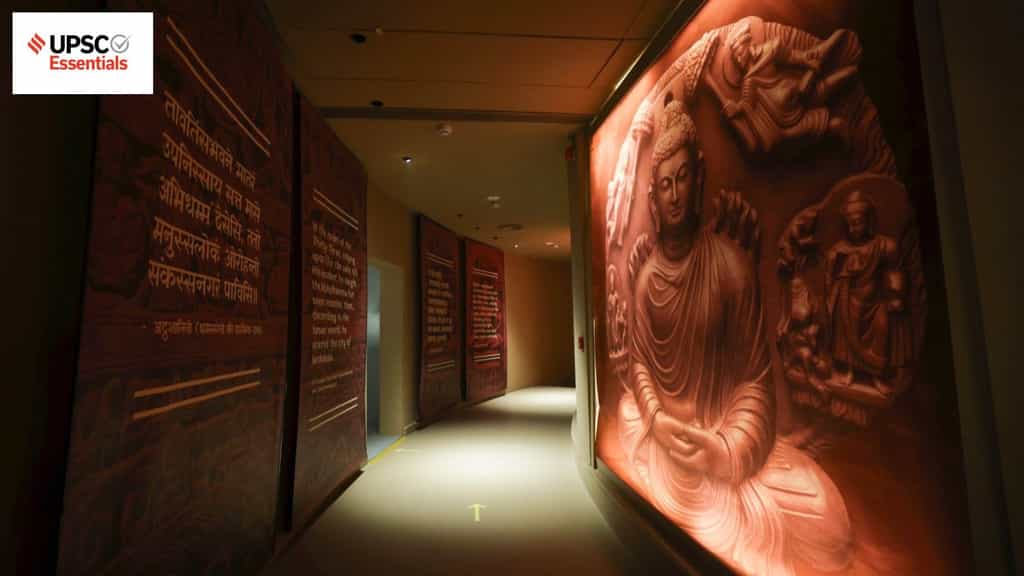
— Recently, the Indian Prime Minister inaugurated “The Light and The Lotus: Relics of the Awakened One”, an exhibition in New Delhi to present the Piprahwa Gems, the sacred Buddhist relics.
— The relics, which were taken by an Englishman from their resting place in India in 1898, were returned to the country last year.
— The exhibition will feature the Buddha relics, as well as an “immersive display of 88 antiquities” and the repatriation gallery along with a model of the excavation site, according to the Ministry of Culture.
— The relics, “found buried together in reliquaries with the corporeal relics of the Historical Buddha”, have been described by Sotheby’s, the auctioneer, as being “among the most extraordinary archaeological discoveries of all time”.
— The antiquities include a collection of 349 gemstones, which were unearthed in 1898 by William Claxton Peppé, an English estate manager, at a Buddhist stupa in Piprahwa, a village in UP’s Siddharthnagar district, near the border of Nepal.
— Most of the gems and precious metals, comprising nearly 1,800 pearls, rubies, topaz, sapphires, and patterned gold sheets, went to what is now the Indian Museum in Kolkata. However, a fifth of the total find, including duplicates of the main collection, was retained by Peppé.
— According to the Indian legal notice, the collection includes “bone fragments, soapstone and crystal caskets, a sandstone coffer, and offerings such as gold ornaments and gemstones”, which were “excavated…from the Piprahwa Stupa – widely identified as ancient Kapilavastu”, the capital of the Shakya “republic” of the 5th-6th centuries BCE where Prince Siddhartha lived before leaving home in his search for the truth.
— The relics are an “inalienable religious and cultural heritage of India and the global Buddhist community”, and their sale “violates Indian and international laws, as well as United Nations conventions”.
— The Piprahwa relics hold a central place in the archaeological study of early Buddhism. These are among the earliest and most historically significant relic deposits directly connected to Lord Buddha.
— These elements provide accessible insights into the life of Lord Buddha, the discovery of the Piprahwa relics, their movement across regions, and the artistic traditions associated with them.
Early Buddhist Stupa-art, while depicting folk motifs and narratives successfully expounds Buddhist ideals. Elucidate. (2016)
Pala period is the most significant phase in the history of Buddhism in India. Enumerate. (2020)
Relevance: This question tests conceptual clarity in climatology and dynamic meteorology, especially extra-tropical versus tropical weather systems. It is relevant for analysing extreme weather events and their increasing impacts, an important dimension of physical geography in GS-1.
(Reuters)
— When a mass of high-pressure air collides with a mass of low-pressure air, storms usually result. Wind is produced as the air moves from high pressure to low pressure.
— A bomb cyclone is characterised by a pressure decrease in the low-pressure mass of at least 24 millibars in a 24-hour period. The winds become stronger as a result of the rapid increase in the pressure differential, or gradient, between the two air masses. The term “bombogenesis,” which sounds even more fierce, refers to this rapid intensification process.
— The bomb cyclone, which depends on temperature gradients rather than ocean heat content, is created when cold polar air and warm subtropical air collide at frontal boundaries, frequently over warm ocean currents. “Bombogenesis” refers to the quick intensification that occurs when a tropical cyclone forms over warm tropical ocean waters (over 26.5°C/80°F) from pre-existing disturbances, driven by latent heat generated from condensing water vapour.
— A tropical cyclone has a circular structure with a clear “eye” (calm centre) surrounded by spiral rainbands and an intense eyewall, whereas a bomb cyclone is a mid-latitude cyclone that frequently has a comma shape and brings distinct warm and cold fronts with weather systems wrapping around a low-pressure centre.
— A bomb cyclone causes heavy snow, ice, severe winds, coastal flooding, blizzard conditions, and widespread regional disruption. Tropical cyclones, on the other hand, cause storm surge, severe winds, torrential rainfall, broad inland floods, and a high potential for destruction.
— Bomb cyclones can occur in any season in the United States. However, they are most common during the autumn and winter, when freezing air from the Arctic can move south and collide with milder air masses.
— Bomb cyclones most typically form in the western North Atlantic. That is because it is an area where cold air from North America collides with warm air over the Atlantic Ocean, resulting in bombogenesis.
What is sea surface temperature rise? How does it affect the formation of tropical cyclones? (2024)
Tropical cyclones are largely confined to South China Sea, Bay of Bengal and Gulf of Mexico. Why? (2014)
Editorial Context & Insight
Original analysis & verification
Methodology
This article includes original analysis and synthesis from our editorial team, cross-referenced with primary sources to ensure depth and accuracy.
Primary Source
The Indian Express