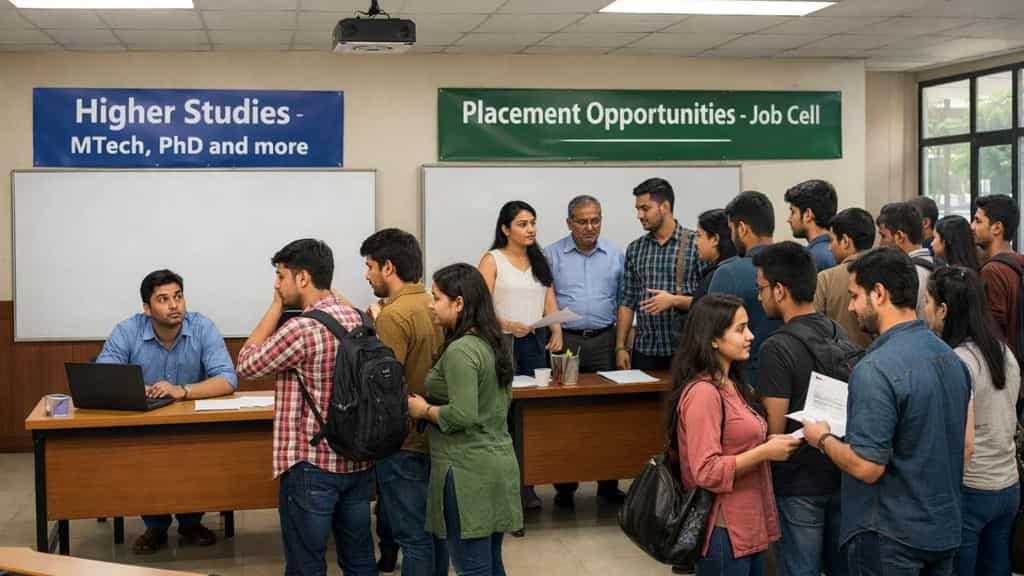
In a move aimed at reversing the declining interest of BTech graduates in postgraduate engineering education, the Council of Indian Institute of Technology (IIT Council) has flagged structural gaps in India’s MTech ecosystem and set a 12-month timeline for comprehensive reforms across all IITs.
The council, the apex coordination body of the premier engineering institutes across the country, will take steps to better align the MTech programmes with industry needs, emerging technologies, and long-term research priorities.
According to the minutes of the council’s latest meeting, which took place in August last year, the issue was discussed in detail following a presentation by the director of IIT Hyderabad on the recommendations of a committee on MTech reforms.
The council noted that one of the main reasons BTech graduates are not inclined to pursue MTech degrees in India is the limited availability of relevant and contemporary specialisations. Many programmes, members observed, continue to follow narrow disciplinary structures that do not reflect the interdisciplinary skill sets now demanded by industry.
Another major concern highlighted was the lack of internship opportunities within MTech programmes. Unlike global postgraduate models where industry exposure is embedded into the curriculum, Indian MTech students often graduate with minimal hands-on industrial experience. The council emphasised that this weakens employability outcomes and reduces the perceived value of an MTech degree.
To address this, the council stressed that industry internships should be made a compulsory component of MTech programmes across IITs.
An earlier The Indian Express report had flagged a steep decline in postgraduate engineering, noting that nearly two out of every three MTech seats in engineering colleges across India remain vacant. AICTE data highlights that MTech admissions have fallen to a seven-year low of around 45,000 students over the last two academic years, even as BTech enrolments continue to rise. Experts have attributed this trend to limited value addition from an MTech degree, a disconnect between curriculum and industry needs, and the absence of significant salary advantages.
Source: AICTE data for engg and tech (AI generated gfx)
Data accessed by The Indian Express for enrolments between 2017 and 2024 reinforces this. Postgraduate engineering intake peaked at over 1.85 lakh seats in 2017–18 but steadily declined to about 1.24 lakh by 2023–24, with enrolments dropping from nearly 66,900 in 2018–19 to around 45,000 in 2023–24.
In contrast, undergraduate engineering shows a more positive trajectory: despite intake dipping from about 14.75 lakh seats in 2017–18 to 12.55 lakh in 2021–22 before recovering to 13.49 lakh in 2023–24, enrolments rose sharply post-pandemic, climbing from about 7–7.5 lakh till 2020–21 to over 11.2 lakh by 2023–24.
As part of the proposed overhaul, the council discussed the introduction of a dual-track MTech model. One track would be oriented towards industry engagement, focusing on applied projects and internships, while the other would emphasise research and feed into doctoral pathways. This structure, the council felt, could better align postgraduate education with both private sector demands and national research objectives. The possibility of launching multidisciplinary and blended-mode MTech programmes was also discussed to reflect technological convergence and widen access.
Formally, the council has recommended that all IITs revamp and redesign their MTech curricula in line with their individual visions and institutional strengths. Four to five broad, discipline-based, industry-dominated committees are to be constituted by the Standing Committee of the IIT Council to guide this process and report progress to the council. A 12-month timeline has been proposed to initiate these reforms.
While MTech reforms formed a key focus, the discussions also pointed to broader constraints affecting postgraduate education. Council members noted that limited research support and the absence of adequate overheads in research grants place increasing financial pressure on IITs, restricting their ability to sustain modern labs, industry collaboration, and high-quality postgraduate training. The issue of equitably recognising academic and industry experience in faculty recruitment was also raised, given its impact on mentoring and applied learning at the postgraduate level.
The council’s deliberations extended to doctoral education and curriculum alignment with national priorities such as artificial intelligence, quantum technologies, cybersecurity, and semiconductors, reinforcing the view that MTech reform must be part of a larger reset of higher education beyond the undergraduate level. Taken together, the minutes noted that improving MTech participation will depend not only on curriculum changes but on reshaping how postgraduate education, research, and industry engagement intersect within the IIT system.
To this effect, the council recommended that this issue be taken up with funding agencies, starting with the National Research Foundation, while also calling for new mechanisms to assess research and innovation outcomes beyond publications, including industry-linked projects, patents, and technology development.
Strengthening the IIT Council secretariat with research expertise, creating a common MIS (Management Information System: a centralised digital system that would collect, track, and analyse data related to research and innovation across IITs) to track outcomes, and aligning funding support with demonstrated research impact were discussed as steps to reinforce the research backbone that underpins postgraduate education across IITs.
Editorial Context & Insight
Original analysis & verification
Methodology
This article includes original analysis and synthesis from our editorial team, cross-referenced with primary sources to ensure depth and accuracy.
Primary Source
The Indian Express