


Key takeaways
What happened
6B is built to power capable agents entirely on-device. It supports tool calling and multi-step workflows while staying small and fast enough for everyday hardware, from laptops to phones. This enables developers to deploy agents everywhere, keep data private on the device, and scale usage without a cloud inference bill. 6B is pre-trained on ~34T tokens, with a mid-training phase that extends the context window to 128K.
Why it matters
Post-training then turns the base model into an agent in four stages: The Agentic RL pipeline separates model optimization, inference, and environment execution into distinct components. The Training Engine optimizes the model, while the Rollout Engine generates actions using the latest policy. The RL framework orchestrates the training loop by launching rollouts, collecting trajectories and rewards, and updating the model.
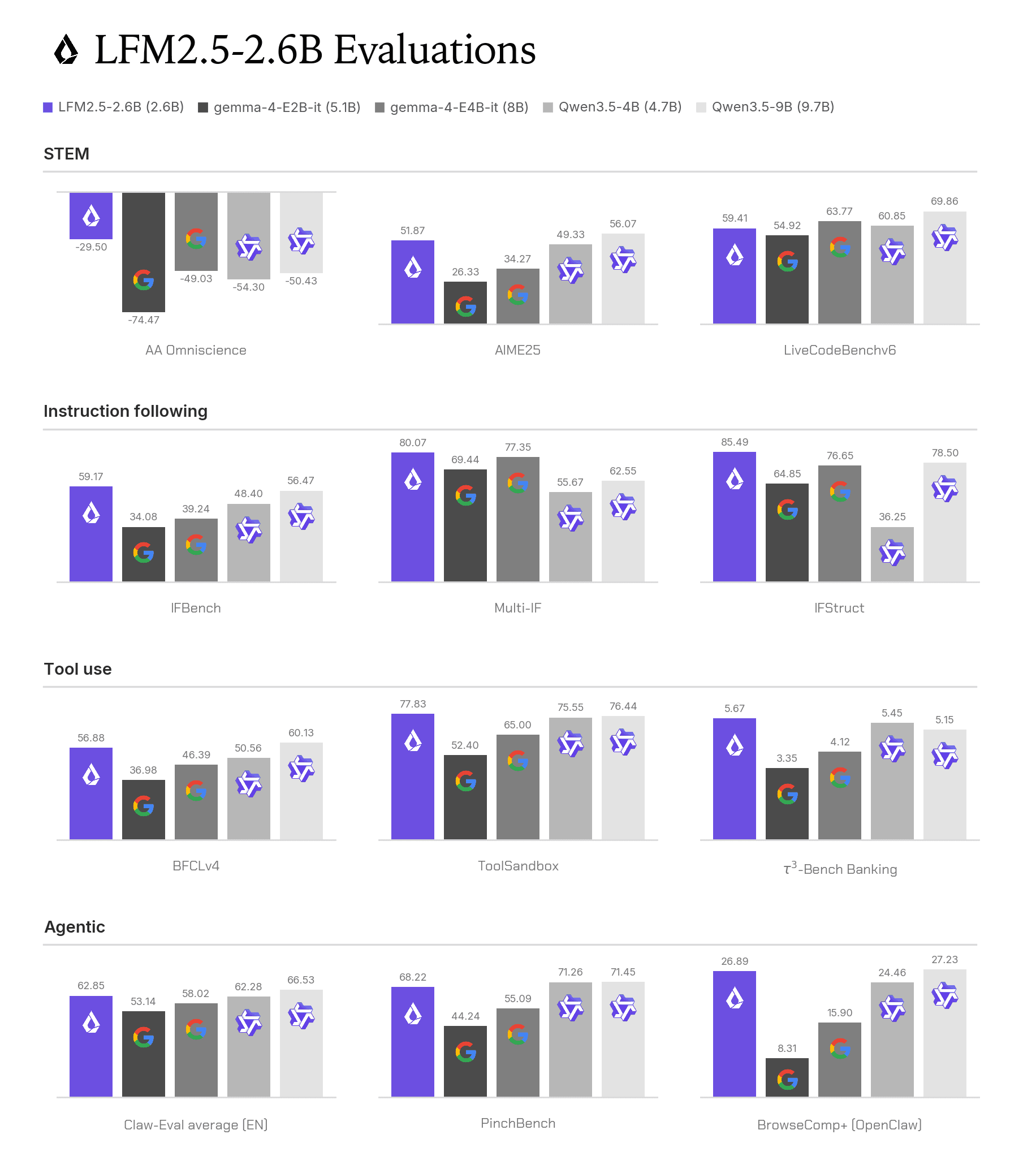
It is the smallest model in the group, yet it competes with and often beats the rest. For your app, the strengths are instruction following and tool use. 7B Qwen edges ahead. On agentic tasks, it beats both Gemma models and stays even with the Qwens. It also leads on knowledge and stays close on math.
What to watch
Coding is the one place the larger models keep a clear lead, so reach for something bigger there. cpp, MLX, vLLM, SGLang, and ONNX. CPU inference. 6B is the fastest model we tested, with decode speeds of 220 tokens/s on an M5 Max and 113 tokens/s on a Ryzen AI Max+ 395. At 30 tokens/s, it allows you to run capable agents even on a phone. GPU inference.
3B tokens per day on a single H100. 6B when you need on-device agents for high-volume workloads. 6B powering a research agent. The agent helps you research specific questions and generates a summary. 6B-Base are available on Hugging Face today. 5, we're delivering on our vision of AI that runs anywhere. These models are: We can't wait to see what you build.