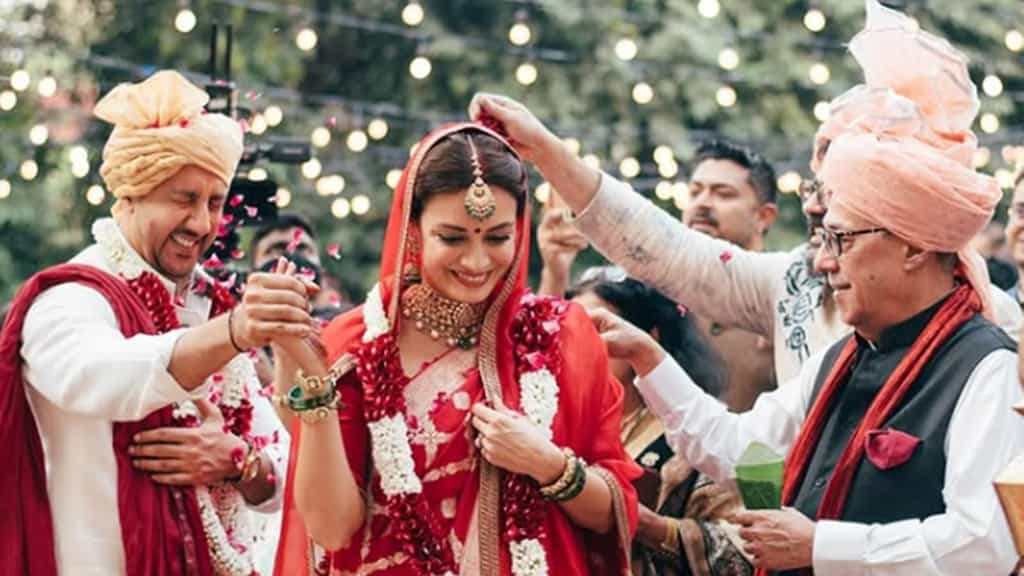
Weddings are often extravagant affairs, but actor Dia Mirza and her husband, Vaibhav Rekhi, took a different route when they tied the knot in 2021. Their celebration was designed to be eco-friendly, focusing on sustainability at every step — from décor to fashion to waste management.
Appearing on the Fashionably Pernia podcast, Dia was quick to respond when the host noted that many couples followed suit after her wedding. She emphasised, “We’ve done it for centuries,” prompting the fashion designer to remark that people tend to forget this.
Dia then reflected on how society has been drawn into a cycle of excessive consumption, saying, “We forgot that because we got sucked into mindless consumption, consumerism, capitalist world, making you believe that the only way you can validate your existence is if you are wasteful.”
Determined to break that pattern, the couple made thoughtful choices for their wedding. Instead of extravagant gifts, they opted for hand-crafted woven baskets from Meghalaya and gifted plants to their guests. Their floral arrangements featured hyper-local flowers, reducing the carbon footprint of transportation. Even the décor was planned with sustainability in mind — natural, locally sourced, and mostly recyclable or rented.
Vishal Kumar, CEO of Waste Warriors, tells indianexpress.com, “Couples can integrate sustainability into their wedding planning by focusing on thoughtful details that minimise waste while enhancing beauty. For example, using digital invitations and RSVP systems reduces paper usage. Opting for locally sourced, seasonal flowers not only supports regional growers but also minimizes the carbon footprint associated with transportation.”
Couples may also choose venues that emphasise natural surroundings and offer eco-friendly facilities, he adds. Sustainable practices can extend to catering as well — selecting menus that feature organic, locally grown produce can create a delicious, visually appealing experience. Every element, from reusable décor to natural elements like dried flowers, can be carefully curated to ensure an eco-friendly wedding is both elegant and memorable.
“Additionally, partnering with on-ground NGOs to ensure the leftover food is shared with those in need, and not wasted. The organisers must set up waste management contracts to ensure the waste (food waste and the non-biodegradable) is segregated and sent to authorised recyclers,” he stresses.
Selecting sustainable fashion and décor helps reduce the environmental impact associated with resource-intensive production processes and waste generation. Kumar notes, “For instance, wedding attire made from organic, ethically sourced fabrics typically requires fewer chemicals and less water than conventional textiles. Similarly, décor crafted from recycled or upcycled materials minimizes waste and encourages a circular economy. These choices collectively reduce pollution and resource depletion over time.
According to Kumar, one common challenge is the perception that eco-friendly options “may limit creativity or come with higher costs.” Many couples initially worry that sustainable alternatives might compromise the aesthetic quality of their celebration. However, thorough research and early planning can uncover numerous vendors and products aligning with sustainability and high design standards. Limited availability or lack of awareness among local vendors can also be hurdles requiring additional bandwidth for organising.
To overcome these issues, he says that couples can network with others who have planned eco-friendly events, join online communities for sustainable wedding planning, and even consult with an eco-event planner. “By investing time in understanding available options and negotiating with vendors who share an eco-conscious vision, couples can design a wedding that is not only beautiful but also kind to the planet.”
Editorial Context & Insight
Original analysis and synthesis with multi-source verification
Methodology
This article includes original analysis and synthesis from our editorial team, cross-referenced with multiple primary sources to ensure depth, accuracy, and balanced perspective. All claims are fact-checked and verified before publication.
Primary Source
Verified Source
The Indian Express
Editorial Team
Senior Editor
Aisha Patel
Specializes in India coverage
Quality Assurance
Quality Assurance Editor
Fact-checking and editorial standards compliance