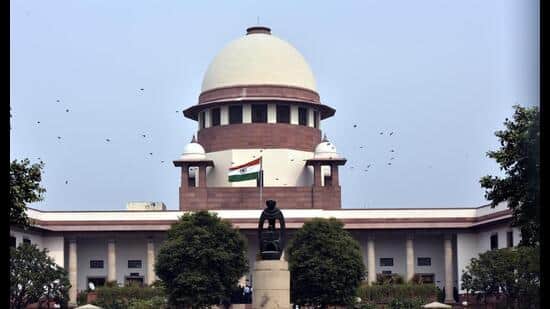
The Supreme Court on Tuesday granted bail to former Amtek Group chairperson Arvind Dham in a money laundering case arising from an alleged ₹27,000-crore bank fraud. A bench of justices Sanjay Kumar and Alok Aradhe set aside the August 2025 order of the Delhi high court, denying Dham bail.
The high court held that his release could jeopardise the trial and undermine public confidence in the justice system. It observed that the allegations involved grave economic offences that caused substantial losses to public sector banks and could not be dealt with lightly.
Granting bail in such cases, the high court warned, risked eroding the fabric of economic governance. It noted that being “sick and infirm” was not a passport to bail in cases involving serious economic crimes, adding that Dham’s medical condition, though concerning, could be managed in custody.
The money laundering proceedings against Dham stemmed from a 2022 Central Bureau of Investigation (CBI) case registered on complaints by IDBI Bank and Bank of Maharashtra, which accused Amtek Group companies of defaulting on loans through fraudulent means, including cheating and criminal breach of trust.
On the Supreme Court’s February 2024 directions, the Enforcement Directorate (ED) initiated its probe and registered a case in 2024. The ED said Dham was the ultimate beneficial owner of the alleged fraud, which was executed through systematic manipulation of financial records. The agency alleged that assets and profits were overstated by over ₹15,000 crore, fictitious sales and purchases were created, over 500 shell companies were floated, and dummy directors were installed to siphon off public funds. The ED arrested Dham in July last year.
Seeking bail, Dham contended that he was a 64-year-old senior citizen who had spent over a year in custody and was entitled to the benefit of the “sick and infirm” exception under Section 45 of the Prevention of Money Laundering Act (PMLA). He argued that the investigation against him had been completed and that the trial was unlikely to commence in the near future as the CBI probe was still ongoing.
Section 45 of the PMLA imposes stringent twin conditions for the grant of bail, requiring the court to be satisfied that there are reasonable grounds to believe the accused is not guilty and is unlikely to commit any offence while on bail. While the provision carves out an exception for “sick and infirm” persons, courts have consistently held that the exemption is not automatic.
The ED opposed the plea, arguing that the sheer scale and complexity of the alleged fraud disentitled Dham from any such relief. It added that Dham was the “controlling mind” of the Amtek Group and had orchestrated an elaborate scheme to siphon public money through hundreds of shell entities and falsified accounts.
Editorial Context & Insight
Original analysis & verification
Methodology
This article includes original analysis and synthesis from our editorial team, cross-referenced with primary sources to ensure depth and accuracy.