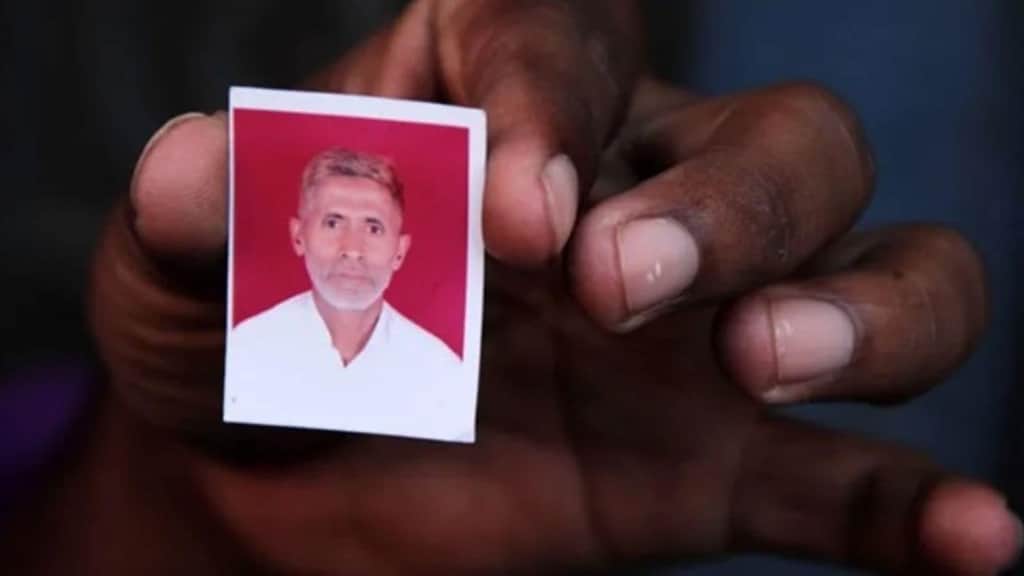
Hearing the Mohammad Akhlaq lynching case, an Uttar Pradesh court on Tuesday said that the matter would now be heard on January 8, after the witnesses could not be presented in the court.
“You want the matter to be adjourned today. I have sent a letter to both the Commissioner of Police, Gautam Buddh Nagar and the Deputy Commissioner of Police, Greater Noida to ensure the security of the witness,” Additional District Judge Saurabh Dwivedi said.
Akhlaq’s lawyer, Mohammad Yusuf Saifi, told the court that the brother-in-law of Sartaaz, Akhlaq’s elder son, had died a day ago, and hence the family could not be present.
Dwivedi asked if the matter should be listed on Wednesday. To this, Saifi asked if they could get a new date of January 8.
Earlier, the additional district judge had directed that the case be categorised as “most important” and be heard daily. The court also directed the prosecution to record the evidence in the case at the earliest.
Akhlaq, 50, was beaten to death by a mob over rumours that he had killed a cow and stored the meat in his home in Bisada village in Dadri in Gautam Buddh Nagar district.
On October 15 last year, the Uttar Pradesh government had moved an application to withdraw prosecution in the case, citing reasons that ranged from allegedly inconsistent statements made by Akhlaq’s kin in naming the accused and the fact that no firearms or sharp weapons were recovered from the accused, to the absence of previous enmity or hostility between the accused and the victim.
In its order, the court had said that it had carefully studied the judgments of the Supreme Court in Sheo Nandan Paswan vs State of Bihar (1987) and Tehseen S Poonawala vs Union of India (2018) that were cited by counsel for the victim, and State of Kerala vs K. Ajith and Others (2021), which was cited by counsel for the accused.
Relying on the verdict of a five-judge bench in the Sheo Nandan Paswan case, the court had said that the victims had the right to object, and the objection was fit to be heard and taken cognisance of. The matter dealt with in the Ajith case was not related to ‘mob lynching’, the court said.
The court had said that murder is a crime against society, and the state carries out prosecution so that “the fear of law remains ingrained in society”. The prayer of the prosecution for withdrawal was without any basis, and fit for rejection, it added.
Editorial Context & Insight
Original analysis & verification
Methodology
This article includes original analysis and synthesis from our editorial team, cross-referenced with primary sources to ensure depth and accuracy.
Primary Source
The Indian Express