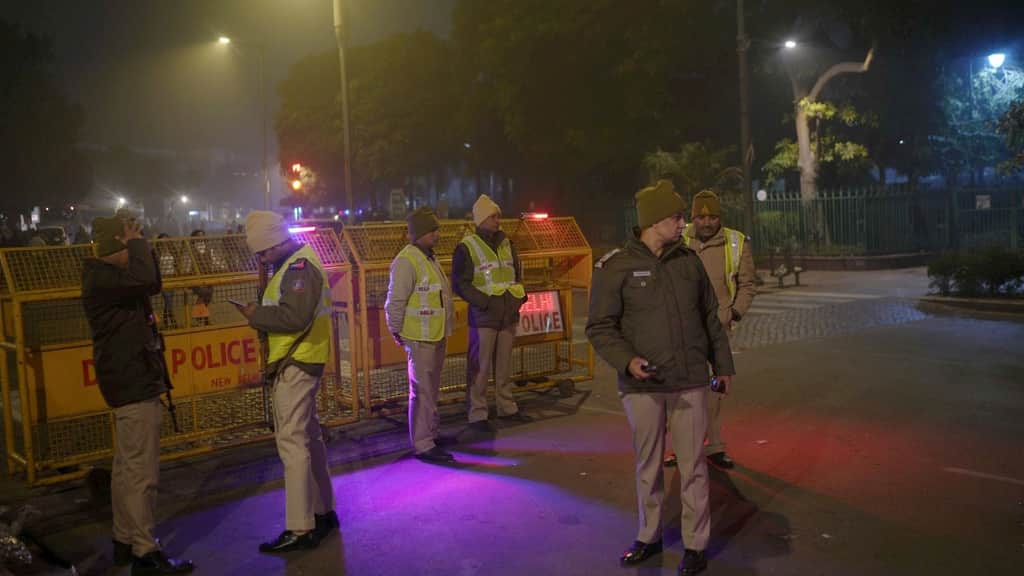
Investigating officers said experts from Gujarat had come to Delhi and were shown the footage of the accused from various CCTV cameras. (File photo/PTI)
In a first, the Delhi Police has used gait analysis as a key evidence to pin the accused who allegedly killed a 32-year old UPSC aspirant in October last year in the Capital, The Indian Express has learnt. An 813-page chargesheet in the murder case was filed on Monday at the Tis Hazari court. The court has not yet taken cognizance of the chargesheet.
Ram Kesh Meena, the UPSC aspirant, was allegedly killed by his live-in partner, Amrita Chauhan, her former boyfriend, Sumit Kashyap and Sandeep Kumar, an accomplice, at the home he had rented in North Delhi’s Timarpur. Amrita was allegedly upset, according to police, about the 32-year-old not deleting their intimate videos. When Sumit was allegedly told about this, both of them decided to kill Meena.
As per the probe, on October 5, the victim was first thrashed, then strangled using a phone charging cable. The accused tried to disguise the incident as an accidental death in a house fire but the autopsy report highlighted the injuries and undid their plot.
Before the killing, Amrita had been allegedly coordinating with the other accused via Instagram — she told them that the accused was home. The accused were seen entering the house around 8:45 pm. Thirty-eight minutes later, Sandeep left while Amrita and Kashyap stayed back, said officers. The duo then allegedly poured petrol on Meena’s body, set him on fire and left the premises at 2:57 am on October 6. Quoting the autopsy report, officers privy to the probe said, “It came into notice that some burn injuries were found… indicating that the victim was alive/unconscious when he was set on fire.”
Police then conducted a gait analysis. Forensic experts consider various factors during the comparison, such as the movement of the feet and hands, stride length, and the complete gait cycle. The investigators compared the suspects seen in the CCTV footage from in and around the crime scene with a recreated video. Using specialised computer software, the two recordings were analysed side by side.
A total of 55 witnesses were questioned during the investigation. An air conditioner, which was burnt, was inspected by technical experts of companies to rule out any ignition from AC. After inspection, it came into notice that no leakage from the window AC compressor was found intact. This too has been mentioned as a significant piece of evidence in the chargesheet filed.
A police team led by Inspector Pankaj Tomar, SHO Timarpur, consisting of Sub-inspector Deepak, sub-inspector Mohit and Head Constable Ram Roop cracked the case. Police say they have sufficient evidence on record to ensure conviction in this case. Police say they have sufficient evidence on record to ensure conviction in this case. Investigating officials said the murder was pre-planned as the accused had even taken a house on rent in South Delhi’s Chattarpur where they went after killing the 32-year-old.
What is gait pattern analysis?
Systematic study of walking to understand movement, or identify individuals, examining temporal (speed, step length) and spatial (joint angles, foot placement) features using tools like motion sensors or cameras to detect abnormalities from conditions or for forensic identification via footprints/CCTV. It breaks down the gait cycle (stance/swing phases) to assess criminal investigation by identifying unique deviations.
Editorial Context & Insight
Original analysis & verification
Methodology
This article includes original analysis and synthesis from our editorial team, cross-referenced with primary sources to ensure depth and accuracy.
Primary Source
The Indian Express