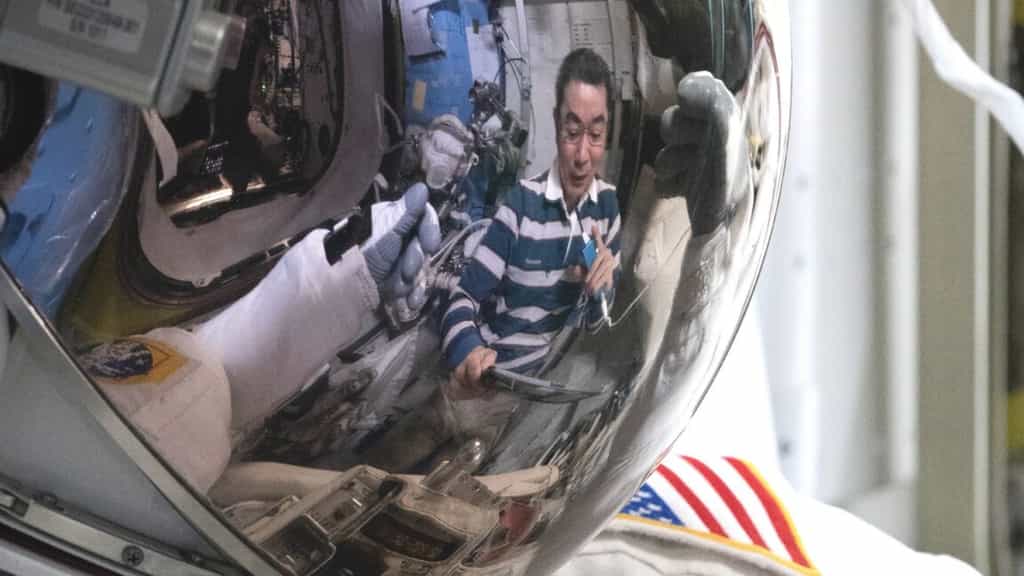
Someone on the International Space Station suffered an unspecified “medical situation” Wednesday, prompting the postponement of a planned spacewalk and raising the possibility of an early return for a portion of the lab’s seven-person crew, NASA said in a statement.
NASA has never ordered a medical evacuation from space before, but the option has always been available at the International Space Station with lifeboats ready for activation.
The space agency announced the spacewalk postponement Wednesday afternoon due to a “medical concern” with a member of the space station’s crew. NASA officials declined to identify the crew member or release further details about their condition, citing medical privacy restrictions.
It is rare, but not unprecedented, for NASA to postpone a spacewalk because of a medical issue. It last happened in 2021, when an astronaut was unable to perform a spacewalk due to a pinched nerve. NASA initially said managers would reschedule Thursday’s planned excursion for another date.
But the situation on the ISS appeared more serious after a second statement released by NASA late Wednesday night. NASA confirmed the medical issue involved a single crew member and said the person was stable. Then, NASA said managers were considering bringing home the ailing crew member on a SpaceX Crew Dragon capsule.
The Dragon spacecraft docked at the ISS launched August 1 with NASA astronauts Zena Cardman and Mike Fincke, Japanese astronaut Kimiya Yui, and Russian cosmonaut Oleg Platonov. This mission, designated Crew-11, was slated to end with the crew’s undocking and return to Earth around February 20.
“Safely conducting our missions is our highest priority, and we are actively evaluating all options, including the possibility of an earlier end to Crew-11’s mission,” NASA said. “These are the situations NASA and our partners train for and prepare to execute safely. We will provide further updates within the next 24 hours.”
Editorial Context & Insight
Original analysis & verification
Methodology
This article includes original analysis and synthesis from our editorial team, cross-referenced with primary sources to ensure depth and accuracy.
Primary Source
Ars Technica