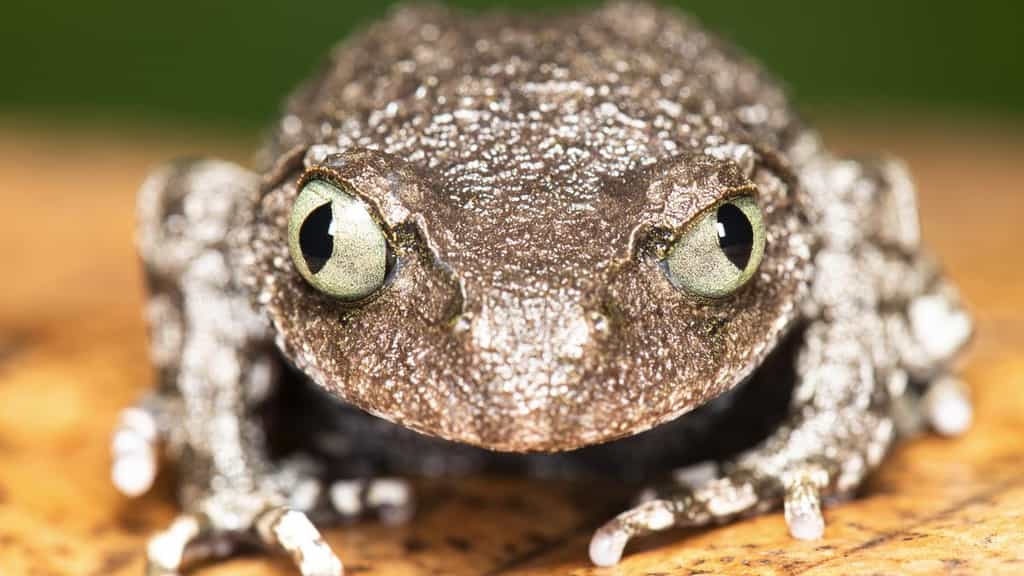
Scientists from the University of Delhi have discovered two new slender-armed frogs from the remote mountain habitats of Arunachal Pradesh.
One of the newly described species has been named in honour of the late journalist E. Somanath, recognising his long-standing engagement with environmental reporting.
The discovery, published in the US-based peer-reviewed journal PeerJ, follows more than three years of intensive field expeditions to the isolated regions of Arunachal Pradesh. The research was led by noted herpetologist S.D. Biju as part of the doctoral work of his student A.N. Dikshit Akalabya Sarmah.
During surveys conducted across five northeastern States, the team recorded multiple populations of slender-armed frogs belonging to the genus Leptobrachium, a group distributed across South and Southeast Asia. Detailed laboratory analyses later confirmed that specimens collected from Arunachal Pradesh represented two previously unknown species.
One of the species, named Soman’s Slender Arm Frog (Leptobrachium somani), was discovered at Tiwarigaon in Arunachal Pradesh. It is named after E. Somanath, who used to accompany Prof. Biju on field expeditions in search of frogs.
The small frog measures about 55 mm in length and has a uniformly greyish-brown body with irregular light-grey markings and silver-grey to light-blue eyes. It inhabits evergreen forests, with males typically calling from the banks of forest streams.
The second species, Mechuka Slender Arm Frog (Leptobrachium mechuka), was first collected near Mechuka town in Arunachal Pradesh. Slightly larger, at around 60 mm, it has a uniformly brown body with a reddish tinge and distinctive silvery-white eyes. The species occurs in evergreen forests and adjoining grasslands. It was recently reported from China under a mistaken identity.
The scientists used an integrative taxonomic approach that combined DNA analysis, morphological comparisons of adults and tadpoles, bioacoustic studies and three-dimensional micro-CT scans of the skeleton. The molecular data were compared with all known species of the genus to establish the evolutionary distinctiveness of the new frogs.
The study also highlights the role of the Brahmaputra river as a major biogeographical barrier. Both newly described species are restricted to the northern side of the river, while all other known members of the genus occur south of it.
According to Prof. Biju, the findings demonstrate how large river systems influence the distribution and diversification patterns of the slender-armed frogs.
Arunachal Pradesh forms part of the Himalaya biodiversity hotspot, one of the world’s most biologically rich regions, harbouring exceptional plant and animal diversity found nowhere else on Earth. Among the amphibians found in the region are members of the family Megophryidae, one of the most diverse frog families globally with 366 recognised species, including the Asian horned frogs. The slender-armed frogs (Leptobrachium), belonging to this family, comprise around 40 species.
Editorial Context & Insight
Original analysis & verification
Methodology
This article includes original analysis and synthesis from our editorial team, cross-referenced with primary sources to ensure depth and accuracy.