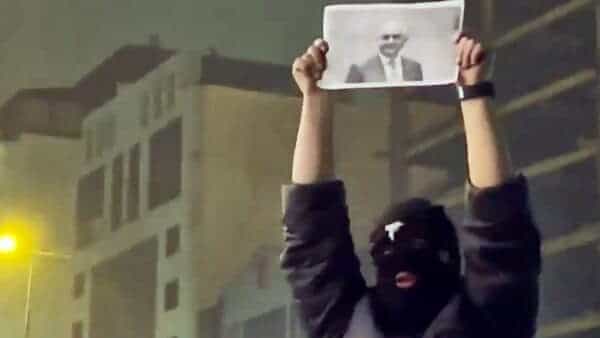
US President Donald Trump on January 10 voiced strong support for protesters in Iran, suggesting Washington was prepared to step in as nationwide demonstrations over economic hardship escalated into the country’s biggest unrest in three years.
“Iran is looking at FREEDOM, perhaps like never before. The USA stands ready to help!!!” Trump wrote on Truth Social.
The comments came as protests spread across multiple Iranian provinces, with reports of deaths as rallies turned violent amid deepening public anger over inflation, currency collapse and prolonged economic stagnation.
The demonstrations initially began in Tehran on December 28, where shopkeepers took to the streets to protest the government’s handling of a sharp currency slide, soaring prices and years of economic decline.
Iran’s economy has struggled since the United States reimposed sanctions in 2018 after Trump withdrew from the international nuclear agreement during his first term. The Iranian rial has lost more than a third of its value against the US dollar over the past year, while years of high inflation have eroded purchasing power and pushed the cost of basic necessities beyond the reach of many citizens.
As sanctions tightened and Iran grappled with the aftermath of its June conflict with Israel, the currency saw another sharp fall in December. Protests erupted on December 28 and entered their 11th day this week, showing no signs of slowing.
Trump has repeatedly warned Tehran against using lethal force on demonstrators, threatening US retaliation if protesters are killed.
“If they start killing people like they have in the past, I think they’re going to get hit very hard by the United States,” Trump said on January 5.
Earlier, on January 2, Trump issued an even stronger warning: “If Iran shoots and violently kills peaceful protesters, which is their custom, the United States of America will come to their rescue. We are locked and loaded and ready to go.”
Asked later about reports of protesters being killed, Trump added: “We’ll take a look. We’re watching it very closely.”
Speaking at a joint press conference with Israeli Prime Minister Benjamin Netanyahu on December 30, Trump warned Iran against attempting to rebuild its military or nuclear capabilities following recent strikes.
“Now I hear that Iran is trying to build up again. And if they are, we’re going to have to knock them down. We’ll knock them down. We’ll knock the hell out of them,” Trump said, adding that he hoped such action would not be necessary.
Republican Senator Lindsey Graham escalated the rhetoric further on January 8, delivering a blunt warning to Iran’s Supreme Leader Ayatollah Ali Khamenei.
“To the People of Iran, we stand with you tonight. We stand for you taking back your country from the Ayatollah, who kills you and terrorises the world,” Graham told Fox News.
“To the Ayatollah: you need to understand, if you keep killing your people who are demanding a better life, Donald J Trump is going to kill you,” he added. “To the Ayatollah and his thugs: if you keep killing your people in defiance of President Trump, you are going to wake up dead.”
Graham stressed that Trump’s approach marked a sharp departure from past US policy, saying, “Donald J Trump is not Barack Obama. He has your back.”
The warnings come months after a 12-day air war in June between Israel and Iran, during which Israeli and US strikes killed nearly 1,100 Iranians, including senior military commanders. Iranian retaliatory missile attacks killed 28 people in Israel.
The United States directly entered the conflict by striking Iranian nuclear sites at Fordow, Natanz and Esfahan. Trump later said the facilities were “totally obliterated”.
The current demonstrations — driven by economic distress, inflation and public outrage — represent one of the most serious challenges to the government.
Despite mounting pressure and escalating international warnings, the protests continue to spread, underscoring deep-seated anger over Iran’s economic crisis and political leadership.
Editorial Context & Insight
Original analysis & verification
Methodology
This article includes original analysis and synthesis from our editorial team, cross-referenced with primary sources to ensure depth and accuracy.
Primary Source
mint - news