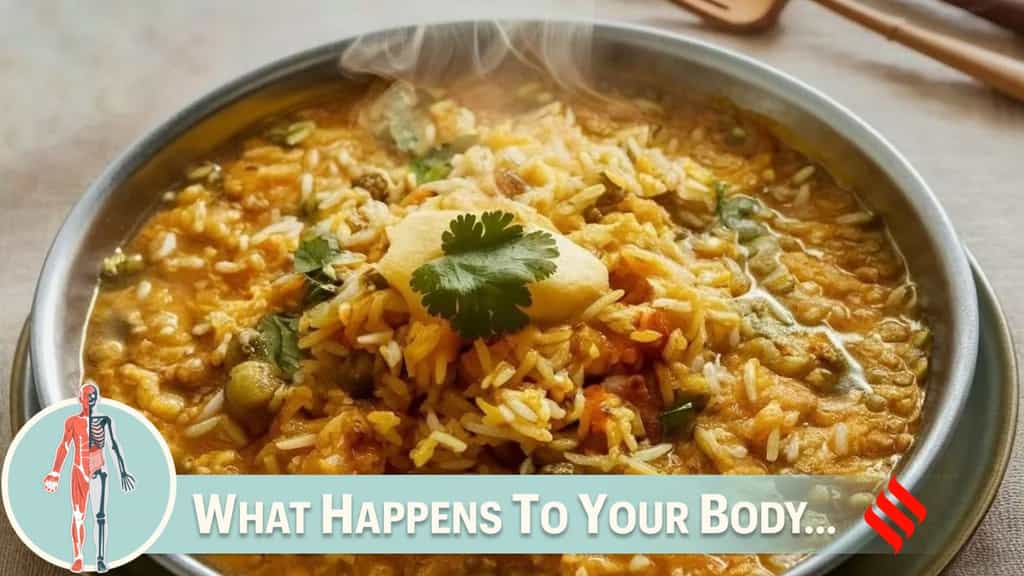
Sambar rice is a comfort food in many Indian households. Made with rice, lentils, vegetables and spices, it is often considered a complete meal and a healthier alternative to oil-heavy or processed foods. But is it healthy to eat sambar rice every day?
According to Dr Suvetha, Ambassador, Physicians Association for Nutrition India (PANI), Bengaluru, the answer depends “less on the dish itself and more on how it is eaten.” The portions, variety and overall dietary balance, she adds.
Eating sambar rice regularly is not inherently unhealthy, Dr Suvetha explains. “It can be a better lunch option than many fried or refined foods, as it naturally combines carbohydrates, plant protein, vegetables and spices.” The problem arises when people eat sambar rice daily without maintaining a balanced diet. “If the meal consists mainly of a large portion of rice with a watery sambar containing very few vegetables, it can lead to health issues over time,” she says.
A nutritious version would include a generous serving of vegetable-rich sambar with a restricted portion of rice, she elaborates.
A hot bowl of sambar (Photo: Freepik)
Dr Suvetha cautions that eating sambar rice every day without other food groups can lead to nutrient deficiencies over time. Rice and dal alone do not provide all essential vitamins and minerals, she notes.
Common deficiencies seen in such cases include vitamin B12, iron and calcium, with occasional zinc deficiency as well. “If the diet lacks additions like yoghurt, soya milk, fruits, nuts or seeds, the body may not get adequate micronutrients,” she explains.
Over time, these deficiencies can lead to fatigue, hair loss, body aches, poor immunity, and general weakness, the doctor adds.
Portion control, especially with white rice, is crucial for long-term health. Dr Suvetha points out that Indians have a higher predisposition to diabetes, making large daily portions of rice a concern.
“White rice can cause a rapid spike in blood sugar levels when eaten in excess,” she says. Regularly eating large portions may contribute to belly fat, insulin resistance and eventually diabetes.
Yes, variety is key. Dr Suvetha stresses that using the same dal and vegetables every day limits the nutritional benefits. Different lentils and vegetables offer varying amino acids, fibres and micronutrients, she adds.
Rotating ingredients helps improve digestion, support gut health, and prevent nutritional gaps. “Diversity in dals and vegetables makes sambar a more complete meal with long-term health benefits,” she elaborates.
DISCLAIMER: This article is based on information from the public domain and/or the experts we spoke to. Always consult your health practitioner before starting any routine.
Editorial Context & Insight
Original analysis & verification
Methodology
This article includes original analysis and synthesis from our editorial team, cross-referenced with primary sources to ensure depth and accuracy.
Primary Source
The Indian Express