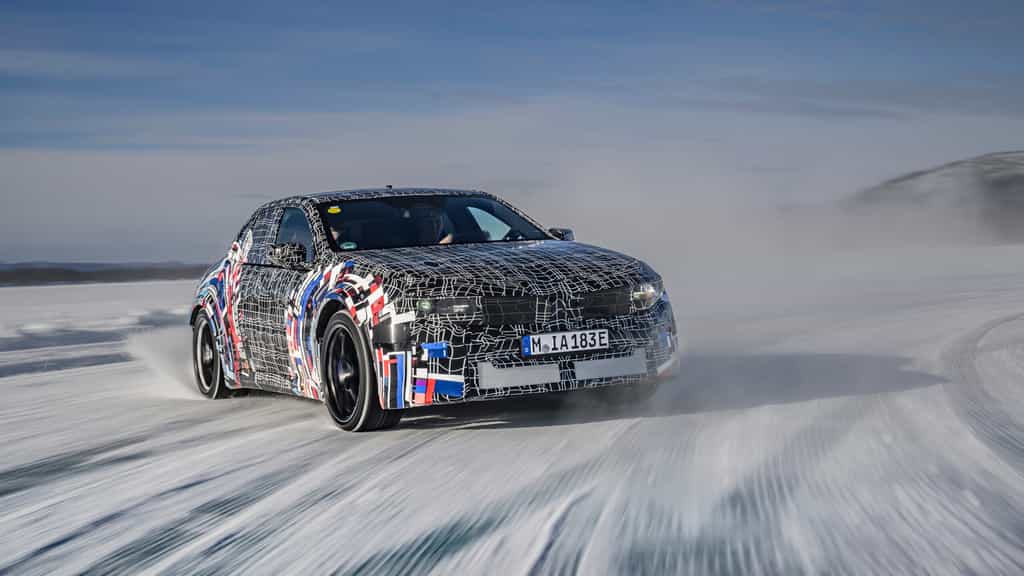
Late last year, we drove BMW’s new iX3. It’s the first of a series of electric BMWs to use a newly developed platform, known as the “Neue Klasse.” Later this year, we’ll see the first fully electric version of the 3 Series when the i3 sedan debuts. And next year, BMW enthusiasts will finally find out what the brand’s M division—which infuses motorsport into the vehicles like few others—can do with an EV.
There have been M-tuned EVs before now, more powerful variants of the i4, iX, and i7. And each time we’ve driven them, BMW has been at pains to point out that these weren’t true M cars, not like the M3 or M5. Honestly, they weren’t better than the cheaper, less powerful versions, something that won’t be allowed for next year’s performance EV, which might be called something like the iM3, assuming the naming convention remains logic-based.
“The next generation of models are set to establish a new benchmark in the high-performance vehicle segment,” says Franciscus van Meel, managing director of BMW M GmbH. “With the latest generation of Neue Klasse technology, we are taking the BMW M driving experience to a new level and will inspire our customers with outstanding, racetrack-ready driving dynamics for everyday use.”
Technology is the key to distinguishing the M EV from its more sedate siblings. The Neue Klasse platform hews to the software-defined vehicle trend, where a handful of powerful computers each control a wide array of functions, rather than dozens or hundreds of discrete electronic control units in black boxes each doing a single job. One computer handles infotainment, and another deals with automated driving and active safety systems. A third handles the relatively mundane but no less important job of climate control, plus the seats and doors and windows.
However, the important one here is called the Heart of Joy, which runs M-specific software, called BMW M Dynamic Performance Control. This offers an order of magnitude faster response in terms of the car’s electronic dynamic control compared to current M models, which is put to good use controlling the four electric motors that will propel the electric M.
Editorial Context & Insight
Original analysis and synthesis with multi-source verification
Methodology
This article includes original analysis and synthesis from our editorial team, cross-referenced with multiple primary sources to ensure depth, accuracy, and balanced perspective. All claims are fact-checked and verified before publication.
Primary Source
Verified Source
Ars Technica
Editorial Team
Senior Editor
James Chen
Specializes in Technology coverage
Quality Assurance
Senior Reviewer
Fact-checking and editorial standards compliance