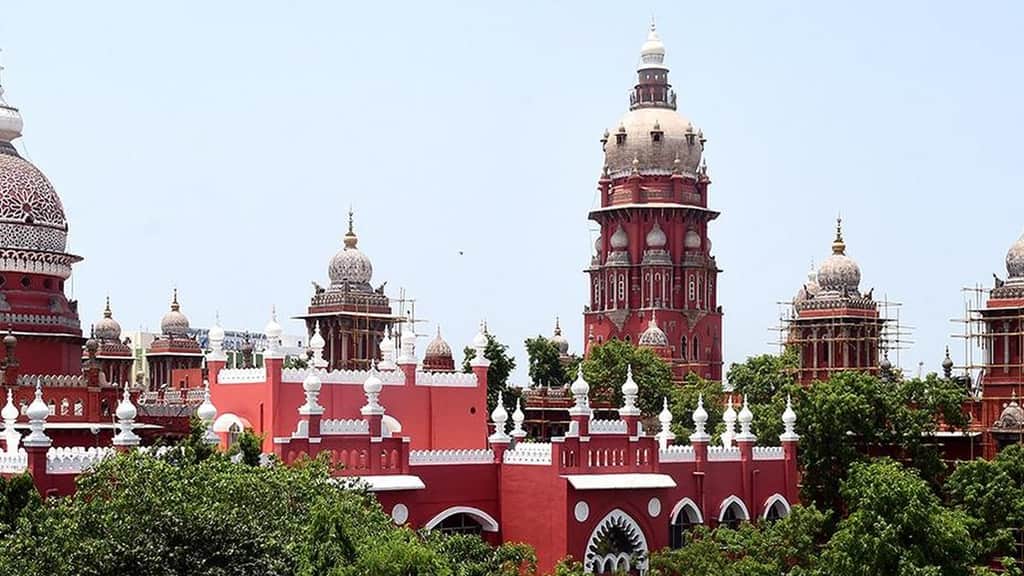
The Madras High Court on Wednesday (January 7, 2026) directed the Tamil Nadu Home Secretary to constitute district-level monitoring committees, headed by the respective Collectors, to ensure that no serving or retired police officer in the State engages uniformed police personnel for personal or household work despite the abolition of the ‘orderly’ system way back in 1979.
Third Division Bench of Justices S.M. Subramaniam and C. Kumarappan also ordered that the committees should comprise a revenue official, not below the rank of a District Revenue Officer (DRO), and two police officers handpicked by the Collectors concerned for the purpose of collecting information, conducting inspections, and taking action on complaints.
Advocate General P.S. Raman had suggested the constitution of such committees after the judges expressed dismay over the “abhorrent” practice of trained police personnel being used for cleaning shoes, cooking, and running errands at the residences of higher officials continuing, despite several orders passed against it by the government and the High Court.
The judges directed the Home Secretary to ensure the constitution of the district-level committees across the State within two weeks. During the course of the hearing of the matter, they also remarked that letting the Superintendents of Police head such committees may not serve the purpose, as in most cases, it was those officers who use police personnel for household work.
“We fail to understand how police personnel trained in handling arms could be forced to do menial jobs at the residences of both retired as well as serving police officers. If the officers are allowed to continue this practice, it would naturally reflect on their character. They will be tempted towards corruption, filing false cases against citizens, and not addressing genuine complaints,” Justice Subramaniam told the A-G.
He also said, the police personnel paid from the public exchequer should never be misused for the personal works of higher officials. Agreeing that it was an “evil” practice, the A-G told the court that even his Personal Security Officer (PSO) often rushes to carry the bags whenever he goes for shopping. “I tell him that his job is to protect me and not to carry my shopping bags. That is what is expected from higher officials,” Mr. Raman said.
The A-G also stated that he had already spoken about the issue to the Home Secretary who had issued a letter to the Director-General of Police (DGP), and marked a copy to all the top police officials in the State, making it clear that uniformed police personnel should not be deployed for personal/household work, and that even Officer on Special Duty (OSD) should not be deployed without the authorisation of the DGP.
When the Division Bench said, such government letters and instructions issued in the past had failed to abolish the orderly system completely, Mr. Raman said, the court could then order the establishment of district-level monitoring committees to check the issue.
Editorial Context & Insight
Original analysis & verification
Methodology
This article includes original analysis and synthesis from our editorial team, cross-referenced with primary sources to ensure depth and accuracy.