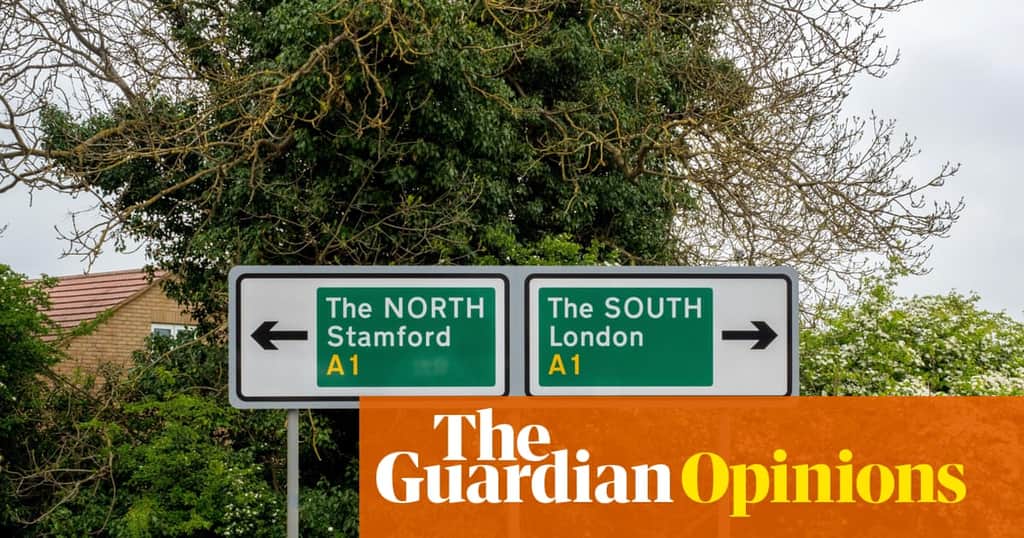
Of course they weren’t being mean, but each time my university friends jokingly echoed my Leeds-accented “no” with a noise that is perhaps best approximated as “nerhhh”, I found myself undergoing elocution conditioning. Within a year, the identifying characteristics of my accent had gone, replaced with a sort of unplaceable, vaguely northern voice. It didn’t matter that we were at university in Leeds, my home city, where most of the population had a stronger accent than me; it was novel – and apparently amusing – to those who had come from the south.
It’s now a familiar scenario. With an increasing north-south divide in university admissions, campuses in the north are teeming with southerners. That may be inevitable under the circumstances, but it can leave students from the surrounding areas feeling out of place only a few miles from where they grew up.
It’s a feeling that York University’s northern students know even better than I do, and undergrads there have found a solution in resurrecting the university’s Northern Society, a club where northern students can feel at home. To some people that might seem an overzealous remedy to a problem that doesn’t really exist. But those who have experienced this subtle cultural discohesion will understand the desire to cling on to our identity and our roots. It’s far from easy being a northerner in spaces and places where the default identity is southern. Still, we survive.
In ways many and varied. When I moved to London after university, I found myself further eradicating traces of the broad vowels my family and friends at home all had. I felt a need to blend in, to not stand out. A lot of this was subconscious, driven probably by various mean comments I had encountered during my lifetime, whether directed at me or not. Sometimes, the slights were indirect: hearing people put on a northern accent, for example, to do an impression of someone stupid or unsophisticated. Other times they were very direct, like all the comments about how “racist northerners” caused Brexit.
I learned to smile while tolerating the complete absence of knowledge displayed by many southerners about anything outside the home counties. I learned to be rueful, or perhaps to swallow hard, as the discussion turned to politics and I encountered a grossly unfair and incredibly frustrating narrative about bigotry in the north. The fact is that the north is progressive and votes Labour in huge numbers at every election. For all the talk of the “red wall”, if we had been independent, there would have been no coalition government in 2010, no David Cameron, no Theresa May, no Boris Johnson, no Liz Truss, no Rishi Sunak. Say that again: no Boris Johnson, no Rishi Sunak.
My home constituency at the last election was majority Labour, with the Greens in second and the Lib Dems third. Of course, there were asylum protests and mindless flag wavers in the north, but they were absolutely everywhere, including London, and notably Epping.
There is a danger we all recognise that the very act of proudly holding on to a northern identity is used against you: that you are dubbed a “professional northerner”. Southerners tend to do this. The so-called professional northerner mostly exists in the minds of southerners – and in spaces dominated by them. They are seen as old-fashioned, colloquial creatures, aggrandising of the north and fond of spouting deliberately obscure references that even other northerners don’t always get.
Of course, the risk exists. There is a fine line between pride in the environment that made you and a sort of fetishisation of your authentic northern background (which can become more of a caricature the longer someone is out of the north). It can be easy to occasionally slip on to the wrong side of that line, especially in situations where you are feeling anxious about not fitting in, perhaps fearing judgment or outright dismissal. It can feel like the best way of surviving – getting ahead of the jokes and taking control back from the assumptions. But that is survival at a heavy cost.
It is hard to pinpoint the northern culture we hold so dear: after all, were talking about arguably the most diverse part of the UK, home to more than 15 million people – including all the southerners who have drifted up – but I think it’s fair to say there are characteristics that are not exclusive to but exemplify the north, such as openness, kindness, bluntness and good humour.
When I think of the times I’ve laughed so hard I’ve been bent over double, clutching my sides in agony, a northerner has almost always been responsible. That is something worth holding on to – and I do.
Editorial Context & Insight
Original analysis & verification
Methodology
This article includes original analysis and synthesis from our editorial team, cross-referenced with primary sources to ensure depth and accuracy.
Primary Source
Opinion | The Guardian