My 12-year-old brother Mazen ran into the kitchen, shouting that the eggplants were sprouting. He held up the tiny green shoots, his hands shaking. My older brother Mohammed and I rushed outside, laughing despite the fear that had become our constant companion. Each sprout was a victory.
Before Gaza’s skies darkened with smoke and the ground shook with bombs, our garden was a lush tapestry of trees and plants, each leaf and branch woven into our family memory. Birds danced above the branches. Five ancient trees stood tall, twisted trunks weathered by sun and wind, branches heavy with black and green olives. Fruit trees filled the air with sweetness – orange, lemon, a broad-leaved fig and a small clementine.
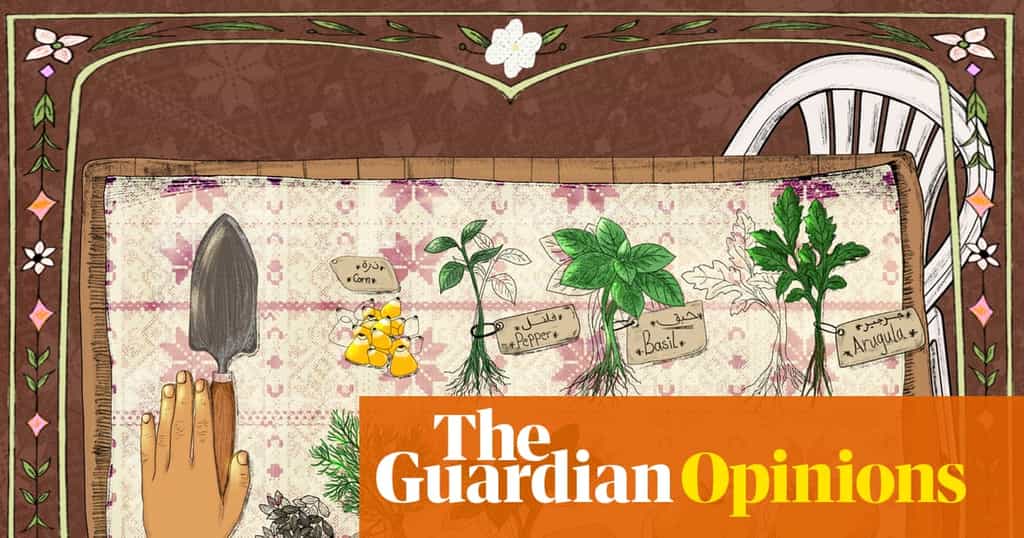
In the midst of the Israeli bombardment, my brother Mohammed and our father committed a small but profound act of rebellion. They decided to plant – to extend our small crop. They bought seedlings and seeds from a local farmer, who tended a rare patch of green and sold plants grown on his land. They bought 30 corn seeds, costing 15 shekels, roughly $5; three pepper seedlings, each priced at $2; two eggplant seedlings; two stems each of mint, basil, ain jarada (a local herb, known for its fresh aroma) and arugula, all for a single dollar; and four potato seeds.
When the genocide came, it ravaged buildings, tore through markets, disrupted supplies and inflated prices beyond reason. Food became a luxury, and the simple act of eating turned into a daily struggle. The weight of hunger was heavy, occupying every corner of our lives. It was a constant companion, reminding us of what we lacked and how powerless we often felt.
My father and brother placed each plant carefully, covering their roots with soil, pressing gently to hold them in place. The seeds represented a gamble against the odds, a test of faith that life could flourish even now. “To plant is to believe in tomorrow,” my father said, as he pressed them gently into the soil.
Carrying heavy buckets, they hauled water for the garden from more than 200 meters away, where neighbours queued in line to fill jugs. Water, once abundant from municipal taps, had become a hard-won treasure.
The work was exhausting. The heat bore down mercilessly. Despite dizziness and weariness, day after day, they watered, tended and cleared space, so the seedlings could stretch toward the sun. Each drop of water was a tiny act of resistance.
Plants such as tomatoes or cucumbers, which require protective greenhouses (“hammams”) to survive Gaza’s harsh conditions, had already failed. The garden’s path was littered with hardship. My brother’s heart aches when he thinks of a mango seedling he nurtured for 10 months. He had split the seed, soaked it, wrapped it for a week and, after seeing the sprout, planted it. For two months, he watered it diligently. But the genocide forced our family to flee to Rafah. When we returned five months later, the mango plant was dead.
So my father and brother chose plants that thrived with less care – ones which could succeed even in the most difficult conditions.
The highlight was the corn. Thirty kernels, bought as popcorn seeds, grew into proud green stalks up to my chest. Standing among them, I felt a quiet pride.
Despite the harsh conditions, lack of water and constant danger, each plant managed to grow, offering us food and a sense of achievement amid devastation.
Potatoes soon followed. We harvested them and, boiled or fried, they became a meal made even richer by their origin. We drank fresh mint tea. Arugula and ain jarada added sharp, peppery notes to our salads.
Today, as scarcity gnaws and violence rages, even during a supposed ceasefire, the garden is still breathing life. It is a mix of longtime residents – the fig, orange, lemon and olive trees – and our new crops. In a land ravaged by genocide, it persists – leaf by leaf, root by root. It is a chronicle of endurance and quiet rebellion.
Editorial Context & Insight
Original analysis & verification
Methodology
This article includes original analysis and synthesis from our editorial team, cross-referenced with primary sources to ensure depth and accuracy.
Primary Source
Opinion | The Guardian