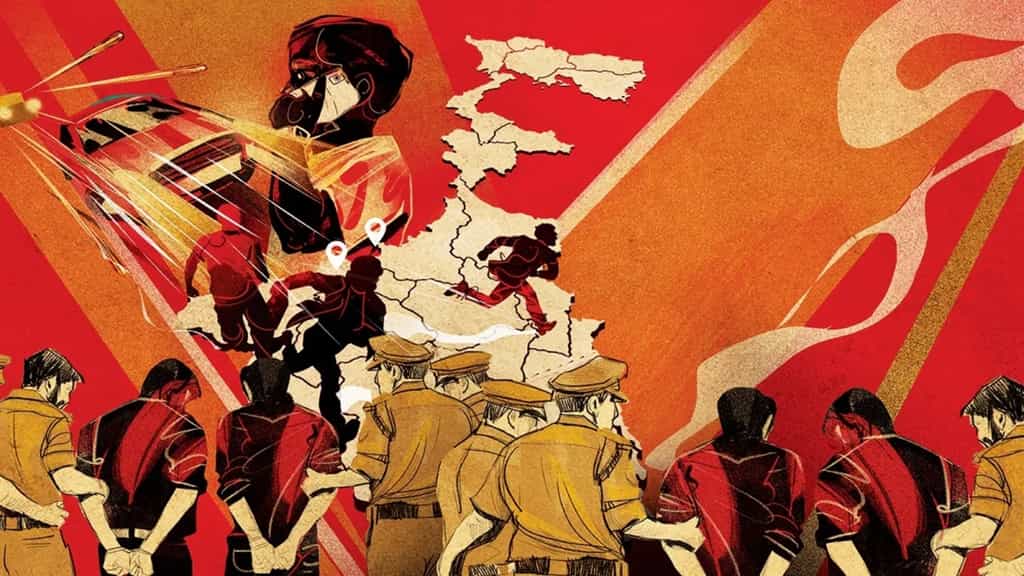
Serious crimes such as murder and dacoity fell to their lowest in 25 years in Bihar last year, an analysis of data shows, even as cases of theft, burglary and cyber crime saw an uptick.
Data between 2001 and 2025 — the most recent figures were shared by Bihar Director General of Police Vinay Kumar last week — paints a picture of how the state’s crime profile has changed, with traditional violent offences that fuelled the ‘Jungle Raj’ image declining from peaks in the early 2000s and mid-2010s.
Murder cases, at 3,619 in 2001, stayed above 3,000 between 2005 and 2015 but began falling from 2016, dropping to 2,581. Despite brief spikes in 2019 and 2020, the downward trend continued, reaching 2,556 in 2025 — the lowest in the past two-and-a-half decades.
Dacoity presents one of the sharpest long-term declines in the dataset. From more than 1,200 cases annually in the early 2000s, including a peak of 1,297 cases in 2004, numbers fell steadily over the next two decades. By 2015, dacoity cases had declined to 426, and by 2025, to 174 — a reduction of more than 80 per cent over 25 years and the lowest level since 2001.
Robbery, while more volatile, also shows a clear downward trajectory from its early peak. After touching 2,909 cases in 2004, robberies declined sharply to a low of 1,266 cases in 2012. Although intermittent spikes were recorded in subsequent years, including during the pandemic, the figure fell again to 1,558 cases in 2025, nearly half the level recorded in 2004.
Riot-related cases show the most pronounced drop. From 8,520 cases in 2001, riots surged through the 2000s and early 2010s, peaking at 13,566 cases in 2014. Since then, numbers have dropped sharply, falling to 7,262 cases in 2019 and further to 2,502 cases in 2025 — the lowest since 2001 and an over 80% decline from the mid-2010s peak.
Unlike other violent crimes, rape cases have risen, from 746 cases in 2000 to a peak of 2,205 cases in 2024. The year 2025 marked a marginal fall to 2,025 cases, although levels remain significantly higher than two decades ago.
Despite the notable decline in several categories of violent crime in recent years, total cognisable crime in Bihar has increased — a trend that frequently features in public and political debate. Data from 2001 to 2024 shows that this rise is largely driven by non-violent offences such as theft, burglary, non-ransom kidnapping, cyber-related complaints and regulatory offences.
Theft has emerged as one of the largest contributors to overall cognisable crime in the state over the past decade. Burglary followed a similar upward trajectory, though at a smaller scale.
While kidnapping has seen an overall rise, experts argue that elopement-related cases, child custody disputes and missing-person complaints are often registered under kidnapping provisions. In contrast, kidnapping for ransom has declined over the past two decades, from 385 cases in 2001 to 52 cases by 2024.
Experts said crimes are also being reported more proactively, with cybercrimes, property crimes and dispute-linked offences now accounting for a much larger share.
“An increase in cognisable crime does not automatically indicate a deterioration in law and order,” said a former officer, speaking on condition of anonymity. “It often reflects expanded reporting, legal awareness, and greater access to police stations and online systems.”
Presenting the annual report, Bihar DGP Vinay Kumar said the state saw a decline in major crimes compared to 2024, even as police stepped up arrests, seizures and preventive action.
During the year, Bihar Police recovered 4,963 illegal firearms, seized 54 licensed weapons and 30,133 cartridges. They also unearthed “74 illegal mini gun factories” and seized “89 bombs, 288 detonators, counterfeit currency worth 3,97,700 in Indian currency and 17,000 in foreign currency, 7,301.539 grams of heroin, 68,270.86 kg of ganja, and 22,727 vehicles”.
The DGP cited intensified operations by the STF and anti-Naxal units, with STF encounters rising from eight in 2024 to 29 in 2025 and arrests of organised criminals more than doubling. Police arrested 134 Naxals and saw six key cadres surrender, pushing Naxal groups to the “brink of collapse” in parts of the state.
He said enforcement of prohibition laws continued, with recovery of 17,39,976 litres of domestic liquor and 18,99,623 litres of foreign liquor, adding that the crackdown led to “zero reported cases of toxic alcohol deaths in 2025”.
Editorial Context & Insight
Original analysis and synthesis with multi-source verification
Methodology
This article includes original analysis and synthesis from our editorial team, cross-referenced with multiple primary sources to ensure depth, accuracy, and balanced perspective. All claims are fact-checked and verified before publication.
Primary Source
Verified Source
The Indian Express
Editorial Team
Senior Editor
Aisha Patel
Specializes in India coverage
Quality Assurance
Associate Editor
Fact-checking and editorial standards compliance