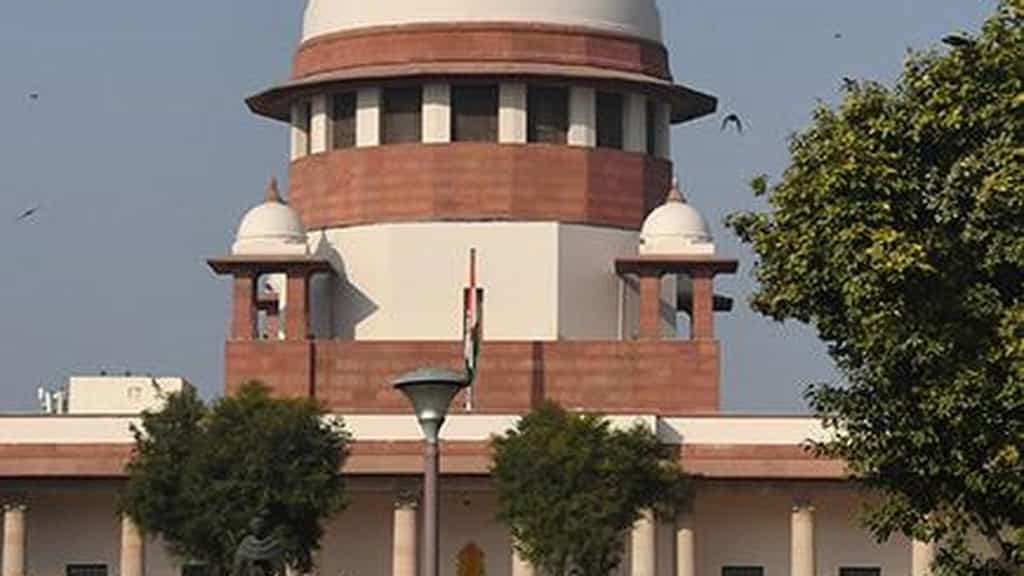
The Supreme Court on Tuesday (January 13, 2026) urged corporates and investors to consider the inclusion of disabled persons not as a mere “compliance issue” but also as a "strategic advantage" that would enhance their business performance, resilience and social impact.
The judgment by a Bench of Justices JB Pardiwala and K.V. Viswanathan is the second in as many months with the Supreme Court stepping in to highlight that business corporations do not only lead a profit-only existence but have a constitutional duty to contribute to the society and environment.
In December last year, the apex court had interpreted ‘corporate social responsibility’ or CSR to inherently include environmental responsibility, holding that the legal person of a corporation has a fundamental duty to protect the environment as a key organ of the society.
On Tuesday, the Bench headed by Justice Pardiwala exercised the court’s extraordinary constitutional powers of the Supreme Court under Article 142 of the Constitution to direct Coal India Limited (CIL) to give Sujata Bora, who has multiple disabilities, a supernumerary post with a separate desk and specially-designed computer at its North Eastern Coalfields office in Assam.
Ms. Bora had qualified in the CIL interview for the post of management trainee after applying as a reserved candidate in the visually-handicapped (VH) category. However, the CIL declared her “unfit” on learning that she not only suffered from visual disability but also ‘Residual Partial Hemiparesis’. The CIL had argued that the notification advertising the post had not provided for multiple disability.
“Ms. Bora was rejected for no fault of hers,” Justice Pardiwala declared in court.
The judge interacted with Ms. Bora, who came online, and talked to her about Stevie Wonder, the visually-impaired American singer-song writer and musician.
Justice Pardiwala quoted U.S. Supreme Court judge Justice William O. Douglas that the right to work does not mean the right to eat alone, it also meant the right to live with dignity.
The court said the “lack of physical sight cannot be equated to the lack of vision”. Ms. Bora fought bravely for her rights to be a member of the mainstream society by standing up on her own feet. The CSR of corporates includes the recognition of hard-fought human rights. The instruments of the United Nations recognised the grant of rights to indigenous people, women, national-ethnic-religious minorities, migrant workers and persons with disabilities.
Justice Pardiwala, reading from the judgment, said “disability inclusion is a vital component of the social dimension” in the Environmental, Social, Governance (ESG) framework used by companies. In fact, disability inclusion was recognised as a crucial part of the ESG framework. The framework is a set of guidelines used by companies to assess, measure, manage and report their performance and impact on environmental, social and governance factors.
“Putting the ‘I’ [inclusion] in the ESG framework was vital. Inclusion of the PwD was considered as a strategic advantage of the sustainability practices for corporates and investors,” Justice Pardiwala observed.
Editorial Context & Insight
Original analysis and synthesis with multi-source verification
Methodology
This article includes original analysis and synthesis from our editorial team, cross-referenced with multiple primary sources to ensure depth, accuracy, and balanced perspective. All claims are fact-checked and verified before publication.
Editorial Team
Senior Editor
Dr. Elena Rodriguez
Specializes in India coverage
Quality Assurance
Associate Editor
Fact-checking and editorial standards compliance