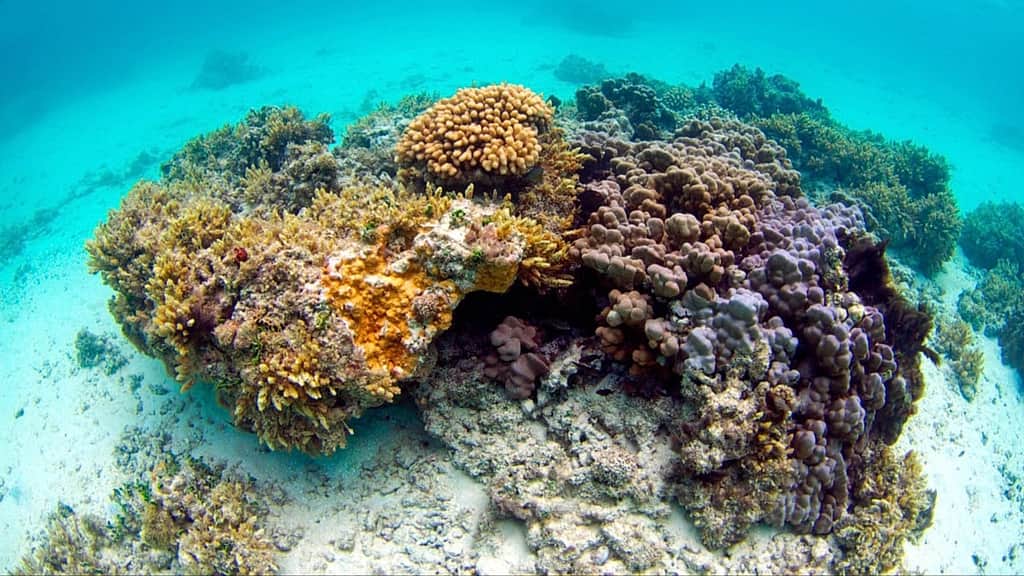
Coral reefs could become a crucial part of the pathway to help fight global hunger and improve nutrition around the world.
According to UNICEF data, around 2.3 billion people experienced moderate or severe food insecurity in 2024 – that’s 336 million more than in 2019. At the same time, many reef fish populations have become depleted as a result of overfishing, while climate-fuelled warming has triggered “unprecedented” coral dieback.
However, new research from the Smithsonian Tropical Research Institute (STRI) says that rebuilding these stocks and managing them at a “sustainable level” is still feasible and may be a solution to tackling malnutrition.
The study, published in the journal PNAS, analysed data from all territories worldwide that contain coral reefs, including Dominican Republic, Panama, Jamaica, Kenya, Mauritius, Oman, Jamaica, Madagascar, Philippines, and Indonesia.
Researchers calculated how much fish stocks would need to grow to reach “maximum sustainable yields” and “pretty good yields” as well as how long recovery would take under different management scenarios.
They found that fish recovery time depended on the extent of overfishing in the area, and could take on average from six to 50 years. However, researchers concluded that coral reefs worldwide could increase sustainable yields by almost 50 per cent if fish populations were allowed to recover toward their maximum production levels rather than being depleted by overfishing.
This could provide countries with 20,000 to 162 million additional sustainable meals, enough to meet the recommended seafood intake for several million people annually.
Countries that could benefit most from the boost are those currently suffering from the greatest hunger and micronutrient deficiencies, such as parts of Africa and Southeast Asia.
"Our findings also reinforce that effective reef fisheries monitoring and management have substantial and measurable benefits beyond environmental conservation,” says Jessica Zamborain-Mason, first author of the paper. “It has food security and public health implications.”
Achieving healthy reefs and better fish stocks is no easy feat. Researchers argue that such a plan would require establishing a clear strategy to help improve the management of fisheries.
Those working in thefishing industry may also need to be provided with alternative livelihoods during recovery periods. For some locations, these changes could require international support.
“The next challenge is designing specific strategies that balance conservation with human livelihoods, ensuring that the ocean's potential is fully realised,” the study states.
Editorial Context & Insight
Original analysis & verification
Methodology
This article includes original analysis and synthesis from our editorial team, cross-referenced with primary sources to ensure depth and accuracy.
Primary Source
Latest News From Euronews | Euronews RSS