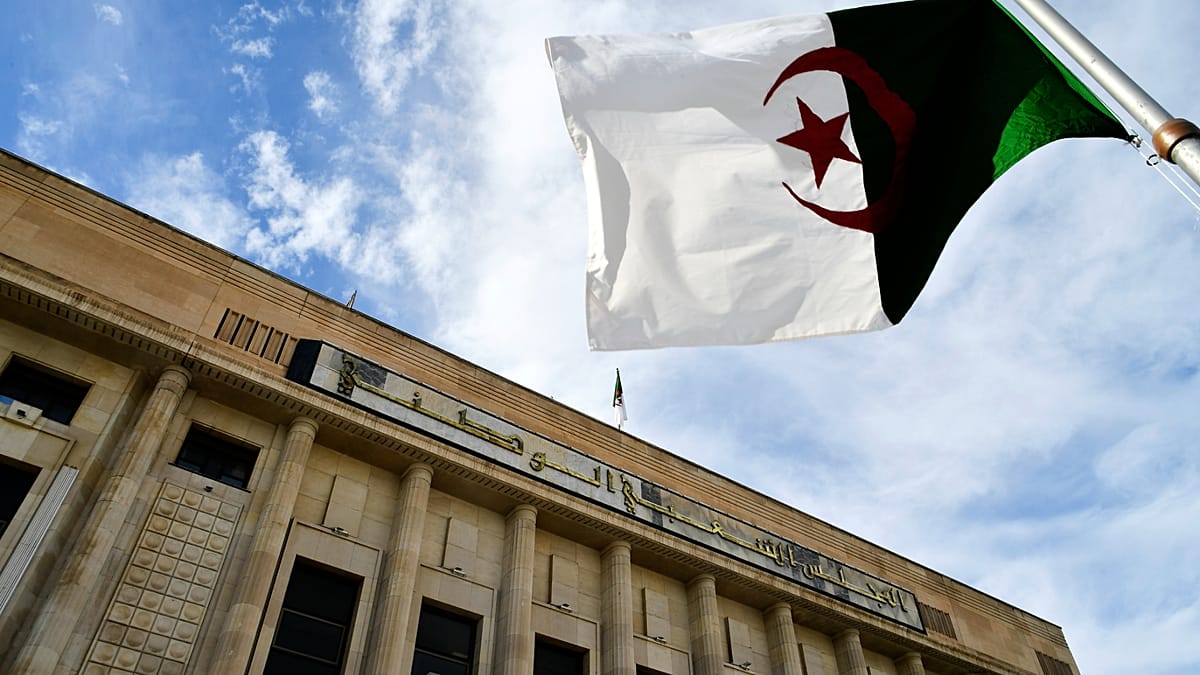
Algeria's parliament unanimously adopted a law on Wednesday declaring France's colonisation of the country a state crime and demanding an official apology from Paris.
Lawmakers wearing scarves in the national colours chanted "Long live Algeria" as they approved the bill, which states that France holds "legal responsibility for its colonial past in Algeria and the tragedies it caused," according to state news agency APS.
The 27-article law lists crimes it accuses French colonial rule of, including nuclear testing, extrajudicial executions, physical and psychological torture and systematic plundering of resources.
It also states that "full and fair compensation for all material and moral damage caused by French colonisation is an inalienable right of the Algerian state and people".
Parliament speaker Ibrahim Boughali said the legislation sent "a clear message, both internally and externally, that Algeria's national memory is neither erasable nor negotiable".
French President Emmanuel Macron has previously described the colonisation as a "crime against humanity" in 2017 — at a time when he first ran for president — but has declined to issue a formal apology.
In 2023, he said, "It's not up to me to ask forgiveness," while expressing hope of working toward reconciliation.
A source at France's Foreign Ministry told Euronews it deplored "a manifestly hostile initiative" that goes against efforts to resume Franco-Algerian dialogue and calm work on issues of remembrance.
"With regard to the memory of colonisation, everyone can recognise the extent of the work undertaken by the President of the Republic, in particular through the establishment of a joint commission of French and Algerian historians," a ministry source said.
"We remain committed towards restoring a dialogue with Algeria, capable of responding to France's priority interests, particularly with regard to security and migration issues," they concluded.
Relations between Paris and Algiers have deteriorated sharply since the summer of 2024, when France recognised Morocco's autonomy plan "under Moroccan sovereignty" for Western Sahara.
Algeria, which supports the Polisario Front's quest for Western Saharan independence, recalled its ambassador and accused Paris of crossing a "red line".
Tensions escalated further in August when Macron called for stricter visa requirements for Algerian diplomats and government officials.
Algiers retaliated by giving French diplomats 12 days to leave the country. France responded by recalling its ambassador and expelling 12 Algerian diplomats. A new wave of expulsions occurred in April.
In November 2024, Algeria arrested writer Boualem Sansal after he made statements about the border between Algeria and Morocco.
Eight months later, a court confirmed his five-year prison sentence before he was pardoned at the request of German President Frank-Walter Steinmeier.
Another arrest that soured relations was that of journalist Christophe Gleize. Arrested in May 2024 in Tizi Ouzou, he was sentenced on appeal to seven years' imprisonment for apology for terrorism and possession of publications harmful to national interest.
France ruled Algeria from 1830 to 1962, and its legacy remains a source of ongoing significant disputes. Algeria says 1.5 million people were killed during the 1954-1962 independence war, while French historians estimate around 500,000 total casualties, including approximately 400,000 Algerians.