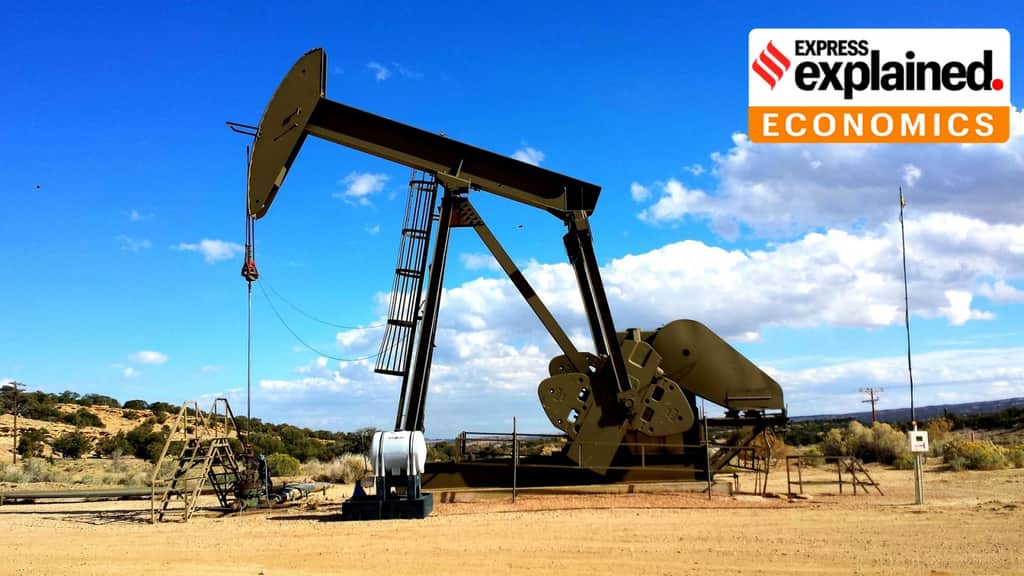
Oil is no stranger to conflict, and so it has, unsurprisingly, emerged as a major factor in the US action in Venezuela, in which American forces captured Venezuela’s President Nicolás Maduro on Saturday (January 3). Soon after Maduro’s capture, US President Donald Trump said that Washington would take control of Caracas’s oil sector and American majors would pump in billions of dollars to revive the struggling Venezuelan oil industry and fix its broken oil infrastructure.
While it remains to be seen how international oil prices will react to the weekend’s developments in Venezuela, experts and industry insiders don’t expect any major spike in prices in the near term, given that the oil market is well-supplied amid relatively subdued global demand, and Venezuela’s current position as only a marginal oil supplier internationally.
Notably, the recent US blockade of Venezuela and seizure of Venezuelan oil tankers did not have a significant impact on international oil prices. In the long run, if the US succeeds in effectively controlling Venezuela’s oil industry, more Venezuelan oil is likely to flow globally, potentially having a bearish impact on oil prices.
As for India, the country appears to be well-shielded from any direct impact in the near term, as Indian refiners do not import Venezuelan crude. With the upward pressure on international oil prices also expected to be muted, given an oversupplied market, it is unlikely to create a major pain point for India, which is the world’s third-largest consumer of crude oil and depends on imports to meet over 88% of its oil needs.
However, India stands to gain if Trump can get Caracas to agree to his terms going forward, as that could potentially make the Venezuelan oil industry sanctions-free and open for business.
Although it accounts for less than 1% of global oil production, Venezuela has the largest oil reserves globally, estimated at over 300 billion barrels or a fifth of the proven oil reserves all over the world. The world’s largest oil exporter, Saudi Arabia, is second to Venezuela in terms of proven oil reserves. But Venezuela produces around 1 million barrels per day (bpd) of crude, while global output is over 100 million bpd.
The relatively insignificant oil production by Venezuela, despite massive potential, is a result of a combination of factors that include US sanctions on the country’s oil and gas sector constraining its energy exports, apart from a severe economic crisis in Venezuela and a debilitating lack of investment in the country’s oil and gas infrastructure. Trump now wants the American oil majors to get into the game so that more Venezuelan oil can be pumped into the global market — including the US — and to the benefit of American corporations.
According to experts, if Trump’s intentions for Venezuela’s oil industry turn into a concrete plan that is implemented, Venezuela could emerge as a significantly larger oil supplier than it is now. It could also open up the country’s oil sector for more investments, not just from American companies, but from other countries’ corporations, as well.
More oil supply in the international market should translate into downward pressure on oil prices in the long run. To be sure, any or all of these effects would take a few years to be tangibly felt, as billions of dollars would need to be pumped into ageing and ill-maintained Venezuelan oil and gas infrastructure.
“They (Venezuela) were pumping almost nothing by comparison to what they could have been pumping and what could have taken place…We’re going to have our very large United States oil companies — the biggest anywhere in the world — go in, spend billions of dollars, fix the badly broken infrastructure, the oil infrastructure, and start making money for the country,” Trump said at a press conference on Saturday.
How the situation evolves over the next few weeks and months would be crucial from India’s perspective as well. If the US and Venezuela’s new leadership can negotiate an easing or suspension of sanctions, it could open the doors for Venezuelan oil to flow more freely in the international market, including to India.
It could also pave the way for ONGC Videsh, the overseas investment arm of the state-owned Oil and Natural Gas Corporation (ONGC), to recover over $500 million worth of stuck dividends from its shareholding in two Venezuelan oil and gas projects, and create opportunities for more Indian investment in Venezuela’s oil and gas sector.
India — specifically private sector refining giant Reliance Industries (RIL) — was a regular buyer of Venezuelan crude prior to the imposition of US sanctions on Caracas in 2019. Following the sanctions, oil imports from Venezuela stopped within a few months. As per India’s official trade data, Caracas was New Delhi’s fifth-largest supplier of oil in 2019, providing close to 16 million tonnes of crude to Indian refiners.
In October 2023, the US eased sanctions on Venezuela’s petroleum sector, authorising oil exports without limitation for six months. This led to RIL and a few other Indian refiners restarting oil imports from Venezuela. But imports then stopped as the sanction waiver was not extended by Washington after its understanding with Caracas on the conduct of free and fair presidential elections in Venezuela broke down. A few months later, RIL was able to restart Venezuelan oil imports after obtaining a sanctions waiver from the US. But in the summer of 2025, the company halted oil imports from Venezuela after the Trump administration threatened higher tariffs on countries buying Venezuelan crude. No Venezuelan oil has imported into India for months now.
As for ONGC Videsh’s investments in Venezuela, the company in 2024 sought special approvals from the US to operate two Venezuelan oil projects — San Cristobal and Carabobo 1 — where it holds a participating interest and has pending dividends worth over $500 million. But the approvals are yet to come.
ONGC wants to operate projects in Venezuela under the so-called “Chevron model”, which allows foreign oil companies to operate in the country after receiving specific approvals from the US. The model is referred to as the Chevron model in the oil industry because the US major Chevron was the first to operate in sanctions-hit Venezuela through this route.
Given Washington’s sanctions on the Latin American country’s oil and gas sector, companies cannot use American banking channels, services, and US dollars for these projects, unless they have a specific license from the Office of Foreign Assets Control (OFAC) of the US Department of the Treasury. The specific license for this type of operation usually gives foreign companies major control over finances, operations, production, and marketing of oil from Venezuelan projects, despite Venezuela’s state-owned oil major Petróleos de Venezuela, SA (PDVSA) being the majority shareholder. ONGC Videsh holds 40% stake in the San Cristobal project and 11 per cent in Carabobo 1.
Editorial Context & Insight
Original analysis & verification
Methodology
This article includes original analysis and synthesis from our editorial team, cross-referenced with primary sources to ensure depth and accuracy.
Primary Source
The Indian Express