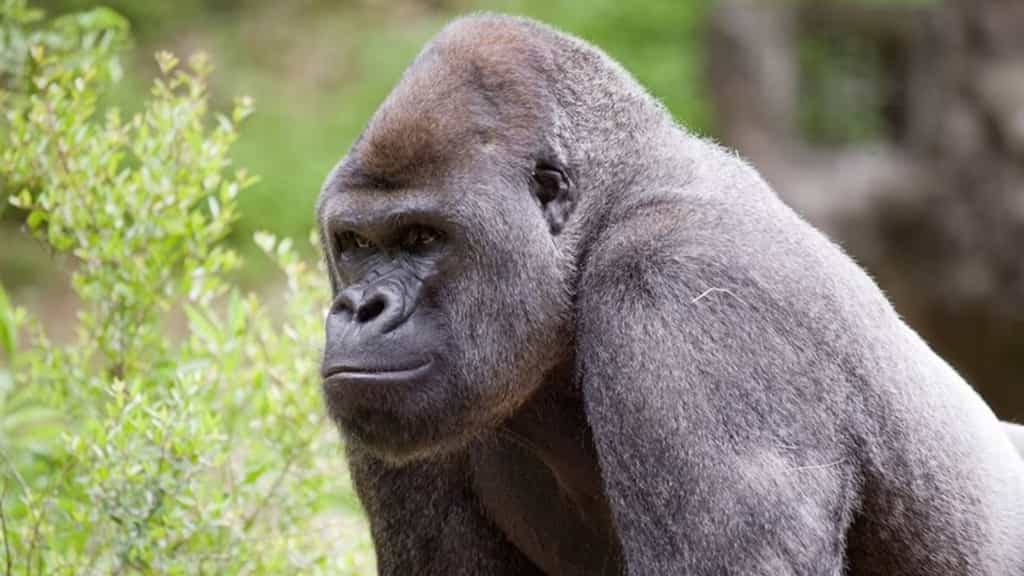
A groundbreaking study has challenged long-standing perceptions about gender dynamics in gorilla societies. Traditionally, male gorillas have been viewed as dominant due to their significant size advantage over females. However, recent research indicates that female gorillas can, and often do, overpower males twice their size, especially in non-alpha males.
Historically, male dominance in gorilla groups has been attributed to their larger size and strength, according to BBC’s Scienfocus Magazine. However, a study conducted by scientists at the Max Planck Institute for Evolutionary Anthropology and the University of Turku analysed 25 years of behavioural data from wild mountain gorillas. The findings revealed that 88% of female gorillas outranked at least one adult male in groups with multiple males. Notably, females won one in four conflicts with non-alpha males, despite being significantly smaller. This suggests that factors beyond physical size, such as social alliances and strategies, play crucial roles in determining dominance.
Here’s a list of other animals where females of the species dominate the males.
Bonobo societies are female-led, and adult females often form coalitions to maintain social dominance over males. Despite being smaller, they outcompete males for food, grooming partners, and mating opportunities. Male bonobos generally inherit their status through maternal lineage, not physical power.
In elephant herds, the matriarch leads the group, typically the oldest and wisest female. While male elephants become solitary as they age, females maintain complex social networks. The matriarch decides where to travel, when to rest, and how to respond to threats, showcasing cognitive and social dominance.
In elephant herds, matriarchs lead the group, typically the oldest and wisest female. (file)
Spotted hyena societies are matriarchal, with females larger, more aggressive, and socially dominant over males. The highest-ranking male is still below the lowest-ranking female. Female hyenas have higher levels of testosterone-like hormones, contributing to their physical strength and dominance.
In eusocial colonies like ants and bees, queens are the most powerful and longest-lived individuals, controlling the reproduction of the entire colony. Worker females also dominate, with males existing solely to mate and then typically dying shortly afterward. This represents ultimate female control in animal societies.
In many spider species, females are several times larger and often consume males after mating (sexual cannibalism). Their size gives them a distinct survival and reproductive advantage, and in some species, females hunt larger prey and live much longer than males.
Female green anacondas can be up to five times heavier than males. During mating season, a single female may attract a “breeding ball” of 10+ males, who compete to fertilise her eggs. After mating, females have been observed cannibalising the males, possibly as a source of nutrients for gestation.
In some species, such as the Strawberry Poison Dart Frog, females are highly territorial and aggressively fight off rival females and males. They play a crucial role in selecting safe locations for tadpoles and retain strong control over reproductive success.
Female raptors are typically much larger and stronger than males — a phenomenon known as reverse sexual dimorphism. This allows the pair to hunt different-sized prey, maximizing food efficiency. Females are also dominant at the nest, often making critical decisions about territory and care.
Female Komodo dragons are larger and more territorial, and they often dominate feeding sites. While male dragons may fight for mating rights, females control nesting sites and are better suited to defend against intruders. Additionally, Komodo females can reproduce asexually through parthenogenesis.
These examples highlight that physical dominance is only one form of power, and in many animal societies, female strength and leadership are key to survival and reproduction. Evolution has shaped these roles based on environmental needs, social dynamics, and species-specific biology.
Editorial Context & Insight
Original analysis and synthesis with multi-source verification
Methodology
This article includes original analysis and synthesis from our editorial team, cross-referenced with multiple primary sources to ensure depth, accuracy, and balanced perspective. All claims are fact-checked and verified before publication.
Primary Source
Verified Source
The Indian Express
Editorial Team
Senior Editor
James Chen
Specializes in India coverage
Quality Assurance
Associate Editor
Fact-checking and editorial standards compliance