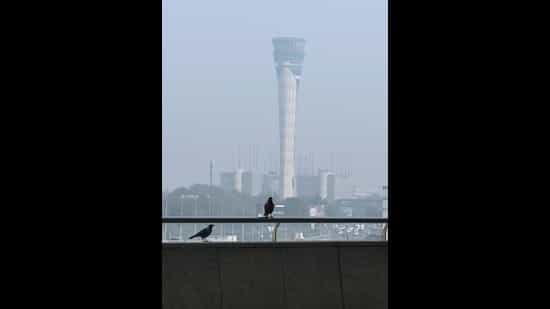
New Delhi The Aircraft Accident Investigation Bureau (AAIB) on Thursday recommended installing systems to record video and background communications of controllers on duty in air traffic control towers at all international airports.
The recommendation has been made by the probe agency in its preliminary report into the November 23 incident at the Indira Gandhi International Airport (IGIA) when an Ariana Afghan Airlines Airbus A310-304 operating flight FG311 from Kabul mistakenly touched down on a runway designated for departures rather than the assigned landing strip.
Delhi airport has four runways; RWY09/27 and RWY10/28, RWY11L/29R and RWY29L/11R.
The aircraft had been cleared by Delhi air traffic control (ATC) to land on Runway 29L, which was in use for arrivals at the time. However, the aircraft instead landed on the nearby Runway 29R, which was configured solely for take-offs during the operation.
“To analyse controller’s actions, post incident/ accident, it is recommended that ATC units be equipped with devices to record video and background communications of controllers performing ATC duties in Tower,” AAIB stated in the report.
These devices, AAIB recommended, also need to be implemented at all international airports on priority (basis), the report said.
“After initial descend with Delhi area control, AFG311 was released to Approach Control and thereafter, radar vectored for ILS Approach RWY 29L. Subsequently, it was released to Tower by Approach Control for final Approach for landing,” the AAIB said.
“AFG311 reported established on localizer RWY 29L at 18 NM to touchdown and came into contact with Tower at 10 NM to touchdown on localizer RWY 29L. Tower Controller instructed AFG311 to continue approach RWY 29L which was read back correctly. At 2NM to touchdown, the tower controller gave landing clearance to AFG311 for RWY 29L while AIC2243, was departing from RWY 29R. AFG311 landed on an unassigned RWY 29R at 063622 UTC despite receiving clearance for RWY 29L,” the AAIB said.
The pilot-in-command (PIC) of the Ariana flight, as per information given to the Directorate General of Civil Aviation (DGCA), stated that he lost ILS (Instrument Landing System) at 4NM (nautical miles) and the aircraft turned right, after which the captain landed with visual approach on runway 29R.
The ILS is a precision radio navigation system that provides short-range guidance to an aircraft allowing it to approach a runway at night, during bad weather and poor visibility.
“As per prevailing mode of operations, RWY 29R was not configured for landings and its approach lights, ILS and PAPI were not switched ON since it was being used in ‘Departure ONLY mode’, as per AAIB report.
The cockpit crew then executed a visual landing on the adjacent runway.
After landing on Runway 29R, the aircraft vacated via taxiway R and informed tower on enquiring that they had lost ILS at 4 NM from touchdown and due to poor visibility, were unable to differentiate between Runway RWY29L and RWY29R,” it said.
“As per prevailing mode of operations, RWY 29R was not configured for landings and its approach lights, ILS and PAPI (Precision Approach Path Indicator) were not switched ON since it was being used in ‘Departure ONLY mode.
The aircraft operated its next flight AFG 312 to Kabul at 1012 UTC from Runway 28 on the same day,” it stated.
Editorial Context & Insight
Original analysis & verification
Methodology
This article includes original analysis and synthesis from our editorial team, cross-referenced with primary sources to ensure depth and accuracy.