Delhi will no longer have to knock on the Centre’s doors to secure loans at high interest rates through the National Small Savings Fund (NSSF) to meet its capital expenditure, according to officials. The city government will soon have an independent “public account”, which will enable it to borrow from the market at lower interest rates.
Currently, unlike other states, Delhi does not have a public account. Its account was merged with that of the Central government and the receipts and expenditures were monitored under it. “Only Delhi was left. As it did not have a separate account, it could not borrow money from the markets. Due to this, Delhi had to seek funds through NSSF, which comprises collections under small saving schemes, net of withdrawals. These loans are also more expensive than market borrowing. Now, with having a public account, the national capital will have the power to secure loans from the market through the Reserve Bank of India (RBI) at a lower interest rate,” explained a senior official.
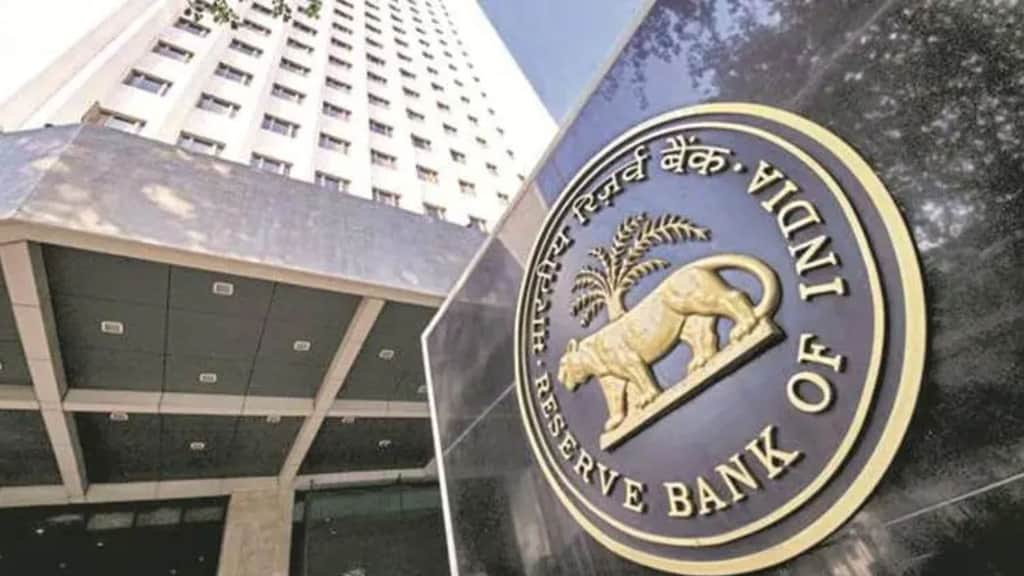
On Monday, the RBI said it signed an agreement with the Government of National Capital Territory of Delhi (GNCTD), under which the central bank, starting January 9, will carry out Delhi’s general banking business and manage its rupee public debt.
This, the Delhi government said in a separate statement, “ushers the Capital into a new era of fiscal prudence, institutional discipline, and infrastructure-led economic growth”. With the agreement in place, the Delhi government can borrow directly from the market, something which all other states and Union Territories have been doing.
Until now, Delhi was borrowing money from the NSSF, a facility which is currently only available to three other states: Arunachal Pradesh, Madhya Pradesh, and Kerala. However, these three states also raise money directly from the market, which Delhi will now be able to do.
The memorandum of understanding (MoU) was signed at a meeting held at the Delhi Secretariat, chaired by the Chief Minister Rekha Gupta, RBI and Bipul Pathak, Additional Chief Secretary (Finance).
Senior officials from the Delhi Government and the Reserve Bank of India, including Delhi Chief Secretary Rajiv Verma, were also present on the occasion.
Gupta, who also holds the Finance portfolio in the Delhi government, described the MoU as a transformational milestone and a long-overdue reform that previous governments failed to initiate.
“Despite being the national capital, Delhi was denied the benefits of structured RBI banking and market borrowings for years. Earlier governments never showed the intent or vision to adopt globally accepted norms of fiscal prudence. Today, that decisively changes,” the CM said.
Taking an aim at the previous AAP government, Gupta said that successive AAP governments neither invested surplus public funds nor adopted cost-efficient borrowing mechanisms. Excess cash remained idle, resulting in loss of interest income, while borrowings were undertaken at high interest rates from other sources, placing an unnecessary burden on public finances and, ultimately, on citizens, she said.
Further, officials said that the Delhi government will now be automatically invested on a daily basis through RBI mechanisms, generating interest income and eliminating losses caused by idle funds.
It will now have access to Ways and Means Advances and Special Drawing Facilities from RBI, ensuring efficient management of temporary cash flow mismatches without resorting to expensive or emergency borrowing.
“For the first time, Delhi will raise funds from the open market at competitive interest rates of approximately 7% through State Development Loans, replacing earlier high-cost borrowing at interest rates of 12 to 13% from alternative sources,” said an official.
Another senior government official said that the amount that Delhi can borrow from the market annually will be decided and set by the Centre.
Meanwhile, the CM said that all the funds raised through market borrowings will be utilised exclusively for capital expenditure, ensuring durable asset creation without transferring short-term liabilities to future generations
Capital investment has a high multiplier effect and is critical for long-term economic growth. Reflecting this commitment, the Budget for 2025–26 provides for capital expenditure nearly 135% higher than the actual expenditure of the previous year, said CM.
Officials said that following the move, the Delhi government is expected to invest the money in Yamuna rejuvenation and drainage infrastructure, drinking water supply systems, hospitals and health infrastructure, public transport and road infrastructure.
Editorial Context & Insight
Original analysis & verification
Methodology
This article includes original analysis and synthesis from our editorial team, cross-referenced with primary sources to ensure depth and accuracy.
Primary Source
The Indian Express