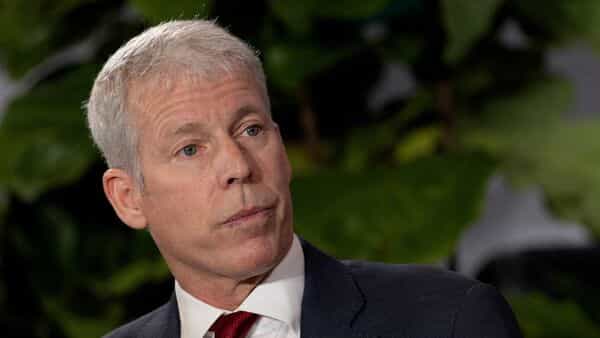
The US needs to control Venezuela's oil sales and revenue indefinitely to stabilize that country's economy and rebuild its oil sector, Energy Secretary Chris Wright said on Wednesday.
The comments reflect the importance of crude oil to President Donald Trump's strategy in Venezuela after US forces ousted the country's leader, Nicolas Maduro, in a raid on the capital Caracas on Saturday.
"We need to have that leverage and that control of those oil sales to drive the changes that simply must happen in Venezuela," Wright said at the Goldman Sachs Energy, CleanTech & Utilities Conference in Miami.
He said the revenues would be used to stabilize Venezuela's economy and eventually to repay oil majors Exxon Mobil and ConocoPhillips for losses when their assets were nationalized by former President Hugo Chavez nearly two decades ago.
The OPEC member nation sits atop the world's largest oil reserves but accounts for only about 1% of global supply after decades of underinvestment eroded production.
Such sales already have begun and the US has engaged "the world's leading commodity marketers and key banks" to execute and provide financial support for them, according to a statement from the US Department of Energy.
Wright added he was speaking to US oil companies to learn what conditions would enable them to enter Venezuela to help boost the country's production in the longer term.
"The resources are immense. This should be a wealthy, prosperous, peaceful energy powerhouse," he said.
On Tuesday, Washington announced a deal with Caracas to initially export up to $2 billion worth of Venezuelan crude to the United States. The agreement is a sign that Venezuelan government officials are responding to Trump's demand that they open up to US oil companies or risk more military intervention. Trump has said he wants interim Venezuelan President Delcy Rodriguez to give the US and private companies "total access" to her country's oil industry.
"Instead of the oil being blockaded, as it is right now, we're going to let the oil flow," Wright said at the conference.
Selling the oil "will benefit the American people, the American economy and global energy markets, but of course, it will also massively benefit the people of Venezuela," he said.
Venezuela's state-run oil company PDVSA said on Wednesday it is progressing in negotiations with the United States for oil sales. PDVSA board member Wills Rangel told Reuters the US will need to buy cargoes at international prices if it wants Venezuelan oil.
Shares of US refiners Marathon Petroleum, Phillips 66 and Valero Energy were up between 2.5% and 5%.
Representatives from Exxon Mobil, ConocoPhillips and Chevron - the top three US oil companies - would be present, according to a source familiar with the planning.
Chevron Vice Chairman Mark Nelson will represent that company at the meeting, another source said.
The companies, all of which have experience in Venezuela, have declined to comment.
Wright said in an interview withCNBC on Wednesday afternoon that he spoke with the CEOs of Exxon, Conoco and Chevron immediately after Maduro was seized, and expected the companies to be engaged in rehabilitating Venezuela's oil sector.
"Are they going to put billions of dollars into building new infrastructure in Venezuela next week? Of course not. You're going to have transformation of the conditions there. But they want to be productive advisers and helpers in that process," he said.
Wright also toldCNBC that some of the proceeds from Venezuelan oil sales could eventually be used to repay ConocoPhillips and Exxon Mobil for their losses in the country, but only after Venezuela's economy is stabilized.
"The huge debts that are owed Conoco and Exxon, those are very real and need to be recompensed in the future. But that's a longer-term issue."
Chevron is the only US oil major now operating in Venezuela's oil fields.
Venezuela was producing as much as 3.5 million barrels per day in the 1970s. But mismanagement and limited foreign investment have since led to a huge drop in annual production, which averaged about 1.1 million bpd last year.
Wright said he believed that short-term production increases in Venezuela are possible with an infusion of equipment and technology, but that a bigger recovery to past production levels would take years.
Editorial Context & Insight
Original analysis & verification
Methodology
This article includes original analysis and synthesis from our editorial team, cross-referenced with primary sources to ensure depth and accuracy.
Primary Source
mint - news