In the present case, the superintendent of police in Bhiwani stated in his report dated December 2 that the complaint was determined to be of a civil nature, the Commission noted.
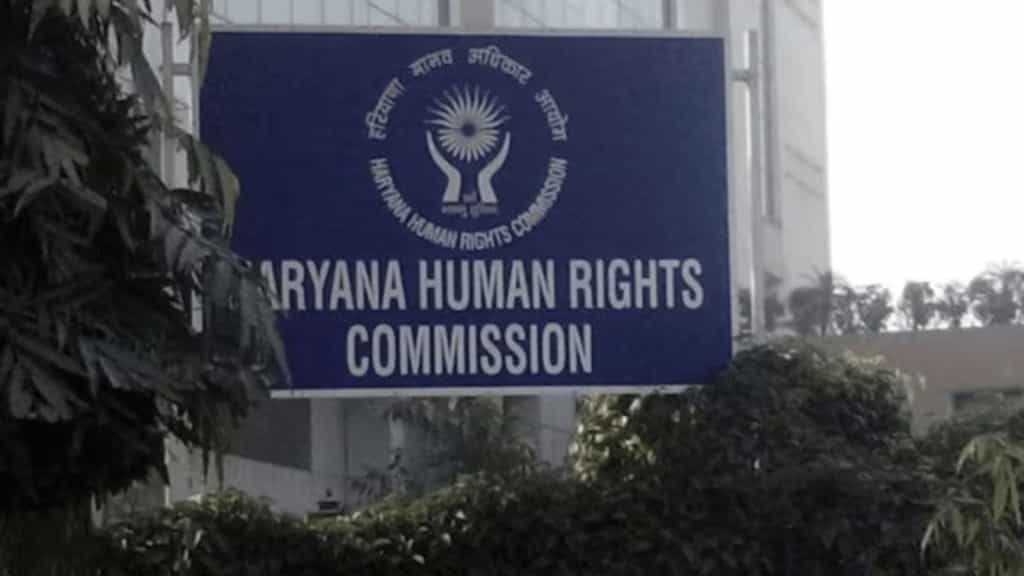
The Haryana Human Rights Commission (HHRC) last month took a strong view in a case from the Sadar police station in Bhiwani district, where the police allegedly misused provisions of the Bharatiya Nagarik Suraksha Sanhita (BNSS) to arrest a person in a civil dispute. Treating the matter as a “serious violation of human rights”, the Commission ordered the issuance of a showcause notice to the police officer concerned.
As per the police report placed before the chairperson of the Commission, Justice Lalit Batra, Assistant Sub-Inspector/ESI Virender took preventive action during the inquiry into a complaint arising out of a civil dispute between two brothers. However, the Commission, in its order, observed that the purpose of Sections 126 and 170 of the BNSS (earlier Sections 107/151 of the CrPC) is “preventive justice and not punitive”, and that the essential conditions for invoking these provisions were “not fulfilled” in the present case.
In the December 17 order, released Thursday, Justice Lalit Batra observed that “when the matter was purely civil in nature, and both parties were present at the police station in the presence of police officers, there was neither any apprehension of breach of peace nor any likelihood of commission of a cognisable offence”.
“A careful scrutiny of the report clearly reveals that the conditions required for invoking Sections 126/170 of the BNSS (earlier Sections 107/151 CrPC) were not satisfied. Section 170 can be invoked only when there is an imminent danger of breach of peace or likelihood thereof under Section 126, and arrest under Section 170 can be justified only when the person concerned designs to commit a cognisable offence.”
“It appears that Assistant Sub-Inspector/ESI Virender converted the inquiry proceedings into an apprehension of breach of peace and attributed a design to commit a cognisable offence to the concerned person (complainant Ashok Kumar), without recording any opinion that the offence could not be prevented otherwise, and thus proceeded to invoke Sections 126/170 of the BNSS. Such one-sided and selective invocation of these provisions without any cogent material reflects a partisan approach and abuse of power on the part of the said police officer,” the Commission observed.
In this context, Justice Lalit Batra, in his order, placed reliance on the judgment in Rajender Singh Pathania and others v. State (NCT of Delhi and others), 2011, wherein the Supreme Court, while interpreting Sections 107 and 151 of the CrPC, observed, “The object of Sections 107/151 of the Criminal Procedure Code is preventive justice and not punitive.”
“Section 151 should only be invoked when there is imminent danger to peace or likelihood of breach of peace under Section 107 of the Code. An arrest under Section 151 can be supported when the person to be arrested designs to commit a cognisable offence. If proceedings under Sections 107/151 appear to be absolutely necessary to deal with the threatened apprehension of breach of peace, it is incumbent upon the authority concerned to take prompt action. The jurisdiction vested in a Magistrate to act under Section 107 is to be exercised in emergent situations,” the apex court had noted.
Assistant Registrar of the Commission, Dr Puneet Arora, stated that “considering the available facts and the seriousness of the allegations, a showcause notice has been issued to Assistant Sub-Inspector/ESI Virender, Police Station Sadar, Bhiwani. Further, an explanation has also been sought from the Superintendent of Police, Bhiwani, being the head of the district police, as to why the complainant should not be compensated for the violation of his human rights.”
The officials have been directed to submit their explanations before the Commission through the director of investigation at least one week prior to the next date of hearing, February 25.
Editorial Context & Insight
Original analysis & verification
Methodology
This article includes original analysis and synthesis from our editorial team, cross-referenced with primary sources to ensure depth and accuracy.
Primary Source
The Indian Express