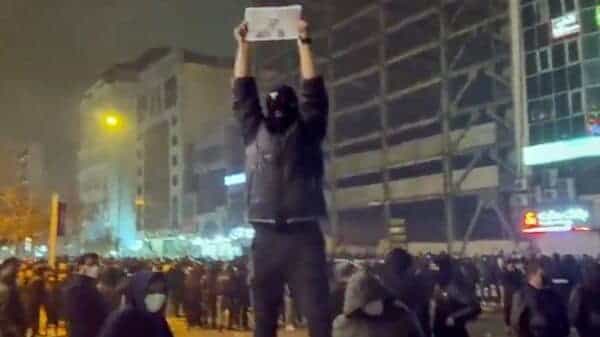
Iran’s attorney general Mohammad Movahedi Azad on Saturday (January 10) warned that anyone taking part in ongoing protests — or even those who “helped rioters” — would be treated as an “enemy of God,” a charge that carries the death penalty, as nationwide demonstrations approached the two-week mark amid an intensifying crackdown.
“Prosecutors must carefully and without delay, by issuing indictments, prepare the grounds for the trial and decisive confrontation,” Azad said in a statement carried by state television. “Proceedings must be conducted without leniency, compassion or indulgence.”
The warning came as Iran remained largely cut off from the outside world, with internet access and phone lines shut down, making it increasingly difficult to assess the scale of the unrest.
At least 72 people have been killed and more than 2,300 detained so far, according to the U.S.-based Human Rights Activists News Agency. Iranian state TV has instead focused on casualties among security forces, while insisting authorities are in control.
Supreme Leader Ayatollah Ali Khamenei has signaled a tougher response despite mounting international pressure, including warnings from the United States.
US President Donald Trump voiced support for demonstrators, writing on social media: “Iran is looking at FREEDOM, perhaps like never before. The USA stands ready to help!!!”
Iranian state television on Saturday portrayed calm returning to most cities, airing pro-government rallies alongside martial music and footage it said showed armed protesters attacking security forces.
“Field reports indicate that peace prevailed in most cities of the country at night,” a state TV anchor said. “There was no news of any gathering or chaos in Tehran and most provinces last night.”
However, videos verified by The Associated Press showed large crowds chanting “Death to Khamenei!” in northern Tehran’s Saadat Abad district, contradicting official claims.
Tasnim news agency said authorities detained nearly 200 people belonging to what it described as “operational terrorist teams,” alleging they possessed firearms, grenades and gasoline bombs.
State TV also broadcast footage of funerals for security personnel, including a large service in the holy city of Qom.
Iran’s exiled former crown prince Reza Pahlavi urged demonstrators to continue protests through the weekend, calling on them to reclaim public spaces and carry Iran’s pre-1979 lion-and-sun flag.
The demonstrations began on December 28 over the collapse of the Iranian rial — now trading at more than 1.4 million to the US dollar — before expanding into direct challenges to Iran’s ruling theocracy.
Rights activists fear the internet blackout could allow security forces to unleash a violent crackdown similar to past protests.
“They are fighting, and losing their lives, against a dictatorial regime,” said Ali Rahmani, son of imprisoned Nobel Peace Prize laureate Narges Mohammadi. “After what happened in 2019, we can only fear the worst.”
Despite threats, arrests and mounting casualties, videos circulating online suggest the unrest shows little sign of easing.
Editorial Context & Insight
Original analysis & verification
Methodology
This article includes original analysis and synthesis from our editorial team, cross-referenced with primary sources to ensure depth and accuracy.
Primary Source
mint - news